Large investment companies are betting against homeownership—by buying up homes in suburban areas and putting them on the rental market.


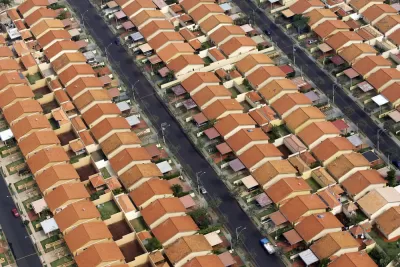
"A new breed of homeowners has arrived in this middle-class suburb of Nashville and in many other communities around the country: big investment firms in the business of offering single-family homes for rent," report Ryan Dezember and Laura Kusisto. "Their appearance has shaken up sales and rental markets and, in some neighborhoods, sparked rent increases."
The article takes Spring Hill, Tennessee as its primary case study. There, "American Homes, Colony Starwood Homes, Progress Residential and Streetlane Homes—own nearly 700 houses, according to tax rolls. That amounts to about 5% of all the houses in town, a 2016 census indicates, and roughly three-quarters of those available for rent," according to Dezember and Kusisto.
The trend is not just apparent in Spring Hill, or in the American South—it's also swept the metropolitan areas of Atlanta, Phoenix, and a "couple dozen" more. To be clear, Dezember and Kusisto are describing Wall Street's bet as an epochal shift in the American Dream—away from homeownership.
FULL STORY: Meet Your New Landlord: Wall Street

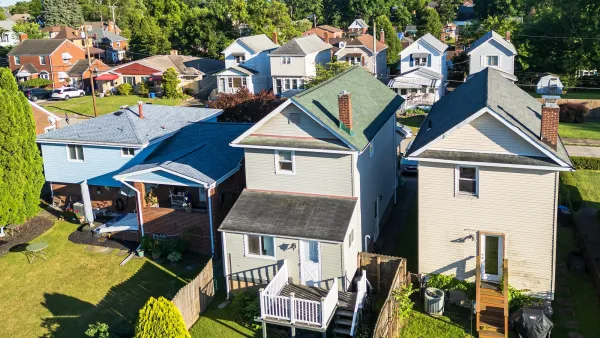
Pittsburgh Median Home Price is Lowest in the US at $250K
After the collapse of the U.S. steel industry, the city was left with a glut of affordable homes.
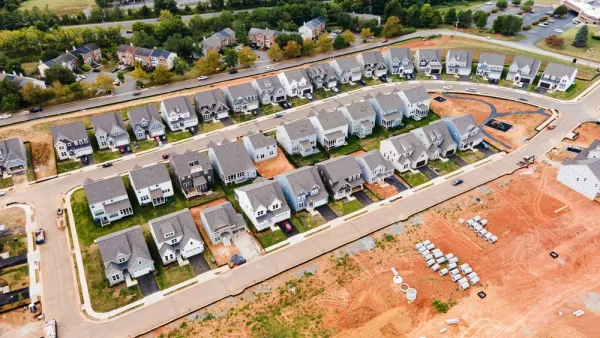
A Big Picture of the US Housing Market
A new report highlights the factors driving up housing costs around the country.
U.S. Home Sales to Foreign Buyers Drop by Almost 10 Percent
International purchases of homes on the U.S. housing market slowed in the last year.

Planetizen Federal Action Tracker
A weekly monitor of how Trump’s orders and actions are impacting planners and planning in America.

The state-sanctioned urbicide of Austin
People don’t kill cities. Freeways do.

US to reduce Colorado River water deliveries to Mexico
A new Colorado Treaty amendment reduces Mexico’s Colorado River water allocation by 250,000 acre feet.

5 New England states march closer to 800 megawatt wind energy project
Securing federal approval for the project may be complicated under the Trump administration, which has historically been hostile towards domestic wind power.

Baltimore to break ground on $50 million Transit Priority Project
The project will bring faster bus trips, safer streets and better bike connections to Baltimore.

Airbnb launches $250 million 'last-dollar financing' housing accelerator, makes first investment in Austin
The company will put $6.4 million towards affordable housing development in Texas’ capital.

FREE Course: Walkable City 1: Why Walkability?
After describing his path towards focusing on walkability as the essence of good planning, Jeff Speck marches through his five principal reasons for making more walkable places.
Reinventing Malls: Planning Alchemy—Turning Gray Fields Into Gold
The course focuses on the opportunities and imperatives that shape reinvention of mall sites.

Eagle County Government
Harvard University Graduate School of Design
Nashville Planning Department
The Architects Foundation
University of Cincinnati Online
The Pocatello Development Authority
The Urban Renewal Agency of the City of Pocatello
Journal of the American Planning Association