A few ideas on how advertisements could do a better job of selling public transit to the public.


The team at Mobility Lab has produced a series of articles offering recommendations on how transit agencies should advertise their services.
First, Ethan Goffman writes an article suggesting that to compete with the media attention focused on prestigious and hip corporations like Tesla, Mercedes Benz, and Uber, transit agencies should "combine efforts – and budgets – in a national effort."
"This could create spots that 'do it all,'" adds Goffman, "using the best contemporary messaging techniques to highlight the benefits of transit. Branding for a specific transit system could then easily be inserted into the ads by local agencies that identify with the messaging. Such ads would help overcome resistance to change, emphasizing the personal, social, and environmental benefits of transit while appealing to everyone from millennials to seniors."
In a follow-up article, John Perry adds two more cents about how transit agencies can ensure quality in advertising campaigns. The premise of Perry's argument: "most contemporary transit advertising in the U.S. sucks. A lot of it is very flat and bureaucratic, unimaginative, and oftentimes with a hokey gimmick." Perry does identify one example par excellence: the work of Metro in Los Angeles, which "produces videos that are splendidly made."
(Perry's article is republished by Mobility Lab. The original article is on Perry's blog, Bastard Urbanism.)
Read the full story: National advertising effort needed by local transit agencies

Designing a Multi-Modal, User-Focused TOD Vision for Los Angeles' Expo Line
Facing explosive development interest around its Metro station, the small city of Culver on L.A.’s Westside is taking steps to shape its mobility future.
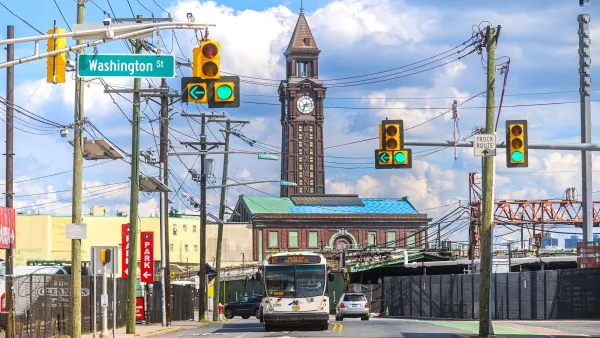
New Jersey has a Plan to buy Transit with LAND. Will it Actually Work?
I have questions.
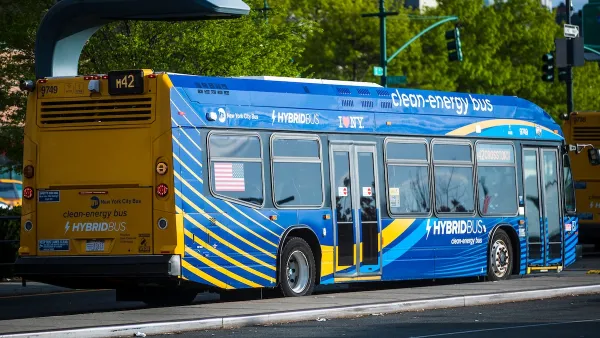
Transit Bus Costs Rise Sharply Due to Tariffs
The cost of a transit bus has gone up by 68 percent since 2021, in part because of recent tariffs on steel and aluminum.

Planetizen Federal Action Tracker
A weekly monitor of how Trump’s orders and actions are impacting planners and planning in America.

California plans to bury El Niño’s downpour
If the state plays its cards right, it may be able to store a billion acre-feet of El Niño’s water in aquifers.

Desperate measures: Advocates weigh draining Lake Powell to fill Colorado River
Draining the reservoir could reduce evaporation losses by a couple hundred thousand acre-feet.

Los Angeles just elected an urban planner as its mayor
Transportation analysts are optimistic that Raman will be more aggressive in addressing transit issues than Bass.

Mamdani’s pied-à-terre tax survives legal challenge
A panel of judges found that the plaintiffs failed to demonstrate injury as a result of New York City's implementation of the tax.

Eastern Nebraska is running out of electricity
Data centers and electrification are straining eastern Nebraska’s grid, throttling economic development.

FREE Course: Walkable City 1: Why Walkability?
After describing his path towards focusing on walkability as the essence of good planning, Jeff Speck marches through his five principal reasons for making more walkable places.
Reinventing Malls: Planning Alchemy—Turning Gray Fields Into Gold
The course focuses on the opportunities and imperatives that shape reinvention of mall sites.

City of Rosemead
Rutgers University, Edward J. Bloustein School of Planning and Public Policy
One Hundred Miles
University of Michigan School for Environment and Sustainability (SEAS)
Hunter College, City University of New York (CUNY)
The Architects Foundation
City of Cambridge
Montrose County
The Pocatello Development Authority