I have questions.


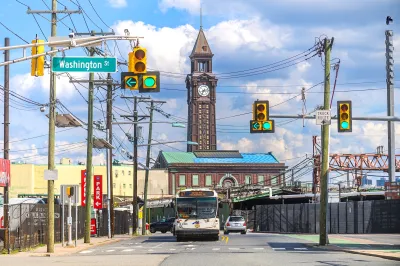
NJ Transit has proposed a new plan to generate non-fare revenue and it could reshape New Jersey’s economic future. Short for “Leveraging Assets for Non-farebox Dollars,” the plan aims to utilize part of its 8,000-acre real estate portfolio to not just to stabilize its budget, but to pitch a long-term vision for a more reliable transit system, stronger local economies, and a better-connected state.
New Jersey is the fastest-growing state in the Northeast, and like much of the country, it’s facing a housing shortage. The LAND Plan aims to be part of the solution by partnering with municipalities to construct affordable housing, Transit-Oriented Developments (TODs), industrial hubs, and retail centers. As the plan proposes, these projects could unlock 30 years of sustainable revenue, easing the pressure for routine fare hikes while also expanding access to homes, jobs, and transit. This type of long-term planning is not just a necessity for the state — it’s a planner's dream!
There are environmental commitments too: about 150-170 acres of wetlands will be protected and new opportunities for solar installations in parking lots and rooftops are also proposed.
This plan brings a new approach to allocating funding and, if executed correctly, could bring real change to the entire state, so long as development is allocated equitably, not just to booming towns but also to historically underserved communities. Providing better access to transit, jobs and housing across will only help the state as a whole.
After reading the Land Plan, here are some questions I still want answered:
- Who gets prioritized? Which towns will see investment first, and why?
- Will community benefits be guaranteed? Such as open space, environmental protection, and local amenities.
- How will NJ Transit handle more riders? Services are already strained.
- Will protections be implemented against displacement and gentrification? Development shouldn’t push out the very residents it’s supposed to help.
Municipalities are urged to work with NJ Transit and update local zoning to make TODs and industrial hubs possible. As stated, “The plan’s proposed actions are presented as options for consideration — not mandates — to support the plan’s full revenue potential.” And as always, community input should be at the forefront. Residents deserve a real voice in shaping what comes next for their communities.
Read the full NJ Transit LAND Plan here and tell me what you think in the comment section below. What questions do you have to add to my list?
Dedicated to advancing sustainable planning in New Jersey, Topology Planner Stephanie Specht supports GIS projects, Preliminary Investigation Reports, and land use applications, with recent work in Hoboken, Cranford, and multiple affordable housing initiatives. She brings prior experience as a GIS Analyst and Environmental Planner for Ocean County, NJ, where she helped preserve more than 8,000 acres of farmland and open space. Stephanie holds a BS in Environmental, Geographical and Geological Sciences with a focus in Geography and Planning from Bloomsburg University and a GIS Certificate from Michigan State.

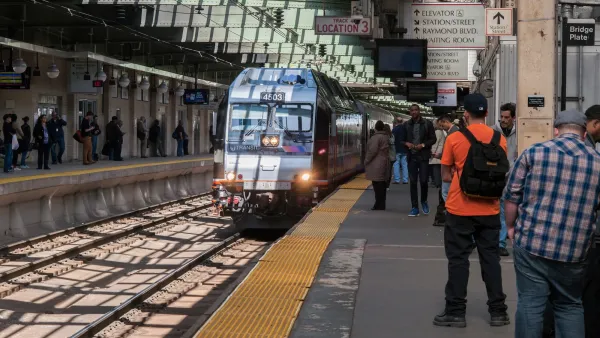
NJ Transit to Cut Service by Half for 4 Weeks for Gateway Project Work
Service between New Jersey and New York will be cut by 50 percent as the agency switches rail operations to another track.
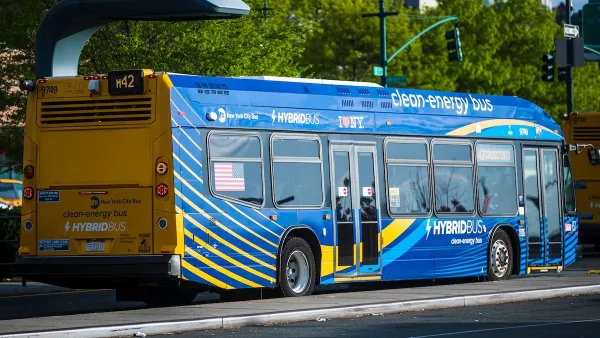
Transit Bus Costs Rise Sharply Due to Tariffs
The cost of a transit bus has gone up by 68 percent since 2021, in part because of recent tariffs on steel and aluminum.
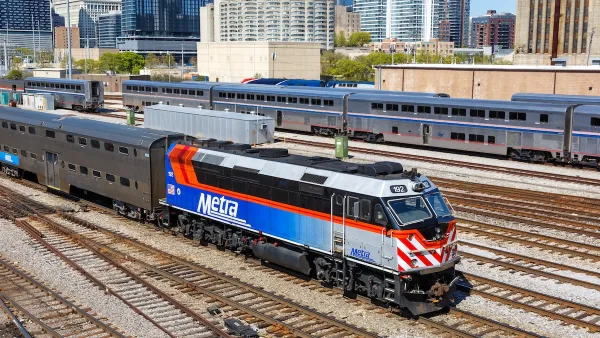
Chicago Transit Faces Severe Service Cuts
Metra officials warn the agency could cut service by as much as 40 percent to make up for a massive budget shortfall.

The state-sanctioned urbicide of Austin
People don’t kill cities. Freeways do.

US to reduce Colorado River water deliveries to Mexico
A new Colorado Treaty amendment reduces Mexico’s Colorado River water allocation by 250,000 acre feet.

New Jersey’s second-largest city bans standalone data centers
Jersey City will continue to allow co-location facilities, such as those meant for research institutions that store their own data.

Amtrak not solely to blame for New Jersey commuter rail's unreliability, report finds
A new study from the Garden State Initiative found that NJ Transit’s budget grew 20% across a 4 year period, but reliability declined significantly over the same period.

EPA erases limits on planet-warming pollution from power plants
Under Monday’s plan, power plants would still have some limits on how much mercury, arsenic and other contaminants they can emit.

Phoenix announces new on-demand transit service, more frequent RAPID buses
Both new services will launch in October, and are part of Phoenix's Project Effective Access Solutions for Easing Congestion.

FREE Course: Walkable City 1: Why Walkability?
After describing his path towards focusing on walkability as the essence of good planning, Jeff Speck marches through his five principal reasons for making more walkable places.
Reinventing Malls: Planning Alchemy—Turning Gray Fields Into Gold
The course focuses on the opportunities and imperatives that shape reinvention of mall sites.

Eagle County Government
Harvard University Graduate School of Design
Nashville Planning Department
The Architects Foundation
University of Cincinnati Online
The Pocatello Development Authority
The Urban Renewal Agency of the City of Pocatello
Journal of the American Planning Association

