King County, Washington was once home to a large number of black homeowners, today the county lags far behind the rest of the country.


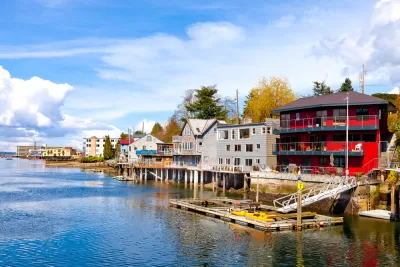
In 1970, 49 percent of black households in King County, Washington were homowners. "Since then, black homeownership in King County has been on a steady downward spiral, with just 28 percent of black households in the county owning their home — about 13,000 of the nearly 48,000 total households," Gene Balk reports for The Seattle Times. The issue, which is mirrored to a smaller extent by King County's Latino families, does not reflect nationwide trends. In fact, the percentage of black families who own homes has held relatively steady.
"It’s a sign of how the postwar Boeing Boom was, in many ways, more beneficial to Seattle’s black community than the current tech boom, says Ron Sims, former deputy secretary of the U.S. Department of Housing and Urban Development, who also served as the King County Executive," Balk writes. The Seattle economy recovered for many, and the value of homes around the city has taken off, but black families in the city did not benefit from the recovery in equal measure. Experts speaking with Balk highlighted the tech industry in particular as excluding African American workers.
FULL STORY: The rise and dramatic fall of King County’s black homeowners

Survey: Seattle-Area Residents Support Upzoning
To fight the growing housing crisis, most King County residents support an end to single-family zoning and accelerated housing development, according to a new poll.

Tax on High Earners Proposed to Fund Homeless Services in Seattle's King County
The Washington State Legislature is proposing a type of tax that the city of Seattle tried, and failed, to implement a few years go.

Seattle to Use Surplus Public Land for Affordable Housing
New municipal and state laws have made it possible for Seattle to sell excess land to affordable housing developers at below-market rates, or even to give it away.

The state-sanctioned urbicide of Austin
People don’t kill cities. Freeways do.

US to reduce Colorado River water deliveries to Mexico
A new Colorado Treaty amendment reduces Mexico’s Colorado River water allocation by 250,000 acre feet.

New Jersey’s second-largest city bans standalone data centers
Jersey City will continue to allow co-location facilities, such as those meant for research institutions that store their own data.

Amtrak not solely to blame for New Jersey commuter rail's unreliability, report finds
A new study from the Garden State Initiative found that NJ Transit’s budget grew 20% across a 4 year period, but reliability declined significantly over the same period.

EPA erases limits on planet-warming pollution from power plants
Under Monday’s plan, power plants would still have some limits on how much mercury, arsenic and other contaminants they can emit.

Phoenix announces new on-demand transit service, more frequent RAPID buses
Both new services will launch in October, and are part of Phoenix's Project Effective Access Solutions for Easing Congestion.

FREE Course: Walkable City 1: Why Walkability?
After describing his path towards focusing on walkability as the essence of good planning, Jeff Speck marches through his five principal reasons for making more walkable places.
Reinventing Malls: Planning Alchemy—Turning Gray Fields Into Gold
The course focuses on the opportunities and imperatives that shape reinvention of mall sites.

Eagle County Government
Harvard University Graduate School of Design
Nashville Planning Department
The Architects Foundation
University of Cincinnati Online
The Pocatello Development Authority
The Urban Renewal Agency of the City of Pocatello
Journal of the American Planning Association