Are the energy and money savings from modern street lamps worth the proliferation of surveillance technology around the city? San Jose, California is considering just such a quandary.


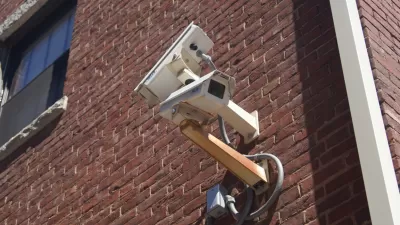
"A proposal to allow surveillance cameras to be installed on [San Jose] streetlamps is raising hackles among privacy advocates," reports Ramona Giwargis.
The San Jose City Council this week considered the installation of surveillance cameras "as part of a bid to reduce the cost of replacing existing streetlamps with more energy-efficient LED lights."
The surveillance cameras are part of a proposal by Siemens to help the city cover the cost of upgrading a large portion of its street lamps. Giwargis explains more:
As part of Siemens’ proposal to install LED lights, the company said it would partner with anyCOMM, a Sacramento County tech company, to install “controller units” that can accommodate up to four video cameras on each streetlamp — with 24/7 digital recording capabilities and audio sensors. The city staff report says the cameras could help combat crime, solve investigations and deter illegal dumping and graffiti.
The proposal raises questions about where and when cities and residents should expect for "smart city" proposals to get entangled with privacy and surveillance concerns. Giwargis includes quotes from local politicians, the regional chapter of the American Civil Liberty Union, and the companies involved to shed light on the controversy.
FULL STORY: Privacy advocates decry proposal for surveillance cameras on San Jose streetlamps


Does every planner need an AI policy?
From a hundred-person agency to a one-person consultancy, the answer is yes. The difference is what “policy" means.

Google Razed 80 Acres in Downtown San Jose. Then… Nothing Happened.
The project was expected to generate about $79 million annually in property taxes.
San Jose to Lease Units in Downtown High-rise for Affordable Housing
An innovative pilot program subsidizes rent in a market-rate building for middle-income residents.

The state-sanctioned urbicide of Austin
People don’t kill cities. Freeways do.

US to reduce Colorado River water deliveries to Mexico
A new Colorado Treaty amendment reduces Mexico’s Colorado River water allocation by 250,000 acre feet.

New Jersey’s second-largest city bans standalone data centers
Jersey City will continue to allow co-location facilities, such as those meant for research institutions that store their own data.

Amtrak not solely to blame for New Jersey commuter rail's unreliability, report finds
A new study from the Garden State Initiative found that NJ Transit’s budget grew 20% across a 4 year period, but reliability declined significantly over the same period.

EPA erases limits on planet-warming pollution from power plants
Under Monday’s plan, power plants would still have some limits on how much mercury, arsenic and other contaminants they can emit.

Phoenix announces new on-demand transit service, more frequent RAPID buses
Both new services will launch in October, and are part of Phoenix's Project Effective Access Solutions for Easing Congestion.

FREE Course: Walkable City 1: Why Walkability?
After describing his path towards focusing on walkability as the essence of good planning, Jeff Speck marches through his five principal reasons for making more walkable places.
Reinventing Malls: Planning Alchemy—Turning Gray Fields Into Gold
The course focuses on the opportunities and imperatives that shape reinvention of mall sites.

Eagle County Government
Harvard University Graduate School of Design
Nashville Planning Department
The Architects Foundation
University of Cincinnati Online
The Pocatello Development Authority
The Urban Renewal Agency of the City of Pocatello
Journal of the American Planning Association