The city of Atlanta recently gained a windfall of transit funding revenue in the form of a half-cent sales tax. The question now becomes whether the city can maximize the $2.5 billion investment.


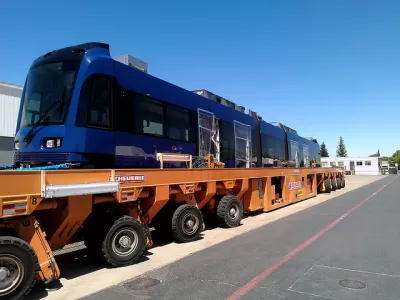
Yonah Freemark provides in-depth analysis of Atlanta's planned $2.5 billion investment in the Metropolitan Atlanta Rapid Transit Authority (MARTA) system, as enabled by a half-cent sales tax approved by Atlanta voters in November 2016.
Freemark evaluates the potential of that funding by exploring a few key decisions still looming for Atlanta residents, politicians, and planners. For instance, Freemark asks, "What can the new revenue fund?" (The list of potential projects would require a lot more than $2.5 billion to fun.) To recommend some metrics for considering how to prioritize the potential projects, Freemark examines the density of residential and commercial along the proposed transit routes, along with demographic data, the politics of rights-of-way, and the future of infill development in the city.
Freemark's assessment at this point in the process is mostly positive, deciding that the city will "beef up existing bus and rail service and build new lines in central areas with good concentrations of people and jobs."
Read the full story: Atlanta’s Raising $2.5 Billion to Invest in Transit. Will It Be Money Well-Spent?

Atlanta Transit Plans Stall Due to Budget Concerns
With MARTA facing a potential billion dollar shortfall, the agency says it can’t fulfill its system expansion plan.
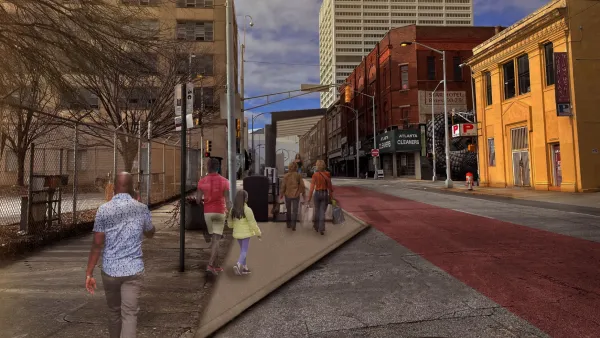
Atlanta's first BRT line opens April 18
MARTA officials say the line will operate like 'rail on rubber tires' and guarantee headways of 15 minutes or less.
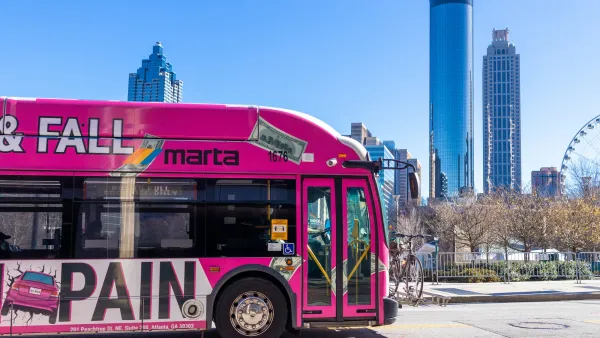
MARTA’s NextGen Bus System to Relaunch With Increased Frequency, New Last-mile Rideshare Program
Atlanta’s transit agency will enhance service on some routes while compensating for service cuts on others with a new on-demand service.

Planetizen Federal Action Tracker
A weekly monitor of how Trump’s orders and actions are impacting planners and planning in America.

The state-sanctioned urbicide of Austin
People don’t kill cities. Freeways do.

US to reduce Colorado River water deliveries to Mexico
A new Colorado Treaty amendment reduces Mexico’s Colorado River water allocation by 250,000 acre feet.

Nation's most wind-powered state turns to coal as data centers increase energy demand
For the first time in decades, Iowa has increased its generation of coal power.

NYC cools commuters with city's first rain garden above a bus stop
New York City officials say the plants in the rain garden can absorb 16 gallons of rainwater during heavy storms.

Brightline West’s future may rely on $6 billion federal loan
The company has until Nov. 2 to make a $400 million equity investment into its proposed high-speed rail line.

FREE Course: Walkable City 1: Why Walkability?
After describing his path towards focusing on walkability as the essence of good planning, Jeff Speck marches through his five principal reasons for making more walkable places.
Reinventing Malls: Planning Alchemy—Turning Gray Fields Into Gold
The course focuses on the opportunities and imperatives that shape reinvention of mall sites.

Greater Baltimore Committee
Eagle County Government
Harvard University Graduate School of Design
The Architects Foundation
University of Cincinnati Online
The Pocatello Development Authority
The Urban Renewal Agency of the City of Pocatello
Journal of the American Planning Association