While the debates around transit-oriented residential development continue, commercial TOD is picking up speed. Offices with nearby transited to fetch much higher rents than their car-only counterparts.


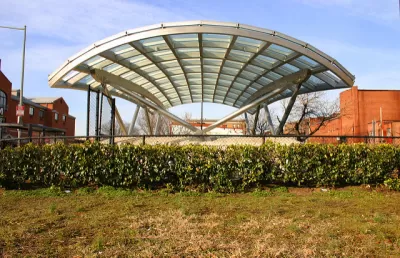
Getting to work without a car has its charms, especially for the young professional set. Increasingly, commercial developers are prioritizing projects within walking distance of transit hubs.
Joe Gose writes, "Office buildings with access to transit are outshining those without, fetching rents nearly 80 percent higher. That amounts to $45.57 a square foot versus $25.39 a square foot, according to a report released this year by Jones Lang LaSalle. Those same buildings have a vacancy rate 3.7 percentage points lower than offices without transit access."
As new transit gets built, office districts are liable to spring up nearby. "Areas that have experienced development near new rail systems or station openings include Fulton Market in Chicago; downtown Kansas City, Mo.; Austin, Tex.; and the RiNo neighborhood of Denver, to name a few."
Read the full story: Transit Hubs: A Growing Lure for Developers
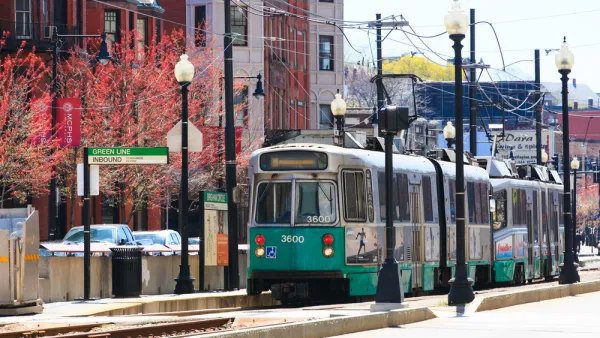
Massachusetts Releases Transit-Oriented Multifamily Housing Rules
Communities near transit stations will have to comply with a new set of regulations that support multifamily development and increased housing density.
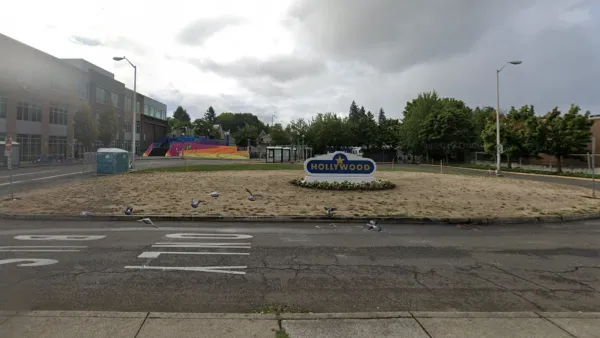
Portland Transit Station to Get Multi-Modal Mixed-Use Overhaul
The regional transit agency for Portland, Oregon is working on a development plan that would drastically multiple the planning considerations at a local transit station.
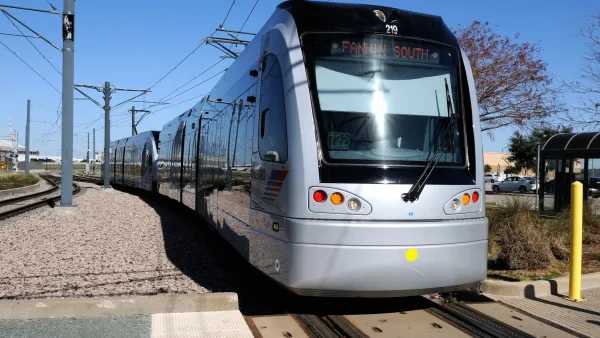
What Makes a Transit System Great in the U.S.
Transit should make people's lives better, with density a key component of successful systems.

Planetizen Federal Action Tracker
A weekly monitor of how Trump’s orders and actions are impacting planners and planning in America.

California plans to bury El Niño’s downpour
If the state plays its cards right, it may be able to store a billion acre-feet of El Niño’s water in aquifers.

Desperate measures: Advocates weigh draining Lake Powell to fill Colorado River
Draining the reservoir could reduce evaporation losses by a couple hundred thousand acre-feet.

Chicago voters approve permanent festival grounds, penalty for vacant property owners
Currently, major summer and fall festivals take over public parks for weeks at a time, drawing criticism from nearby residents

NYC votes to cut outdoor dining red tape, speed up permitting
New York City also voted to allow the Department of Transportation to begin work on urgent projects before notifying elected officials.

California appears to reject Prop. 45
The proposition would have expanded the projects that qualify for a streamlined environmental review, effectively paring down the California Environmental Quality Act.

FREE Course: Walkable City 1: Why Walkability?
After describing his path towards focusing on walkability as the essence of good planning, Jeff Speck marches through his five principal reasons for making more walkable places.
Reinventing Malls: Planning Alchemy—Turning Gray Fields Into Gold
The course focuses on the opportunities and imperatives that shape reinvention of mall sites.

City of Rosemead
Rutgers University, Edward J. Bloustein School of Planning and Public Policy
One Hundred Miles
Hunter College, City University of New York (CUNY)
The Architects Foundation
University of Cincinnati Online
City of Cambridge
Montrose County
The Pocatello Development Authority