Overall, Chicago's regional train service the Metra has been losing ridership, however, Hyde Park neighborhood stations have seen some growth.


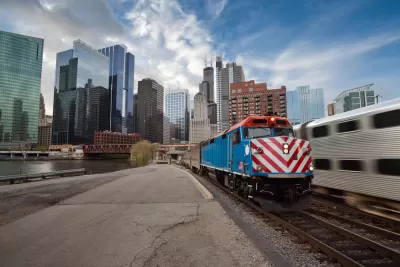
Chicago's South Side has never enjoyed the level of train service available on the North Side, but a new proposal would be a step toward changing that. "The proposal would bring train service closer to the wait times of CTA buses and trains, which south lakefront residents have wanted for at least 10 years," Sam Cholke reports for DNA Info.
While the Metra has seen declining ridership (like many transit systems around the country), "Hyde Park is the area with the most growth on the Electric Line, with ridership at the 51st/53rd Street, 55th/56th/57th Street and 59th Street stops increasing by 7.6 percent over the past three years as more housing is built nearby," Cholk writes.
For a dissenting take on the proposal to increase Metra frequencies in Hyde Park, see an article by Steven Vance, who picks up on the flip side of this proposal: that service will be decreased in other parts of the South Side.
Read the full story: Metra Trains Would Stop In Hyde Park Every 20 Minutes Under New Plan

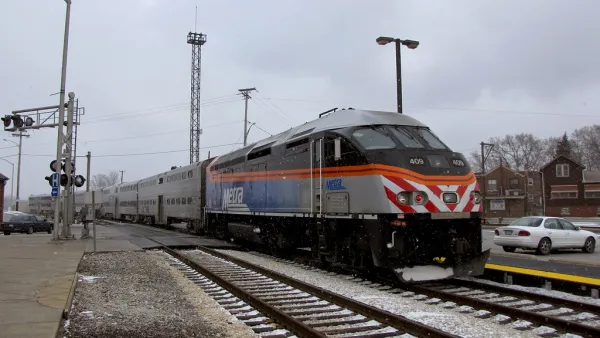
Opinion: Improved Commuter Rail Services Would Better Serve Chicago’s South Side Residents
The city’s South Side residents need more transit options, but an extension of the Chicago Transit Authority’s Red Line would be a costly and less effective alternative.
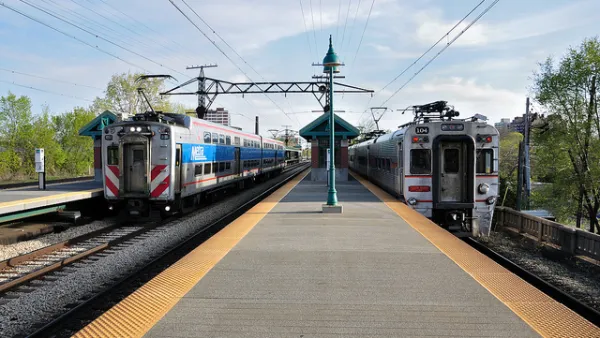
Chicago's Metra Will Build a 95th Street Station
Metra’s Electric line is one of the few places where Chicago’s commuter rail owns the tracks. Transit advocates have lobbied for years for the service to be run more like traditional public transit.
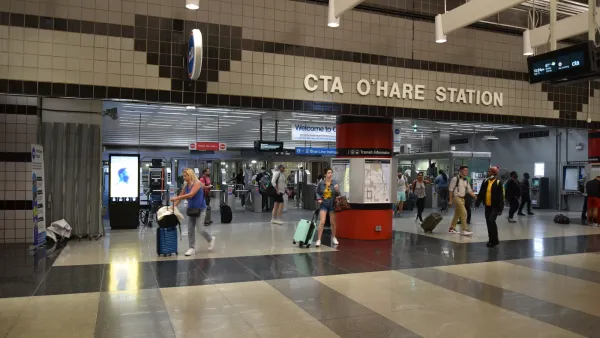
The Vast Majority of Riders Suspended by Chicago Transit Agencies are Black or Latino
The agencies are allowed to ban riders who are accused of violent or threatening behavior.

Planetizen Federal Action Tracker
A weekly monitor of how Trump’s orders and actions are impacting planners and planning in America.

Amtrak, CN end decades-long dispute with eight-year agreement
The new operating agreement establishes an updated framework for the companies to work together, including processes to resolve disputes.

Northwest rail fans eager for Sept. 30 debut of Amtrak’s Airo fleet
Get ready for that new train smell and more seats. But they won’t go faster or run more frequently on the Cascades route in Washington and Oregon.

Brightline Florida files for bankruptcy
The transit company is over $5 billion in debt.

St. Louis Metro to test if single-car trains can reduce operating costs, maintain rider satisfaction
The pilot program will run from October to spring 2027, and begin with one single-car train operating on Metrolink’s Red and Blue lines.

Pennsylvania is building data centers in abandoned mines
Housing data centers in mines provides an alternative to destroying local forests and may spare residents from data centers’ noise and air pollution.

FREE Course: Walkable City 1: Why Walkability?
After describing his path towards focusing on walkability as the essence of good planning, Jeff Speck marches through his five principal reasons for making more walkable places.
Reinventing Malls: Planning Alchemy—Turning Gray Fields Into Gold
The course focuses on the opportunities and imperatives that shape reinvention of mall sites.

City of Thousand Oaks
City of Wisconsin Rapids
Harvard University Graduate School of Design
The Architects Foundation
University of Cincinnati Online
The Pocatello Development Authority
The Urban Renewal Agency of the City of Pocatello