The side of Mount Everest is no place for a crowd.


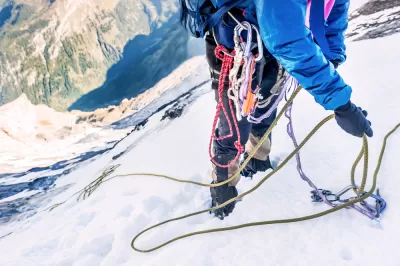
Every year, for a few days in May, the winds whipping Mount Everest subside slightly. The ice softens, and that’s when adventurous climbers start to scale the slopes. High altitudes and thin air are ever-present dangers every season. This year, though, presents a special and equally hazardous obstacle: traffic jams.
The Washington Post reports that more tourists applied for climbing permits this year than in any of the last 60 years, and Nepal officials said up to 800 people could be trying to reach the summit at once. That could create delays as travelers wait to pass—and standing still or moving too slowly in the cold temperatures can quickly lead to frostbite. A year with 600 climbers saw a death toll of 11; this season, 10 people have already died on the mountain.
Read the full story: Mount Everest is so crowded this year, there is a risk of ‘traffic jams’

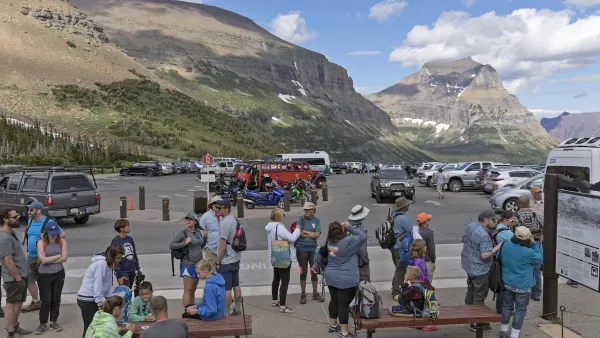
Glacier National Park drops reservation requirement, plans to double down on shuttle network
Since 2021, visitors with cars have had to make a reservation to access the park.
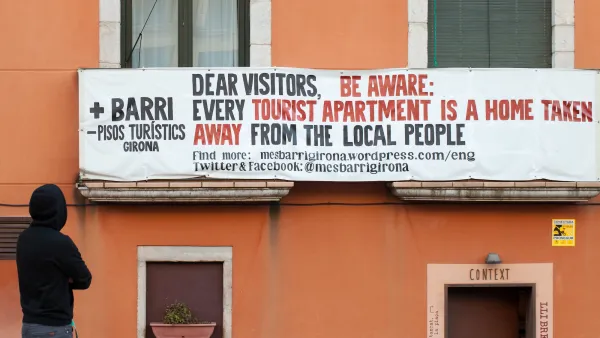
Spain Fines Airbnb $75 Million After Crackdown on Unlicensed Rentals
The government took action after residents in tourist centers protested, blaming tourist rentals for a growing housing crisis.
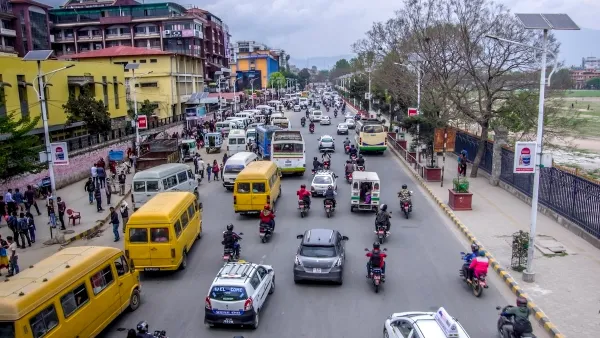
The Small South Asian Republic Going all in on EVs
Thanks to one simple policy change less than five years ago, 65% of new cars in this Himalayan country are now electric.

Planetizen Federal Action Tracker
A weekly monitor of how Trump’s orders and actions are impacting planners and planning in America.

Amtrak, CN end decades-long dispute with eight-year agreement
The new operating agreement establishes an updated framework for the companies to work together, including processes to resolve disputes.

Judges permit Denver to divert 77,000 acre feet from the Colorado River for reservoir expansion
Overuse and climate change have caused the Colorado River’s water levels to plummet.

'Something we’ve never seen before:' rising utility rates could strain city finances nationwide
Data centers, climate change and other factors have caused utility rates in the United States to increase by 38% since 2020.

Trump to overrule local leaders, lease millions of acres of America’s Pacific Island territories’ seafloors to mining companies
International law says that the Indigenous people of America’s territories have a right to prior and informed consent regarding projects that impact their countries.

A ‘shady’ deal: Chicagoans rally against planned Amtrak maintenance facility
The $900 million facility would allow Amtrak to maintain entire trains in one building, which the company says will reduce delays.

FREE Course: Walkable City 1: Why Walkability?
After describing his path towards focusing on walkability as the essence of good planning, Jeff Speck marches through his five principal reasons for making more walkable places.
Reinventing Malls: Planning Alchemy—Turning Gray Fields Into Gold
The course focuses on the opportunities and imperatives that shape reinvention of mall sites.

KFH Group Inc.
Greater Baltimore Committee
Eagle County Government
The Architects Foundation
University of Cincinnati Online
The Pocatello Development Authority
The Urban Renewal Agency of the City of Pocatello