After a wet winter, California's historic drought is over for now. But larger stores of groundwater stored in natural aquifers, steadily depleting, will be difficult to refill.


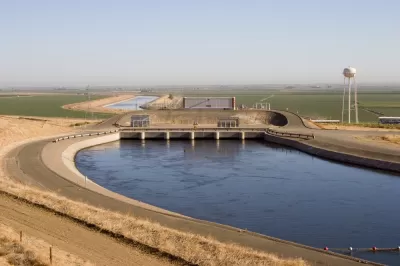
California's past winter was a lot wetter than the last few, replenishing reservoirs and snowpack in a drought-afflicted state. "Thomas Harter, a professor with the [University of California, Davis] Department of Land, Air and Water Resources, says the rainy winter will make a dent in the state's groundwater deficit, especially for the Central Valley."
However, Alastair Bland reports, groundwater levels are still declining over the long term and it's hard to refill deep aquifers. "The challenge, then, will be for Californians to identify methods for diverting surplus surface water during wet winters into areas where it can sink into the ground and recharge overdrawn aquifers."
These groundwater reserves are much larger than the total volume of snowpack and reservoirs. But last winter, a lot of precipitation drained into the ocean rather than the aquifers (which can collapse when they're overdrawn, permanently reducing capacity). Harter says the best way to refill them would be to let surplus flows drain through agricultural lands.
Read the full story: How Wet Weather Impacted California’s Groundwater Deficit

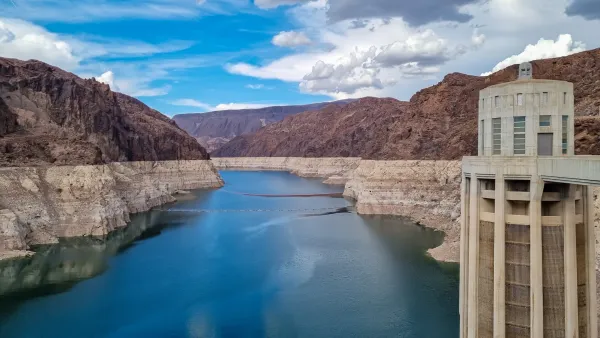
Shrinking Colorado River Aquifers Make up 65% of the Basin’s Water Loss
Satellite data reveals that the Colorado River’s groundwater has decreased dramatically since the start of the century.
Grant Program Will Pay California Farmers To Repurpose Fallow Land
A new state grant program will help California farmers convert idle land to new purposes in an effort to mitigate the environmental and economic effects of drought on the state's Central Valley.
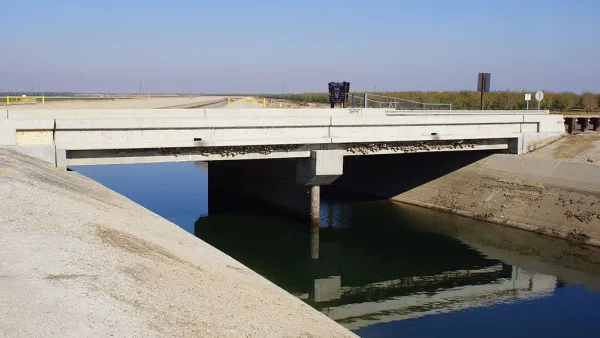
Voters to Decide on Repair of Vital Aqueduct for San Joaquin Valley
California voters in November will have the opportunity to help repair the Friant-Kern Canal, damaged by subsidence, as well as invest in watershed conservation programs, by passing a citizen-initiated $8.9 billion general obligation bond measure.

Planetizen Federal Action Tracker
A weekly monitor of how Trump’s orders and actions are impacting planners and planning in America.

Amtrak, CN end decades-long dispute with eight-year agreement
The new operating agreement establishes an updated framework for the companies to work together, including processes to resolve disputes.
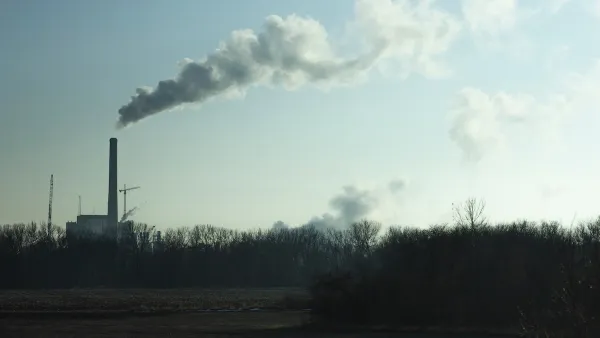
Nation's most wind-powered state turns to coal as data centers increase energy demand
For the first time in decades, Iowa has increased its generation of coal power.

Alabama scores up to $2.5 billion federal loan for largest infrastructure project in state’s history
The Mobile River Bridge and Bayway Project aims to ease congestion at Alabama’s worst bottleneck.

Trump is considering data centers on 6 states' public land — some state officials say they had no idea
If the administration approves the proposed projects, data center and data center-related developments will cover 17,600 acres of public land.

Despite court ruling, Trump is keeping nearly all wind projects in the US on hold
At least 110 wind energy projects have not heard from the government since a federal judge ruled that the Trump administration's freeze on wind turbine clearances was likely illegal.

FREE Course: Walkable City 1: Why Walkability?
After describing his path towards focusing on walkability as the essence of good planning, Jeff Speck marches through his five principal reasons for making more walkable places.
Reinventing Malls: Planning Alchemy—Turning Gray Fields Into Gold
The course focuses on the opportunities and imperatives that shape reinvention of mall sites.

KFH Group Inc.
Greater Baltimore Committee
Eagle County Government
The Architects Foundation
University of Cincinnati Online
The Pocatello Development Authority
The Urban Renewal Agency of the City of Pocatello