A Chicago city park, recently redesigned to be more welcoming, could become less so in its final form. Neighbors complaining about "really shady" park visitors are lobbying for a 6-foot fence to be included in the park's multi-million dollar revamp.


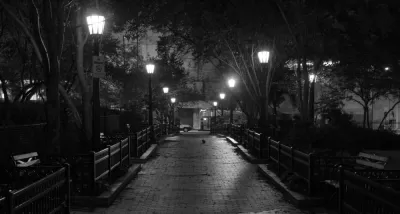
A small park near Chicago's Magnificent Mile, called Seneca Park, was recently redesigned by Chicago-based Site Design Group, but neighbors are complaining that the proposed design would make the park too welcoming for people they don't want hanging around their homes.
"The city aimed to make the park more inviting, in part by removing what it thought was an imposing fence surrounding the property," David Matthews writes for DNA Info. Neighbors disagreed, claiming that "really shady" visitors sometimes gather in the park in large groups and as early as 5:30 in the morning. "Parks officials tried to assuage neighbors' fears by proposing a 4-foot-tall fence around the park. But that wasn't tall enough for some people who attended the meeting," Mathews writes.
Read the full story: Streeterville Park Needs 6-Foot-Tall Fence To Keep Criminals Out: Neighbors


The Race Barriers of American Cities
The United States has a long and insidious history of erecting structures to control the movements of African Americans in urban and suburban spaces.
Don't Call it The 606: Chicago's Popular Linear Park Gets a New Name
The Chicago Park District wants to be extra sure we're all clear on this.
Dog Parks and Gentrification
When is a dog park more than just a park for dogs?

Planetizen Federal Action Tracker
A weekly monitor of how Trump’s orders and actions are impacting planners and planning in America.

Amtrak, CN end decades-long dispute with eight-year agreement
The new operating agreement establishes an updated framework for the companies to work together, including processes to resolve disputes.

Northwest rail fans eager for Sept. 30 debut of Amtrak’s Airo fleet
Get ready for that new train smell and more seats. But they won’t go faster or run more frequently on the Cascades route in Washington and Oregon.

Brightline Florida files for bankruptcy
The transit company is over $5 billion in debt.

St. Louis Metro to test if single-car trains can reduce operating costs, maintain rider satisfaction
The pilot program will run from October to spring 2027, and begin with one single-car train operating on Metrolink’s Red and Blue lines.

Pennsylvania is building data centers in abandoned mines
Housing data centers in mines provides an alternative to destroying local forests and may spare residents from data centers’ noise and air pollution.

FREE Course: Walkable City 1: Why Walkability?
After describing his path towards focusing on walkability as the essence of good planning, Jeff Speck marches through his five principal reasons for making more walkable places.
Reinventing Malls: Planning Alchemy—Turning Gray Fields Into Gold
The course focuses on the opportunities and imperatives that shape reinvention of mall sites.

City of Thousand Oaks
City of Wisconsin Rapids
Harvard University Graduate School of Design
The Architects Foundation
University of Cincinnati Online
The Pocatello Development Authority
The Urban Renewal Agency of the City of Pocatello