Parking lots at MARTA stations have been filling up quickly as Atlantans adjust to their commutes without I-85, after the major freeway collapsed earlier this week.


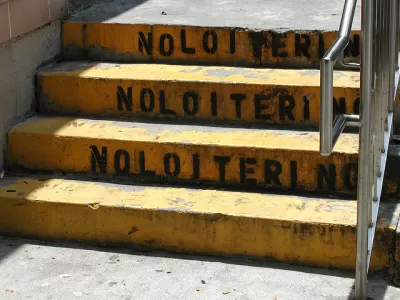
"As The Atlanta Journal-Constitution reported last week, MARTA has seen a big boost in passengers since I-85 collapsed in Atlanta March 30," writes David Wickert. "The agency hopes to take advantage of the opportunity, turning frustrated commuters into long-term customers."
"Among the steps MARTA has taken to entice commuters: It has added more than 2,400 parking spaces at various stations since the I-85 bridge collapsed," reports Wickert. The new spaces have been spread around different stations—no word about what uses previously occupied the space now devoted to the storage of cars.
Planetizen has been watching as Atlantans avoided the worst outcomes of a potential Carmageddon and the good humor used by Atlanta residents to cope with a series of highway and road mishaps around the region.
Read the full story: MARTA adds parking spaces to court frustrated commuters
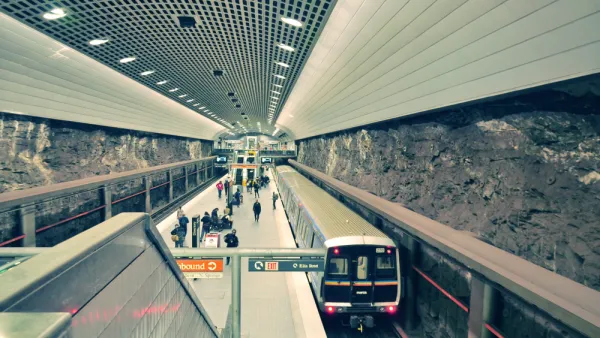
$300 Million in Train Station Improvements Coming to Atlanta
Work on MARTA's Rail Station Rehabilitation Program will continue over several years, with some big changes for Downtown Atlanta included in the plan.

A Look at Accessibility in Atlanta
A wheelchair user describes what it's like to travel on Atlanta streets and on the city's public transit system.
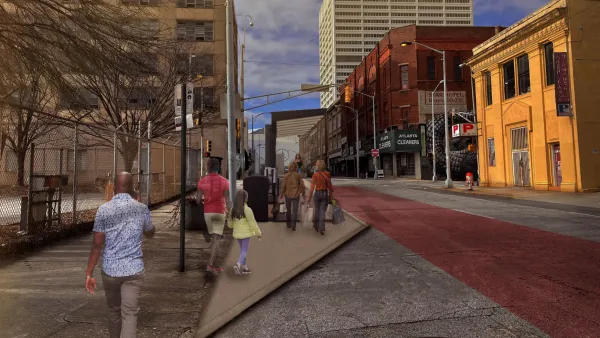
Atlanta's first BRT line opens April 18
MARTA officials say the line will operate like 'rail on rubber tires' and guarantee headways of 15 minutes or less.

Planetizen Federal Action Tracker
A weekly monitor of how Trump’s orders and actions are impacting planners and planning in America.

California plans to bury El Niño’s downpour
If the state plays its cards right, it may be able to store a billion acre-feet of El Niño’s water in aquifers.

Desperate measures: Advocates weigh draining Lake Powell to fill Colorado River
Draining the reservoir could reduce evaporation losses by a couple hundred thousand acre-feet.

Mamdani’s pied-à-terre tax survives legal challenge
A panel of judges found that the plaintiffs failed to demonstrate injury as a result of New York City's implementation of the tax.

Eastern Nebraska is running out of electricity
Data centers and electrification are straining eastern Nebraska’s grid, throttling economic development.

Seattle passes record-breaking transit services expansion
Proposition 1 will double the city’s transit tax to add 95,000 more bus trips and preserve 180,000 bus trips annually.

FREE Course: Walkable City 1: Why Walkability?
After describing his path towards focusing on walkability as the essence of good planning, Jeff Speck marches through his five principal reasons for making more walkable places.
Reinventing Malls: Planning Alchemy—Turning Gray Fields Into Gold
The course focuses on the opportunities and imperatives that shape reinvention of mall sites.

City of Rosemead
Rutgers University, Edward J. Bloustein School of Planning and Public Policy
One Hundred Miles
University of Michigan School for Environment and Sustainability (SEAS)
Hunter College, City University of New York (CUNY)
The Architects Foundation
City of Cambridge
Montrose County
The Pocatello Development Authority