Real-time arrival clocks have been in operation on New York's numbered subway lines since 2006, but they'll soon be on the way for lettered lines as well.


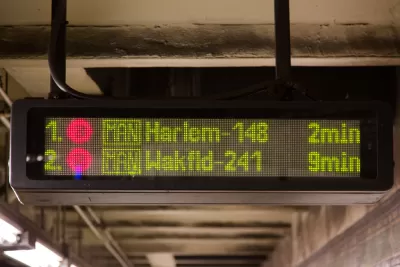
In the commuter driven world of New York City, a simple technological advancement like estimated real-time arrival information is a big change for the city's subway lines, according to an article by Oscar Perry Abello. How much will it mean to New Yorkers, however, is the question Perry Abello investigates.
Given many New Yorkers' devotion to habit and routine, according to Perry Abello, "it’s hard to imagine the extent to which real-time train arrival information displays will somehow stoke changes in New Yorkers’ lives so drastic as to alter where they live or how they get to work."
Perry Abello identifies some of the potential benefits of the arrival clocks, beyond the obvious. One of the key messages that the new clocks send to riders: that the MTA keeps its promises—even years after the promises were made.
Read the full story: Countdown Clocks: What’s Real-Time Train Info to a New Yorker?
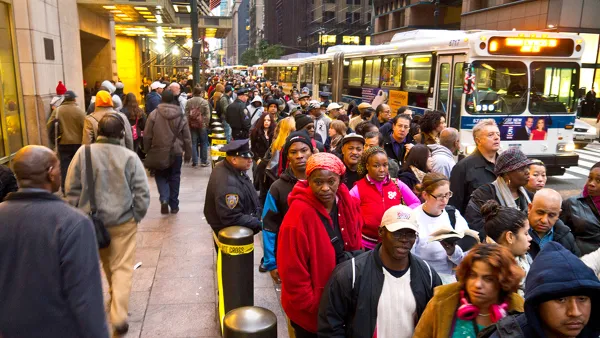
New York MTA Committed to Improving Bus Bunching
The New York MTA is on a mission to mitigate bus bunching, the telltale sign of unreliable service.
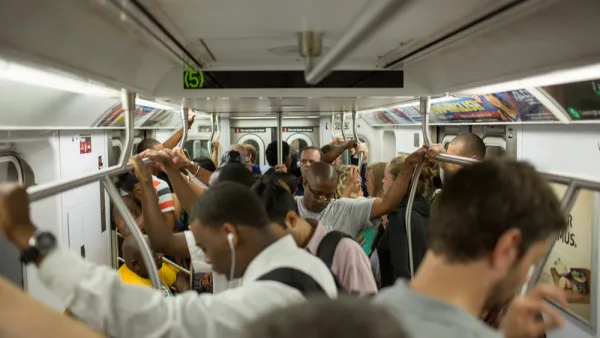
New York Subway Service Lags as Ridership Grows
Increasing ridership, coupled with decreasing service, means a very crowded subway system in New York City.
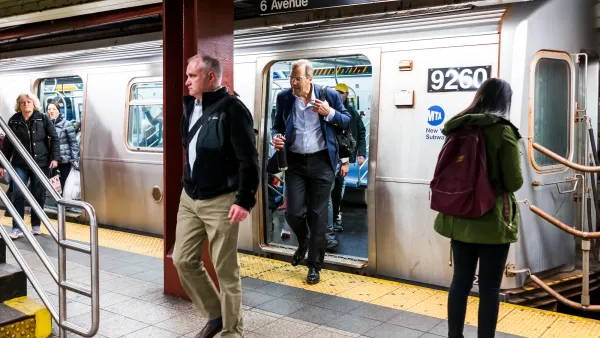
NYC to Upgrade 1/3 of its Subway Car Fleet
The MTA is seeking proposals for up to 2,390 new subway cars to upgrade its aging fleet.

Desperate measures: Advocates weigh draining Lake Powell to fill Colorado River
Draining the reservoir could reduce evaporation losses by a couple hundred thousand acre-feet.

Eastern Nebraska is running out of electricity
Data centers and electrification are straining eastern Nebraska’s grid, throttling economic development.

Malls are becoming the midtowns of the future
Mall and office park redevelopments are a generational opportunity to create new nodes of urbanity.

NYC breaks ground on anti-flooding infrastructure project
New York City's new system will reduce stormwater flows to local sewers by 90%.

One Kentucky town’s secret to affordable housing
The Smoketown Community Land Trust has already built seven affordable homes for community members.

Houston gains petal-shaped cooling infrastructure to make streets more ‘delightful’
The city has installed the pavilions along 15 blocks in Houston.

FREE Course: Walkable City 1: Why Walkability?
After describing his path towards focusing on walkability as the essence of good planning, Jeff Speck marches through his five principal reasons for making more walkable places.
Reinventing Malls: Planning Alchemy—Turning Gray Fields Into Gold
The course focuses on the opportunities and imperatives that shape reinvention of mall sites.

City of Rosemead
Rutgers University, Edward J. Bloustein School of Planning and Public Policy
One Hundred Miles
University of Michigan School for Environment and Sustainability (SEAS)
Hunter College, City University of New York (CUNY)
The Architects Foundation
City of Cambridge
Montrose County
The Pocatello Development Authority