A decade ago, Providence considered a streetcar for land that once moved cars along the former path of Route 195. Now transit planners have once again shifted gears, targeting a high-frequency bus corridor for the area.


"What began as a plan to revive the streetcar era in Providence has evolved into something simpler, a high-frequency downtown bus corridor to improve mass transit in Rhode Island and help reverse years of ridership declines," reports Patrick Anderson.
"Financed in large part through a $13-million federal grant, the $17-million corridor will funnel seven existing Rhode Island Public Transit Agency bus lines into a 1.4-mile route from the Providence train station to the cluster of hospitals on the upper South Side," adds Anderson.
The article includes more details about the hopes for the proposed transit corridor, while also explaining the benefits of frequency for a lay audience. To make the case, Anderson calls on Jarrett Walker, who says Providence's new bus plan is a "very smart way to go."
Read the full story: RIPTA plan: Every 5 minutes, a bus from Providence Station to hospitals

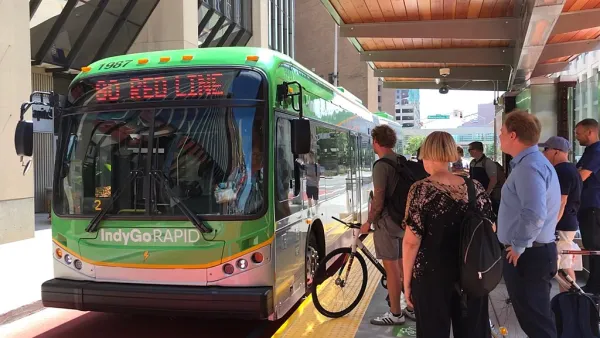
IndyGo Revisits the Bus System Redesign it Paused for the Pandemic
The IndyGo board of directors scrapped a bus system redesign planned for launch in June 2020 as part of its Covid-19 emergency response. The transit agency is now seeking public feedback on a new map with similar changes.
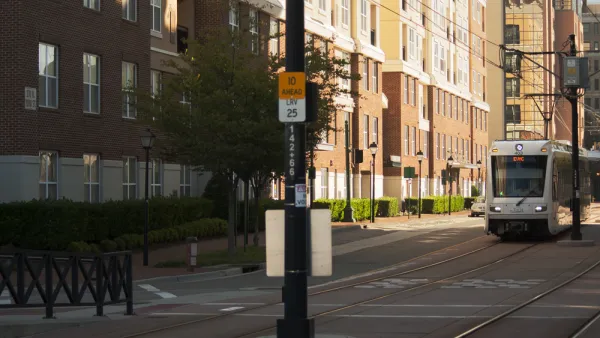
Next Up for Bus System Redesign: Norfolk, Virginia
The Norfolk City Council will vote in February on a draft transit system redesign organized around the principle of a high frequency grid, similar to system redesigns in other cities in recent years.
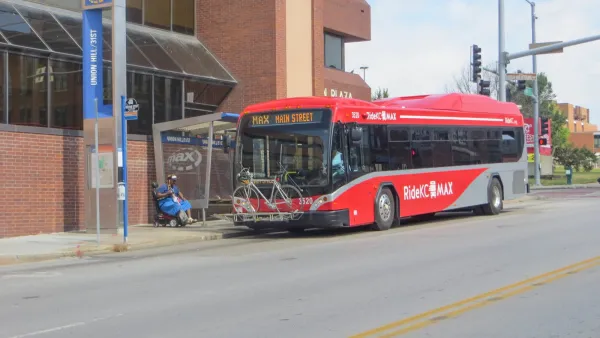
Draft RideKC Bus System Redesign Announced
The RideKC bus system is being redesigned on a high frequency grid.

Planetizen Federal Action Tracker
A weekly monitor of how Trump’s orders and actions are impacting planners and planning in America.

California plans to bury El Niño’s downpour
If the state plays its cards right, it may be able to store a billion acre-feet of El Niño’s water in aquifers.

Chicago breaks ground on $3 billion megadevelopment
The new neighborhood, titled Foundry Park, will one day host 3,700 residences.

California High-Speed Rail Authority CEO resigns after $600,000 scandal
Under Ian Choudri, the authority used taxpayer dollars to fund first class flights and trips to nightclubs.

Want to study the Missouri River? Soon, you may need unanimous approval from 10 states
Legislation would require 10 governors’ permission to study or build projects moving water outside the basin.

Desperate measures: Advocates weigh draining Lake Powell to fill Colorado River
Draining the reservoir could reduce evaporation losses by a couple hundred thousand acre-feet.

FREE Course: Walkable City 1: Why Walkability?
After describing his path towards focusing on walkability as the essence of good planning, Jeff Speck marches through his five principal reasons for making more walkable places.
Reinventing Malls: Planning Alchemy—Turning Gray Fields Into Gold
The course focuses on the opportunities and imperatives that shape reinvention of mall sites.

City of Rosemead
Rutgers University, Edward J. Bloustein School of Planning and Public Policy
One Hundred Miles
Hunter College, City University of New York (CUNY)
The Architects Foundation
University of Cincinnati Online
City of Cambridge
Montrose County
The Pocatello Development Authority