The American Society of Landscape Architects this week announced a list of green infrastructure priorities, full of specifics, without mentioning the Trump Administration.


"The American Society of Landscape Architects (ASLA) urges policy makers and stakeholders to support an infrastructure plan that not only addresses today’s crumbling infrastructure, but also creates tomorrow’s resilient systems," according to a post on The Dirt.
The post lays out a four-point agenda, with detailed descriptions of the challenge, and specific policy and funding priorities to support each of the organizing principles:
- Fixing our nation's water infrastructure
- Upgrading to a multimodal transportation network
- Recognizing public lands, parks, and recreation as critical infrastructure
- Designing for resilience
Never mentioned is the Trump Administration's initial actions, its draft budget proposal, or President Trump's promises of a $1 trillion infrastructure investment. Reading over this agenda, however, it's clear that the ASLA's infrastructure plan is not meant only for the federal government to implement. Local, state, and international action can also play a key role in implementing the vision described by the ASLA, as well as professionals in landscape architecture, planning, and other related design and engineering fields. For the record, the ASLA has already joined the American Planning Association in expressing disappointment with the Trump Administration's proposed federal budget.
Read the full story: ASLA Outlines Infrastructure Priorities
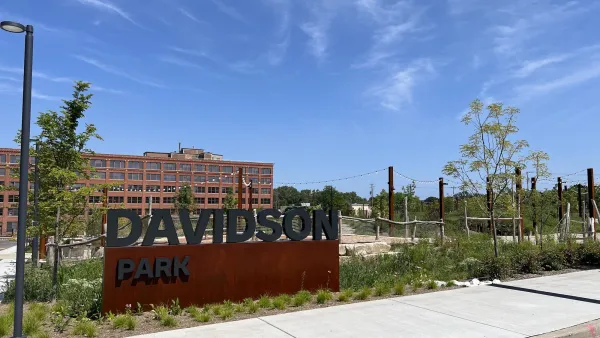
Harley-Davidson turned a Milwaukee parking lot into a green oasis
The park, adjacent to Harley-Davidson headquarters, doubles as stormwater retention infrastructure.
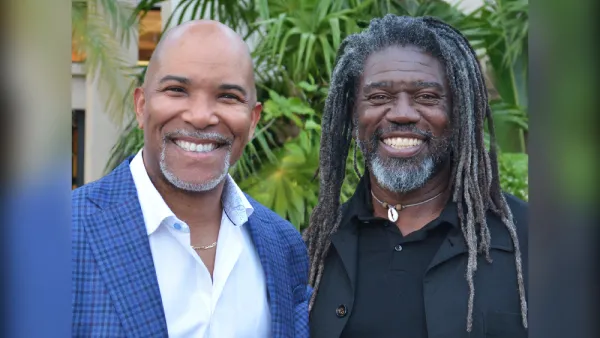
In a Warmer, Wetter and More Disaster-prone World: “Nature is the Greatest Designer”
A conversation with the American Society of Landscape Architects’ CEO Torey Carter-Conneen and board president Kona Gray.
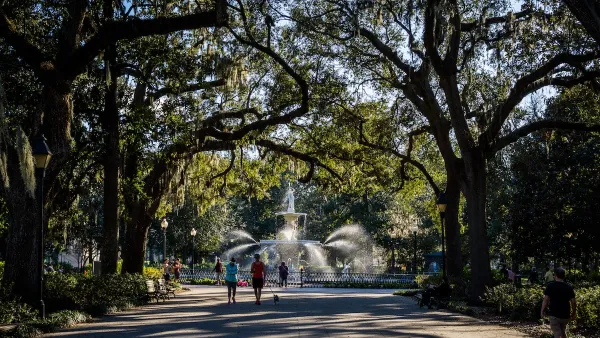
Survey: US Public Spaces Not Meeting Community Needs
A lack of funding prevents many U.S. parks and public spaces from playing a more significant role in helping residents meet daily needs.

Planetizen Federal Action Tracker
A weekly monitor of how Trump’s orders and actions are impacting planners and planning in America.

California plans to bury El Niño’s downpour
If the state plays its cards right, it may be able to store a billion acre-feet of El Niño’s water in aquifers.

Desperate measures: Advocates weigh draining Lake Powell to fill Colorado River
Draining the reservoir could reduce evaporation losses by a couple hundred thousand acre-feet.

US buildings threatened, destroyed by fires set to triple by 2060
Researchers found a high fire risk for socioeconomically vulnerable neighborhoods in the American West.

LA residents may be allowed to paint their own crosswalks
Councilwoman Katy Yaroslavsky put out a motion instructing the Los Angeles Department of Public Transportation to study the feasibility of allowing volunteers to paint crosswalks.

Dallas moves to overhaul its zoning code
The city's zoning reform will allow more multi-family and mixed-use developments.

FREE Course: Walkable City 1: Why Walkability?
After describing his path towards focusing on walkability as the essence of good planning, Jeff Speck marches through his five principal reasons for making more walkable places.
Reinventing Malls: Planning Alchemy—Turning Gray Fields Into Gold
The course focuses on the opportunities and imperatives that shape reinvention of mall sites.

City of Rosemead
Rutgers University, Edward J. Bloustein School of Planning and Public Policy
One Hundred Miles
Hunter College, City University of New York (CUNY)
The Architects Foundation
University of Cincinnati Online
City of Cambridge
Montrose County
The Pocatello Development Authority