Fire standards and street design manuals, meant to protect people, actually make them less safe by damaging walkability and encouraging driving—a classic example of silo thinking.


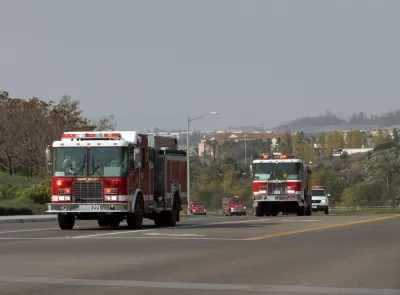
"Of all the urbanism specialists with tunnel vision, fire chiefs, fire marshals, and traffic engineers are probably the most dangerous. And by “dangerous,” I don’t just mean that they’re a threat to good urbanism; they also get people killed, which is exactly the opposite of what they are commissioned to do. A classic example of their silo thinking is playing out right now in Celebration, Florida, where the proposed measures of eliminating on-street parking spaces and eliminating street trees will almost certainly leave Celebration a less safe place than it is today.
Let’s look at things from both a common-sense perspective and a data-driven perspective. Getting rid of street trees does some really bad things for safety: First, it eliminates the first line of defense for those who are walking or biking on the sidewalk (when the streets are too dangerous for biking). A car crashing into a tree at 35 miles per hour will deploy the airbags, but the driver and passengers will likely walk away with little more than bruises. But a car traveling 35 miles per hour that crashes into someone who is biking or walking will likely kill them. Higher speed = more deaths and injuries..."
"...the logical conclusion is that our traffic engineering standards are killing about 23,000 people per year in the US! As with fire standards, traffic engineers should be embracing traditional urbanism with open arms because it saves so many lives per year!"
Read the full story: How Fire Chiefs & Traffic Engineers Make Places Less Safe

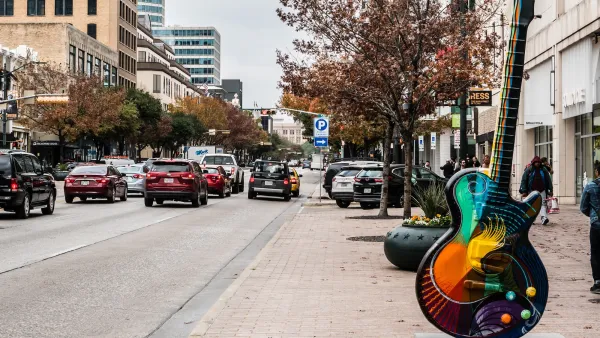
Austin Kicks off Multimodal Congress Avenue Redesign
The Congress Avenue Urban Design Initiative is bringing new pedestrian infrastructure and ‘storefront activation zones’ to the popular street.
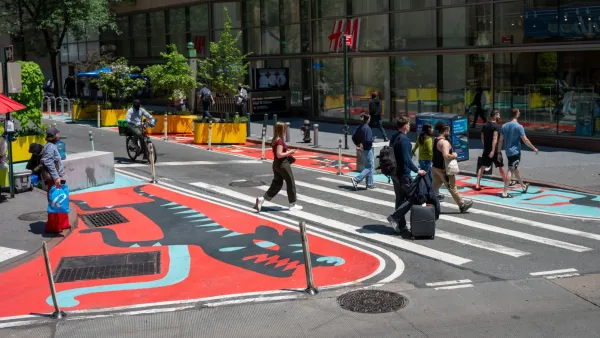
See Downtown Brooklyn’s Dramatic Complete Streets Transformation
A streetscape redesign spearheaded by the Downtown Brooklyn Partnership has quickly made many of Brooklyn’s streets unrecognizable.
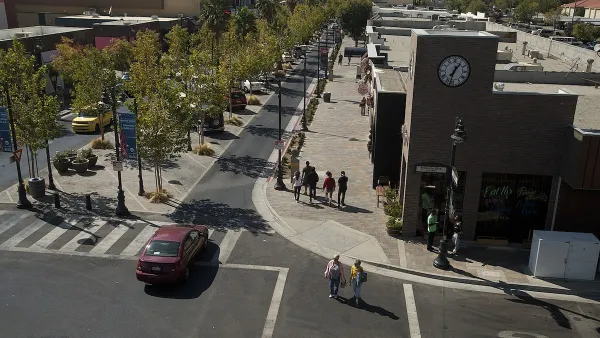
The Vast Potential of the Right-of-Way
One writer argues that the space between two building faces is the most important element of the built environment.

Planetizen Federal Action Tracker
A weekly monitor of how Trump’s orders and actions are impacting planners and planning in America.

Amtrak, CN end decades-long dispute with eight-year agreement
The new operating agreement establishes an updated framework for the companies to work together, including processes to resolve disputes.

Judges permit Denver to divert 77,000 acre feet from the Colorado River for reservoir expansion
Overuse and climate change have caused the Colorado River’s water levels to plummet.

NYC DOT wants faster, more permanent street upgrades
The city is examining ways to build more concrete infrastructure without getting entangled in 'decades-long' projects.

'Something we’ve never seen before:' rising utility rates could strain city finances nationwide
Data centers, climate change and other factors have caused utility rates in the United States to increase by 38% since 2020.

Trump to overrule local leaders, lease millions of acres of America’s Pacific Island territories’ seafloors to mining companies
International law says that the Indigenous people of America’s territories have a right to prior and informed consent regarding projects that impact their countries.

FREE Course: Walkable City 1: Why Walkability?
After describing his path towards focusing on walkability as the essence of good planning, Jeff Speck marches through his five principal reasons for making more walkable places.
Reinventing Malls: Planning Alchemy—Turning Gray Fields Into Gold
The course focuses on the opportunities and imperatives that shape reinvention of mall sites.

Harvard University Graduate School of Design
KFH Group Inc.
Greater Baltimore Committee
The Architects Foundation
University of Cincinnati Online
The Pocatello Development Authority
The Urban Renewal Agency of the City of Pocatello