A seemingly innocuous idea for water recreation has turned into a legal headache for the city of Dallas. Still, the Army Corps of Engineers isn't budging on its declaration of the river as navigable.


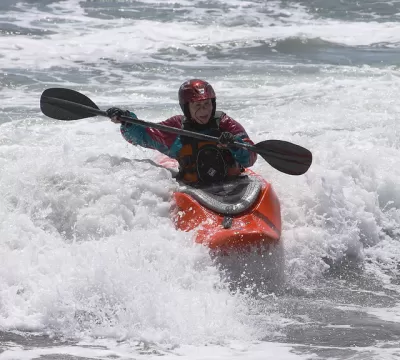
"The U.S. Army Corps of Engineers has balked at the city's request to declare the Trinity River unnavigable," reports Tristan Hallman. The city sought the declaration of the river as "navigable downstream-only" in the hopes of setting the legal foundation for a lawsuit against the designer of a whitewater park on the river.
According to the article, the city is hoping to avoid the "multimillion-dollar repair or removal costs of the standing wave underneath the Santa Fe Trestle. The bypass channels for the $4 million whitewater feature, opened in 2011, are more dangerous than expected and don't allow for upstream navigability for casual boaters as the city had promised."
The Army Corps of Engineers refused the request of the city, saying river was previously used by recreational boats, both upstream and downstream, and there was no reason to disallow those traditional uses in the future. City Attorney Larry Casto has described that description of the Trinity River as "a vestige of a bygone era," according to Hallman's summary of the two conflicting opinions on the subject.
The city of Dallas might have recalled the long-term consequences of a decision to declare an urban river non-navigable, as in the example of Los Angeles River, instead of settling for the short-term reward of this lawsuit.
The Dallas Park and Recreation Department informed the design firm, Arlington-based Schrickel, Rollins and Associates, of its intention to sue in January.
FULL STORY: Lawsuit likely after Army Corps tells Dallas City Hall the Trinity River is indeed navigable

No More Whitewater in Dallas
A whitewater feature built into the Trinity River in Dallas will have to go—it rendered the river unnavigable and thus breached the terms granted by a U.S. Army Corps of Engineers permit.
Army Corps Finally Clears Way for Dallas' Trinity River Project
A long time coming—the U.S. Army Corps of Engineers now supports a comprehensive plan to transform the Trinity River in Dallas.
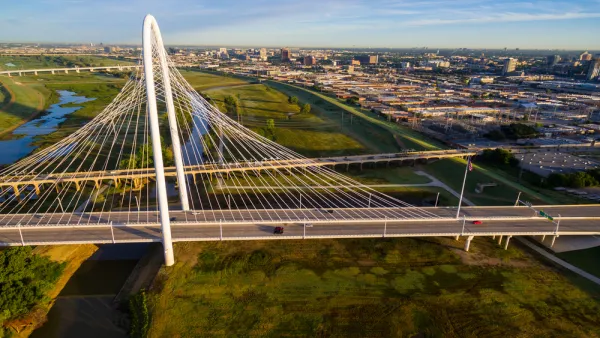
First Look at the Planned Trinity Park in Dallas
Dreams look a lot more like reality this week in Dallas.

The state-sanctioned urbicide of Austin
People don’t kill cities. Freeways do.

US to reduce Colorado River water deliveries to Mexico
A new Colorado Treaty amendment reduces Mexico’s Colorado River water allocation by 250,000 acre feet.

New Jersey’s second-largest city bans standalone data centers
Jersey City will continue to allow co-location facilities, such as those meant for research institutions that store their own data.

Amtrak not solely to blame for New Jersey commuter rail's unreliability, report finds
A new study from the Garden State Initiative found that NJ Transit’s budget grew 20% across a 4 year period, but reliability declined significantly over the same period.

EPA erases limits on planet-warming pollution from power plants
Under Monday’s plan, power plants would still have some limits on how much mercury, arsenic and other contaminants they can emit.

Phoenix announces new on-demand transit service, more frequent RAPID buses
Both new services will launch in October, and are part of Phoenix's Project Effective Access Solutions for Easing Congestion.

FREE Course: Walkable City 1: Why Walkability?
After describing his path towards focusing on walkability as the essence of good planning, Jeff Speck marches through his five principal reasons for making more walkable places.
Reinventing Malls: Planning Alchemy—Turning Gray Fields Into Gold
The course focuses on the opportunities and imperatives that shape reinvention of mall sites.

Eagle County Government
Harvard University Graduate School of Design
Nashville Planning Department
The Architects Foundation
University of Cincinnati Online
The Pocatello Development Authority
The Urban Renewal Agency of the City of Pocatello
Journal of the American Planning Association