Here's a surprising anecdote from the real estate market: there's no right way to measure square footage.


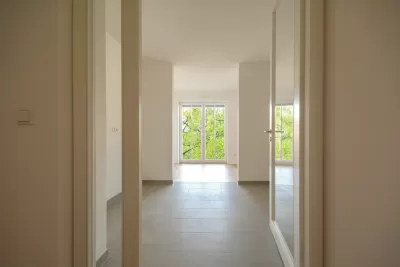
"How big is your house? It depends on whom you ask," according to an article by Alina Dizik.
"There is no national standard when calculating square footage. Appraisers, builders, developers, real-estate agents, tax assessors and architects may each measure spaces differently," explains Dizik. "Some calculate space based on a home’s overall 'footprint.' Others include only interior dimensions of finished living space. Counting square footage also varies by region, so things like balconies, basements and garages are counted in one market, but excluded in another."
The discrepancies in measurements create confusion and surprises for consumers, especially when the measurements of appraisers don't reconcile with the measurements state and local governments use for tax purposes.
For the purposes of managing that confusion, Dizik recommends checking the sources of measurements quoted by real estate agents, "specifically inquiring about private outdoor terraces, the garage, the basement, and utility closets or staircases." Also recommended: "focus on the dimensions of individual rooms, such as the great room, kitchen and bedrooms, which helps potential buyers visualize their living spaces."
[This Wall Street Journal article might be behind a paywall for some readers.]
Read the full story: How Big Is Your House? That Depends

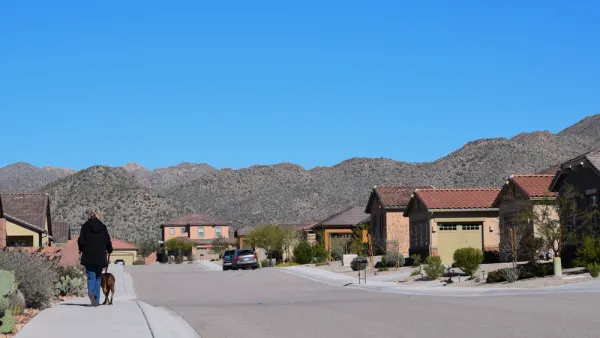
Institutional Investors Gaining a Larger Footprint in the Housing Market, Report Says
The locations with the fastest growing populations are seeing the most dramatic increase in investor-owned single-family housing rentals.
Wall Street Suddenly Buying Fewer Single-Family Homes
Rising interest rates are having a major effect in the housing market—including on the large institutional investors who spent much of the past couple of years buying up single-family homes.
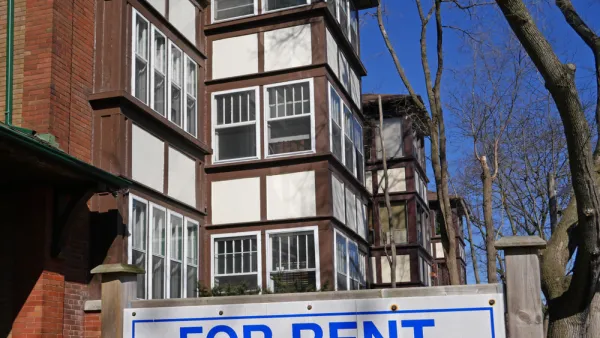
Renting on the Rise, With Consequences for Neighborhoods
A higher share of Americans are renters than at any point in decades. Neighborhoods all over the country, especially in downtowns, have many more renters than they did in 2010.

Planetizen Federal Action Tracker
A weekly monitor of how Trump’s orders and actions are impacting planners and planning in America.

Amtrak, CN end decades-long dispute with eight-year agreement
The new operating agreement establishes an updated framework for the companies to work together, including processes to resolve disputes.

Judges permit Denver to divert 77,000 acre feet from the Colorado River for reservoir expansion
Overuse and climate change have caused the Colorado River’s water levels to plummet.

NYC DOT wants faster, more permanent street upgrades
The city is examining ways to build more concrete infrastructure without getting entangled in 'decades-long' projects.

'Something we’ve never seen before:' rising utility rates could strain city finances nationwide
Data centers, climate change and other factors have caused utility rates in the United States to increase by 38% since 2020.

Trump to overrule local leaders, lease millions of acres of America’s Pacific Island territories’ seafloors to mining companies
International law says that the Indigenous people of America’s territories have a right to prior and informed consent regarding projects that impact their countries.

FREE Course: Walkable City 1: Why Walkability?
After describing his path towards focusing on walkability as the essence of good planning, Jeff Speck marches through his five principal reasons for making more walkable places.
Reinventing Malls: Planning Alchemy—Turning Gray Fields Into Gold
The course focuses on the opportunities and imperatives that shape reinvention of mall sites.

Harvard University Graduate School of Design
KFH Group Inc.
Greater Baltimore Committee
The Architects Foundation
University of Cincinnati Online
The Pocatello Development Authority
The Urban Renewal Agency of the City of Pocatello