A new city staff report on the proposed Scarborough Subway, still in planning stages in Toronto, made the project a much tougher sell for Mayor John Tory and other project supporters.


"The cost to build a one-stop subway extension in Scarborough has climbed to at least $3.35 billion as the estimate of new people expected to be drawn to the line has fallen," report Jennifer Pagliaro and Ben Spurr.
The previous estimate put the cost of the subway at $3.2 billion. The new $3.35 billion figure, however, doesn't include the cost of financing the project. Much of the new cost arises from planned changes at the new Scarborough Town Centre station. Pagliaro and Spurr detail the other evolutions of the project proposal throughout the article.
The estimates are included in a city staff report released at the end of February, which has inspired "fresh questions of value for money and providing the most transit for Scarborough residents," according to the article.
Mayor John Tory supports the project, so much so that he also pitched an additional light rail line to supplement the subway. The increased price tag for the subway could imperil that light rail compromise, according to the article.
Read the full story: Cost of Scarborough subway extension rises to $3.35 billion as number of new riders fall
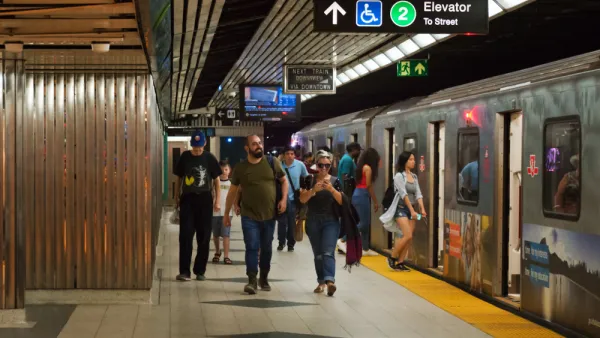
Toronto Subway Plan Gains Federal Backing
A key piece of the funding required to achieve Ontario Premier Doug Ford's vision for an expanded subway system in Greater Toronto Area clicked into place this week.
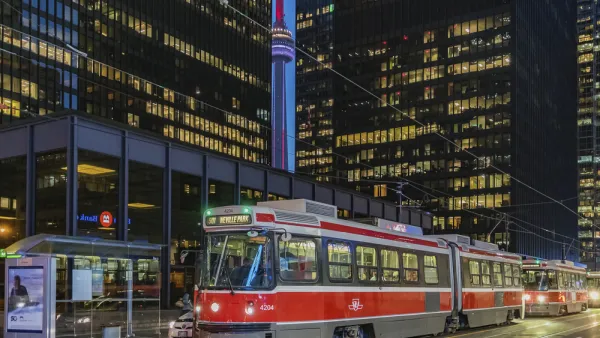
Cost Estimates Nearly Double for Toronto Light Rail Plan
Cost estimate for Toronto's proposed Eglinton East LRT have ballooned from $2.3 billion to as much as $4.4 billion.
Expedited Transit Planning Process Passed Into Law in Ontario
The controversial subway plan announced by Ontario Premier Doug Ford in April 2020 now has legislative support in the form of a new law that expedites the planning, design, and construction process for transit projects in the province.

Planetizen Federal Action Tracker
A weekly monitor of how Trump’s orders and actions are impacting planners and planning in America.

California plans to bury El Niño’s downpour
If the state plays its cards right, it may be able to store a billion acre-feet of El Niño’s water in aquifers.

Desperate measures: Advocates weigh draining Lake Powell to fill Colorado River
Draining the reservoir could reduce evaporation losses by a couple hundred thousand acre-feet.

Los Angeles just elected an urban planner as its mayor
Transportation analysts are optimistic that Raman will be more aggressive in addressing transit issues than Bass.

Mamdani’s pied-à-terre tax survives legal challenge
A panel of judges found that the plaintiffs failed to demonstrate injury as a result of New York City's implementation of the tax.

Eastern Nebraska is running out of electricity
Data centers and electrification are straining eastern Nebraska’s grid, throttling economic development.

FREE Course: Walkable City 1: Why Walkability?
After describing his path towards focusing on walkability as the essence of good planning, Jeff Speck marches through his five principal reasons for making more walkable places.
Reinventing Malls: Planning Alchemy—Turning Gray Fields Into Gold
The course focuses on the opportunities and imperatives that shape reinvention of mall sites.

City of Rosemead
Rutgers University, Edward J. Bloustein School of Planning and Public Policy
One Hundred Miles
University of Michigan School for Environment and Sustainability (SEAS)
Hunter College, City University of New York (CUNY)
The Architects Foundation
City of Cambridge
Montrose County
The Pocatello Development Authority