It's not just Oroville and Elko County. By 2020, 70 percent of the dams in the United States will be more than 50 years old.


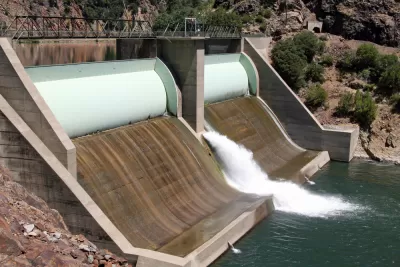
After the recent crises in Oroville, California and Elko County, Nevada, the New York Times surveys the state of America’s 90,000 dams.
In 2016, officials estimated that the repairs needed to bring the country's dams up to safety standards would cost $60 billion. Of that, about $20 billion would need to be prioritized for dams deemed "high hazard," or likely to cause loss of life in case of failure. The Oroville dam, built in the 1960s, has high hazard potential.
A bill pending in Congress would make grants available for the rehabilitation of publicly owned dams that don't meet safety requirements. But more than half of the dams in the United States are privately owned—including the Twentyone Mile Dam in Elko County, which was built in the early 1900s.
More data, infographics, and maps by clicking through to the original article.
Read the full story: America’s Aging Dams Are in Need of Repair

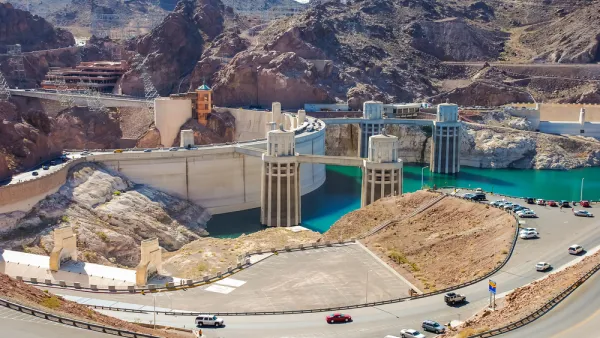
10 Water Policy and Infrastructure Realities
In celebration of Water Week in the United States, as well as World Water Day, as celebrated by the United Nations, Brookings has complied a list of ten facts about water policy and infrastructure.
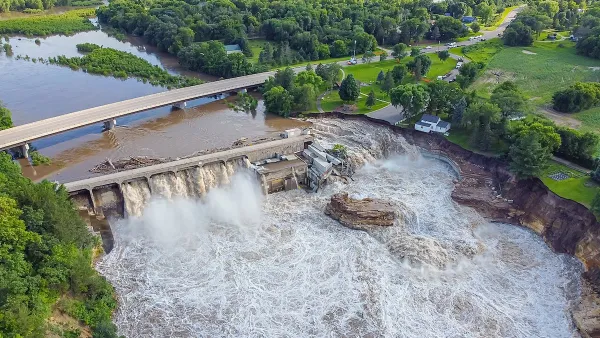
Minnesota Dam Failure Highlights Nationwide Danger
The Rapidan Dam isn’t the only one at risk of imminent failure.

Planning for the Worst May Have Saved Thousands in the Camp Fire
The city of Paradise was prepared for the Camp Fire when it ripped through the town last week, and it still wasn't enough to save everyone.

Planetizen Federal Action Tracker
A weekly monitor of how Trump’s orders and actions are impacting planners and planning in America.

Amtrak, CN end decades-long dispute with eight-year agreement
The new operating agreement establishes an updated framework for the companies to work together, including processes to resolve disputes.

Northwest rail fans eager for Sept. 30 debut of Amtrak’s Airo fleet
Get ready for that new train smell and more seats. But they won’t go faster or run more frequently on the Cascades route in Washington and Oregon.

St. Louis Metro to test if single-car trains can reduce operating costs, maintain rider satisfaction
The pilot program will run from October to spring 2027, and begin with one single-car train operating on Metrolink’s Red and Blue lines.

Pennsylvania is building data centers in abandoned mines
Housing data centers in mines provides an alternative to destroying local forests and may spare residents from data centers’ noise and air pollution.

If Corpus Christi can’t revive desalination plant project, it may owe Texas $235 million
Earlier this month, city officials declined to pursue developing the plant for the second time in a year.

FREE Course: Walkable City 1: Why Walkability?
After describing his path towards focusing on walkability as the essence of good planning, Jeff Speck marches through his five principal reasons for making more walkable places.
Reinventing Malls: Planning Alchemy—Turning Gray Fields Into Gold
The course focuses on the opportunities and imperatives that shape reinvention of mall sites.

City of Thousand Oaks
City of Wisconsin Rapids
Harvard University Graduate School of Design
The Architects Foundation
University of Cincinnati Online
The Pocatello Development Authority
The Urban Renewal Agency of the City of Pocatello