From warehouse to art studio to luxury loft: the SoHo model of industrial-zone gentrification has become familiar around the world. A team of New York-based designers developed a proposal for spreading the benefits of economic growth in these areas.


Last year, the nonprofit Institute for Public Architecture asked participants in its fellowship program to consider the design implications of New York City mayor Bill de Blasio’s pledge to create 1,500 affordable live/work spaces for artists and entrepreneurs. Amritha Mahesh, Thad Pawlowski, and Despo Thoma decided to focus on the relationship between economic growth and displacement in New York's gentrifying industrial zones. What would it take for these areas to be able to absorb new kinds of people and activities without land values rising to levels that only the super-wealthy can afford, they wondered?
The resulting proposal includes a new development model run by mission-based organizations, along with a building typology catering to small businesses and artists.
FULL STORY: Mission-driven gentrification?

Artists' Housing, Beyond the SoHo Loft Model
New York has promised to create 1,500 affordable live/work spaces for artists. Architect Emma Fuller believes that careful consideration of building typologies could make it easier to reach this target.
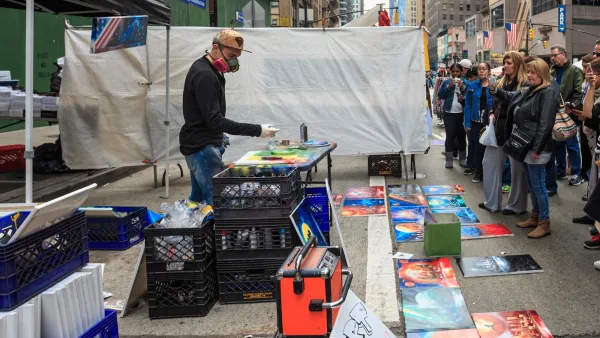
NYC has Lost 4% of its Resident Artists Since 2019
Advocates argue the city should build more affordable housing reserved for artists, who are being increasingly priced out.

A Bronx Community Fights to Have its Voice Heard
After organizing and giving input for decades, the community around the Kingsbridge Armory might actually see it redeveloped — and they want to continue to have a say in how it goes.

Planetizen Federal Action Tracker
A weekly monitor of how Trump’s orders and actions are impacting planners and planning in America.

The state-sanctioned urbicide of Austin
People don’t kill cities. Freeways do.

US to reduce Colorado River water deliveries to Mexico
A new Colorado Treaty amendment reduces Mexico’s Colorado River water allocation by 250,000 acre feet.

Mamdani overhauls NYC's Vision Zero plan with 100 new policy goals
The overhaul aims to reduce traffic deaths and make streets safer for pedestrians, cyclists and drivers through lower speed limits, new safety infrastructure and more.

Amtrak not solely to blame for New Jersey commuter rail's unreliability, report finds
A new study from the Garden State Initiative found that NJ Transit’s budget grew 20% across a 4 year period, but reliability declined significantly over the same period.

EPA erases limits on planet-warming pollution from power plants
Under Monday’s plan, power plants would still have some limits on how much mercury, arsenic and other contaminants they can emit.

FREE Course: Walkable City 1: Why Walkability?
After describing his path towards focusing on walkability as the essence of good planning, Jeff Speck marches through his five principal reasons for making more walkable places.
Reinventing Malls: Planning Alchemy—Turning Gray Fields Into Gold
The course focuses on the opportunities and imperatives that shape reinvention of mall sites.

Eagle County Government
Harvard University Graduate School of Design
Nashville Planning Department
The Architects Foundation
University of Cincinnati Online
The Pocatello Development Authority
The Urban Renewal Agency of the City of Pocatello
Journal of the American Planning Association