To avoid accidents and conserve fuel, UPS trucks sometimes take circuitous routes on their deliveries, avoiding left turns.


To avoid the delay of waiting for oncoming traffic to pass and to prevent accidents, UPS drivers do not turn left. "Although this might be going in the opposite direction of the final destination, it reduces the chances of an accident and cuts delays caused by waiting for a gap in the traffic, which would also waste fuel," reports Graham Kendall for Quartz.
According to the company, the policy saves lots of fuel, which translates to dollars, and reduced environmental impact. "Typically, only 10% of the turns are left turns. As a result, the company claims it uses 10 million gallons less fuel, emits 20,000 tonnes (22,000 tons) less carbon dioxide, and delivers 350,000 more packages every year," Kendall writes.
Read the full story: UPS drivers don’t turn left—and it saves them 10 million gallons of gas a year

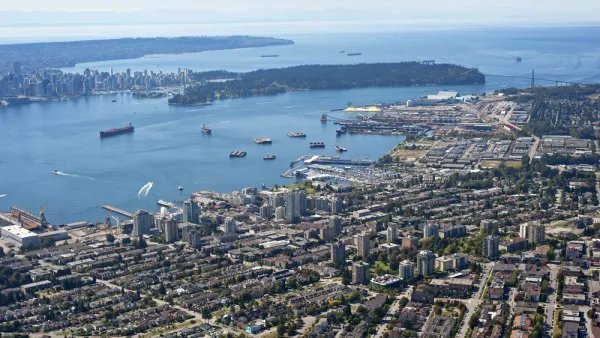
For Vancouver’s Carbon Footprint Reduction Plan, 2030 is the New 2040
Four months after formally recognizing climate change as an emergency, the Vancouver City Council considers six large-scale changes to dramatically reduce city-wide carbon emissions.
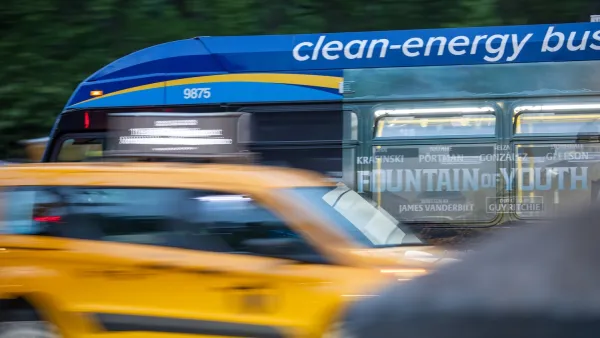
FTA Kills ‘Social Cost of Carbon’ in Transit Grant Criteria
The Capital Investments Grant program will no longer factor in the future impacts of carbon emissions.
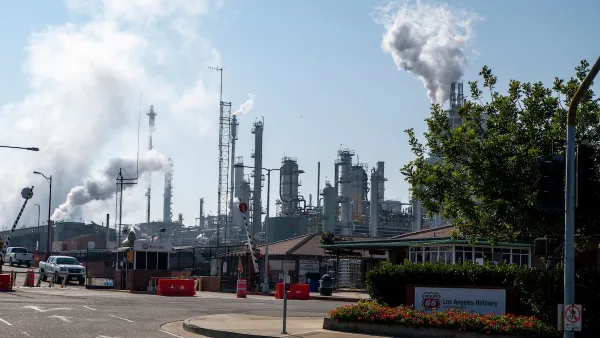
California’s Cap and Trade Program Up in the Air
The state’s carbon trading program is being attacked as ineffective from one side and overly onerous from the other.

Planetizen Federal Action Tracker
A weekly monitor of how Trump’s orders and actions are impacting planners and planning in America.

Amtrak, CN end decades-long dispute with eight-year agreement
The new operating agreement establishes an updated framework for the companies to work together, including processes to resolve disputes.

Northwest rail fans eager for Sept. 30 debut of Amtrak’s Airo fleet
Get ready for that new train smell and more seats. But they won’t go faster or run more frequently on the Cascades route in Washington and Oregon.

NYC to turn city-owned property into thousands of homes
The city has scheduled a public hearing regarding the development for October.

Buses travel at 5mph along this route in NYC. The Bronx's first-ever busway looks to change that
Prior to the busway, buses on the Bx36 route traveled as slowly as 5 miles per hour.

Pittsburg launches 'EZ permits,' aims for one-day turnaround for low-risk permits
The pilot ‘fast lane’ for permits is part of a bundle of modernization efforts for Pittsburg’s permitting process.

FREE Course: Walkable City 1: Why Walkability?
After describing his path towards focusing on walkability as the essence of good planning, Jeff Speck marches through his five principal reasons for making more walkable places.
Reinventing Malls: Planning Alchemy—Turning Gray Fields Into Gold
The course focuses on the opportunities and imperatives that shape reinvention of mall sites.

City of Thousand Oaks
City of Wisconsin Rapids
Harvard University Graduate School of Design
The Architects Foundation
University of Cincinnati Online
The Pocatello Development Authority
The Urban Renewal Agency of the City of Pocatello