A new feature-length documentary film raises the question of whether public transportation is a civil rights issue.


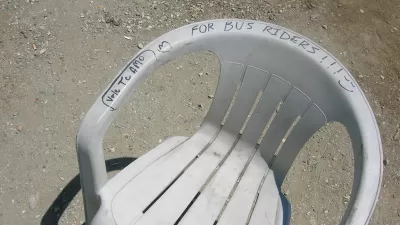
Mass Transit reports from a statement by the Greater Dayton RTA: "The feature-length documentary 'Free To Ride,' which tells the story of the years-long disagreement between the Greater Dayton RTA and the city of Beavercreek to expand public transportation in the community, will debut Feb. 17 at the Washington D.C. Independent Film Festival."
"The Beavercreek City Council initially blocked RTA’s 2011 proposal to extend its service onto Pentagon Boulevard to access jobs and educational opportunities there," explains the post. "The council’s decision was later challenged by [Leaders for Equality and Action in Dayton] LEAD. Ultimately, the federal government threatened to take back more than $10 million dollars in federal funding if Beavercreek blocked public transportation."
LEAD is also currently involved in an ongoing battle over transit planning in Miami Township, Ohio, over the location of bus stops near the Dayton Mall. The trailer for "Free to Ride," which lays out the stakes of the controversy in Beavercreek, can be played below.
The Official Trailer: Free To Ride from Kirwan Institute on Vimeo.
FULL STORY: Documentary Highlighting Dayton RTA Debuts at National Film Festival

A New Transit Equity Dashboard
New data technology has made it possible to measure transit equity in ways that were impossible before. TransitCenter is making good use of the new capabilities.
Taking Stock and Looking Forward: What's Next for Public Transit?
A group of 12 leading transit experts debriefed on the consequences of the pandemic for public transit, and proposed a future that centers public transit as a tool for economic recovery and righting the past wrongs of the planning profession.
An Ongoing Battle for Better Bus Stop Access
Advocacy groups in the Dayton, Ohio region have found repeated reasons to push malls and the RTA transit system for improved access to malls. Lawsuits and federal mandates have ensued.

The state-sanctioned urbicide of Austin
People don’t kill cities. Freeways do.

US to reduce Colorado River water deliveries to Mexico
A new Colorado Treaty amendment reduces Mexico’s Colorado River water allocation by 250,000 acre feet.

New Jersey’s second-largest city bans standalone data centers
Jersey City will continue to allow co-location facilities, such as those meant for research institutions that store their own data.

Amtrak not solely to blame for New Jersey commuter rail's unreliability, report finds
A new study from the Garden State Initiative found that NJ Transit’s budget grew 20% across a 4 year period, but reliability declined significantly over the same period.

EPA erases limits on planet-warming pollution from power plants
Under Monday’s plan, power plants would still have some limits on how much mercury, arsenic and other contaminants they can emit.

Phoenix announces new on-demand transit service, more frequent RAPID buses
Both new services will launch in October, and are part of Phoenix's Project Effective Access Solutions for Easing Congestion.

FREE Course: Walkable City 1: Why Walkability?
After describing his path towards focusing on walkability as the essence of good planning, Jeff Speck marches through his five principal reasons for making more walkable places.
Reinventing Malls: Planning Alchemy—Turning Gray Fields Into Gold
The course focuses on the opportunities and imperatives that shape reinvention of mall sites.

Eagle County Government
Harvard University Graduate School of Design
Nashville Planning Department
The Architects Foundation
University of Cincinnati Online
The Pocatello Development Authority
The Urban Renewal Agency of the City of Pocatello
Journal of the American Planning Association