In the ongoing and contentious debate about whether market-rate development is a cure or a disease, another writer comes down on the side of more supply, no matter the cost.


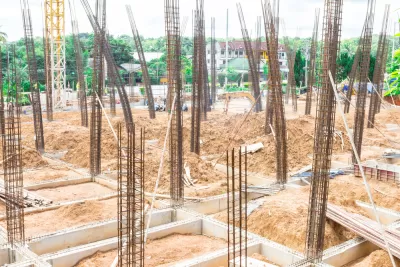
Noah Smith takes a position in the debates surrounding supply and demand in the housing market of desirable urban areas. His position: the cure for costly housing is more costly housing.
Acknowledging that the standard argument of supply vs. demand is complicated by the concept of induced demand, Smith still endeavors to defeat the chosen belief of "progressives." As he describes it: that market-rate housing raises rents and that only government can set an affordable price for housing.
Faced with two competing theories -- the basic Econ 101 theory of supply and demand versus the theory of induced demand -- we have to turn to the evidence. It’s well known [pdf] that urban land has been getting more expensive, but how would denser development change the picture?
Smith calls on studies by Lawrence Katz and Kenneth Rosen from 1987 and Edward Glaeser, Joseph Gyourko, and Raven Saks from 2005 to bolster the pro-supply and demand argument. Smith also calls on more recent research by Eric Fischer, who collected more than 30 years of data on San Francisco rents for a recent study. "He modeled them as a function of supply -- based on the number of available housing units -- and demand, measured by total employment and average wages," explains Smith. "His model fit the historical curve quite nicely."
FULL STORY: The Cure for Costly Housing Is More Costly Housing


Left-NIMBYism and COVID-19
The events of the past year shows that the law of supply and demand applies to urban housing, and that gentrification can, in fact, be subdued.
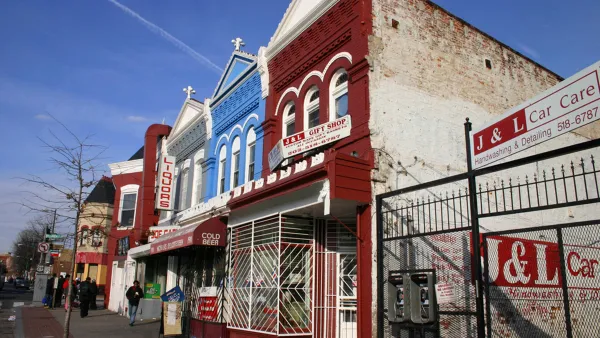
Is Anti-Growth the Wrong Approach to Fighting Gentrification?
Limiting development has been a powerful tool for anti-gentrification activists, but have these policies had counter-productive effects?

Lack of Multi-Family Zones Contributes to Nashville’s High Housing Costs, Study Says
Nashville and surrounding communities allow for a relatively small amount of multi-family housing, according to a new zoning atlas of Middle Tennessee. A regionally focused nonprofit is using the atlas to push for zoning reforms.

Planetizen Federal Action Tracker
A weekly monitor of how Trump’s orders and actions are impacting planners and planning in America.

The state-sanctioned urbicide of Austin
People don’t kill cities. Freeways do.

US to reduce Colorado River water deliveries to Mexico
A new Colorado Treaty amendment reduces Mexico’s Colorado River water allocation by 250,000 acre feet.

5 New England states march closer to 800 megawatt wind energy project
Securing federal approval for the project may be complicated under the Trump administration, which has historically been hostile towards domestic wind power.

Baltimore to break ground on $50 million Transit Priority Project
The project will bring faster bus trips, safer streets and better bike connections to Baltimore.

Airbnb launches $250 million 'last-dollar financing' housing accelerator, makes first investment in Austin
The company will put $6.4 million towards affordable housing development in Texas’ capital.

FREE Course: Walkable City 1: Why Walkability?
After describing his path towards focusing on walkability as the essence of good planning, Jeff Speck marches through his five principal reasons for making more walkable places.
Reinventing Malls: Planning Alchemy—Turning Gray Fields Into Gold
The course focuses on the opportunities and imperatives that shape reinvention of mall sites.

Eagle County Government
Harvard University Graduate School of Design
Nashville Planning Department
The Architects Foundation
University of Cincinnati Online
The Pocatello Development Authority
The Urban Renewal Agency of the City of Pocatello
Journal of the American Planning Association