Scientists are racing to identify the effects of climate change on the environment of California.


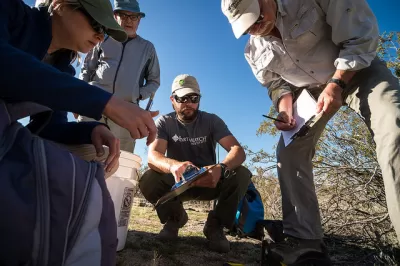
Tim Stephens reports on the work of scientists in the University of California to track the effects of climate change, specifically the work of the UC Natural Reserve System, which is coordinated by the Institute for the Study of Ecological and Evolutionary Climate Impacts (ISEECI).
As scientists deploy their instruments at research sites throughout the UC Natural Reserve System, networked cameras will monitor changes in the vegetation, snapping photos every half hour, while lasers track carbon flow in coastal redwood forests and environmental sensors monitor the microclimates experienced by plants and animals in different habitats. Researchers are also working to reconstruct historical climate variation and changes in land use patterns, assessing the effects of reduced rainfall, and studying the linkages between land and sea along the California coast.
In recent news, researchers in the UC Natural Reserve System recently won a major new grant from the National Science Foundation for research on the interactions between fog, climate change, and redwood forests.
Changing Climate: Studying Climate Change in the University of California Natural Reserve System by Nicholas Weiler / 2015 from SciCom Slugs on Vimeo.
FULL STORY: High-tech sensors monitor ecosystems in climate change research program

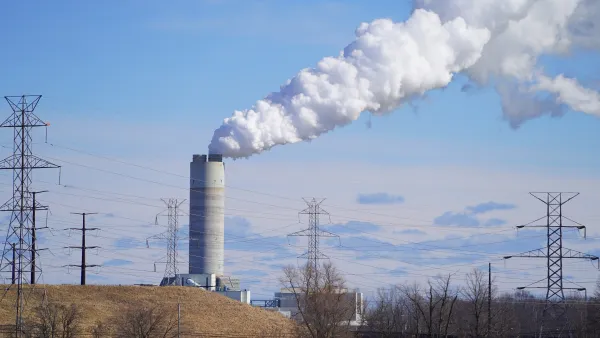
EPA erases limits on planet-warming pollution from power plants
Under Monday’s plan, power plants would still have some limits on how much mercury, arsenic and other contaminants they can emit.
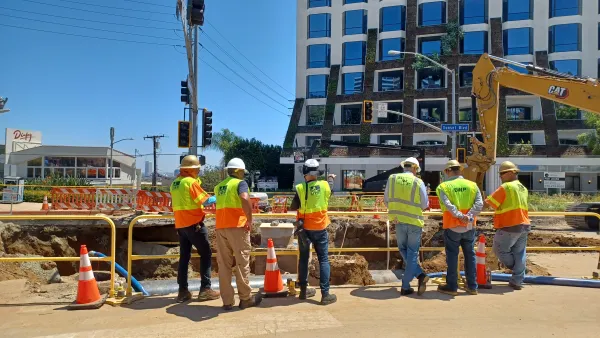
Climate change is battering US water systems
The American Water Works Association estimates that roughly $2 trillion will be needed to update municipal water systems for contemporary conditions.
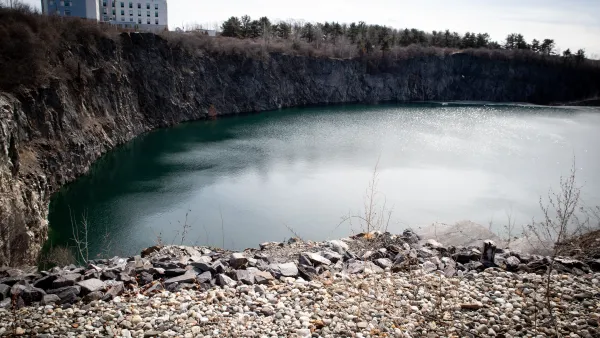
Maine’s booming quarry industry is sending disruptive shockwaves into homes
Climate change has caused sea level rise, flooding and erosion along the coast of Maine, leading to a trend of coastal residents erecting or repairing stone walls.

Planetizen Federal Action Tracker
A weekly monitor of how Trump’s orders and actions are impacting planners and planning in America.

The state-sanctioned urbicide of Austin
People don’t kill cities. Freeways do.

US to reduce Colorado River water deliveries to Mexico
A new Colorado Treaty amendment reduces Mexico’s Colorado River water allocation by 250,000 acre feet.

Brightline West’s future may rely on $6 billion federal loan
The company has until Nov. 2 to make a $400 million equity investment into its proposed high-speed rail line.

LA Metro’s ultimatum: no extra buses for LA28 if federal funding isn’t imminently secured
If Metro does not provide additional buses, LA28 organizers will have to find a new way to manage Olympic traffic. LA28’s budget does not include a line item for transit.

Colorado’s Largest Data Center Could Rise Next to Homes — Without a Public Hearing
The proposed campus would consume 11 times the power of Denver International Airport; as it has across the country, opposition mounts.

FREE Course: Walkable City 1: Why Walkability?
After describing his path towards focusing on walkability as the essence of good planning, Jeff Speck marches through his five principal reasons for making more walkable places.
Reinventing Malls: Planning Alchemy—Turning Gray Fields Into Gold
The course focuses on the opportunities and imperatives that shape reinvention of mall sites.

Eagle County Government
Harvard University Graduate School of Design
Nashville Planning Department
The Architects Foundation
University of Cincinnati Online
The Pocatello Development Authority
The Urban Renewal Agency of the City of Pocatello
Journal of the American Planning Association