Using density as a metric of urban quality is misleading and inadequate, according to an article on CityLab.


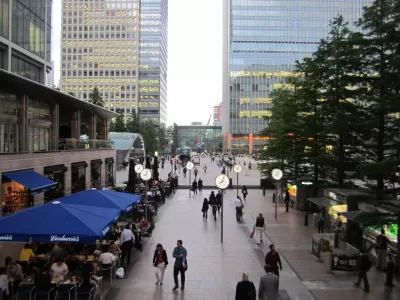
"One thing that many planners, economists, and urban reformers agree on these days is that density is a good thing," begins an article by Garret Nelson.
But Nelson writes to debunk the prevailing wisdom, identifying a deep deception inherent to density: "Far from being a straightforward statistical measurement, it’s actually difficult to define and easy to manipulate."
Thus, Nelson encourages us to "better articulate what it is about density that we actually value," rather than just assuming density as the desirable outcome. Among the potential desirable outcomes of density, Nelson discusses reduced commutes, increased happiness, and agglomeration effects, among others, but also calls for more intensive studies of the spatial structure of cities.
Read the full story: The Deception of Density

The Trouble With QUIMBY
The idea of “quality urbanism in my back yard” has its uses, but should not be used to limit housing supply.

San Francisco's 1971 Urban Design Plan Echoes Today's Concerns
A 1971 effort to quantify the city's values and design goals reflects many of the same priorities that planners and residents face today.

Opinion: Less Restrictive Zoning Necessary for Urban Areas to Lead Recovery
An opinion piece makes the case for pro-development urban planning as a tool of economic recovery.

Planetizen Federal Action Tracker
A weekly monitor of how Trump’s orders and actions are impacting planners and planning in America.

Washington state to charge fee to drivers with fuel-efficient cars
Revenue from the fee will go towards supporting the state’s highways.

Illinois considers spending $1 billion in taxpayer money on data center
A quantum computing campus and data center are currently under construction in Chicago.

Did data centers change how voters cast their ballots?
Texas, Ohio, and Georgia all flipped party control. But in rural counties, the effect of local data centers was mixed.

Amtrak invests in eight new Airo trainsets
The new trainsets will begin serving passengers in 2031.

HUD to end aid for mixed-immigration-status households
The new rule is projected to impact 80,000 people, nearly half of whom are children.

FREE Course: Walkable City 1: Why Walkability?
After describing his path towards focusing on walkability as the essence of good planning, Jeff Speck marches through his five principal reasons for making more walkable places.
Reinventing Malls: Planning Alchemy—Turning Gray Fields Into Gold
The course focuses on the opportunities and imperatives that shape reinvention of mall sites.

City of Charlotte
City of Rosemead
Rutgers University, Edward J. Bloustein School of Planning and Public Policy
University of Michigan School for Environment and Sustainability (SEAS)
Hunter College, City University of New York (CUNY)
The Architects Foundation
University District Partnership