L. A. company Turf Terminators promised low impact lawns in exchange for city rebates, but delivered shoddy work and hot rocks.


Los Angeles has been in the grips of a deep drought for the last five years. Looking for ways to decrease its water use, the city offered its residents rebates to convert lawns to more sustainable, drip-fed grass alternatives using something like mulch, which might hold rain water without consuming it the way grass would. Enter Turf Terminators: a company that promised to replace lawns for the cost of a rebate. According to a Bloomberg story by Anna Scott, the company did more harm than good.
Because of what many called slapdash work and low quality materials, some of the practices meant to decrease water consumption may have increased it. "Gravel radiates more heat than lawns, dead or thriving, helping to create, along with AstroTurf and paving, what environmentalists consider an urban heat island." Extra heat, means extra evaporation, leaving some with the worst of both worlds, neither a verdant lawn nor water savings. As for Turf Terminators, they too have evaporated, their website says they are not "accepting new customers." According to Scott, they laid off 450 employees changed their name to Build Savings and, as of October 10, had a disconnected phone line.
FULL STORY: Grass Warfare in L.A.

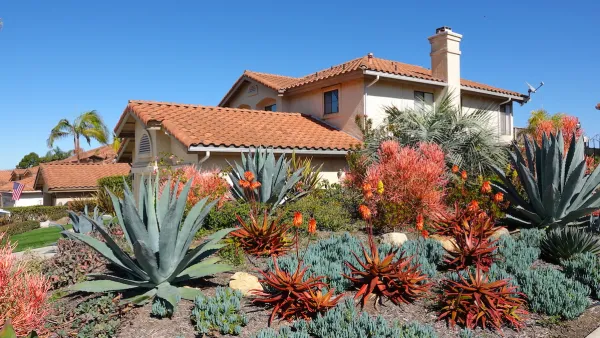
California Agency Awards $38 Million for Turf Replacement
The grant funds grass replacement rebates for commercial and residential properties and water-saving devices for fire stations.
The Rise of Artificial Turf
Once scratchy and unrealistic, artificial grass has come a long way. Now, it’s quickly becoming a popular lawn replacement as droughts and climate change make traditional lawns harder to maintain.
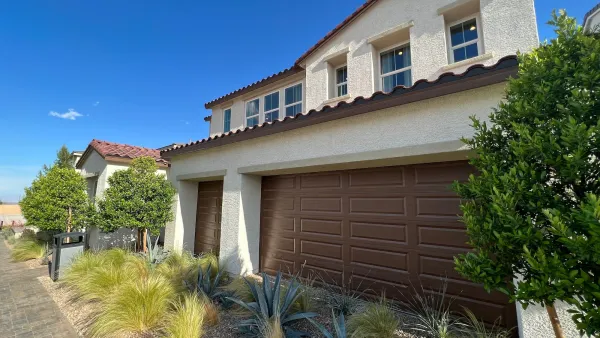
Nevada Law Requiring Removal of ‘Useless’ Grass Has Killed 100,000 Las Vegas Trees, Lawsuit Claims
The lawsuit alleges that the removal of ornamental grass has damaged the city’s tree canopy.

Planetizen Federal Action Tracker
A weekly monitor of how Trump’s orders and actions are impacting planners and planning in America.

The state-sanctioned urbicide of Austin
People don’t kill cities. Freeways do.

US to reduce Colorado River water deliveries to Mexico
A new Colorado Treaty amendment reduces Mexico’s Colorado River water allocation by 250,000 acre feet.

Mamdani overhauls NYC's Vision Zero plan with 100 new policy goals
The overhaul aims to reduce traffic deaths and make streets safer for pedestrians, cyclists and drivers through lower speed limits, new safety infrastructure and more.

Amtrak not solely to blame for New Jersey commuter rail's unreliability, report finds
A new study from the Garden State Initiative found that NJ Transit’s budget grew 20% across a 4 year period, but reliability declined significantly over the same period.

EPA erases limits on planet-warming pollution from power plants
Under Monday’s plan, power plants would still have some limits on how much mercury, arsenic and other contaminants they can emit.

FREE Course: Walkable City 1: Why Walkability?
After describing his path towards focusing on walkability as the essence of good planning, Jeff Speck marches through his five principal reasons for making more walkable places.
Reinventing Malls: Planning Alchemy—Turning Gray Fields Into Gold
The course focuses on the opportunities and imperatives that shape reinvention of mall sites.

Eagle County Government
Harvard University Graduate School of Design
Nashville Planning Department
The Architects Foundation
University of Cincinnati Online
The Pocatello Development Authority
The Urban Renewal Agency of the City of Pocatello
Journal of the American Planning Association