The lawsuit alleges that the removal of ornamental grass has damaged the city’s tree canopy.


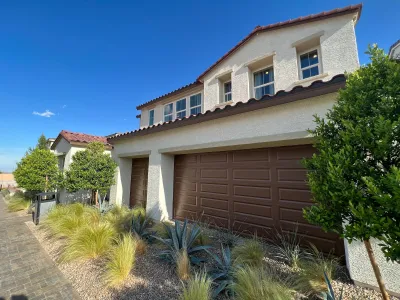
A lawsuit claims that a Nevada law that calls for removing ornamental grass to conserve water has caused the death of 100,000 trees in the Las Vegas Valley.
As Mike Bedigan explains in Independent, “The law, first passed in 2021, targets what the Southern Nevada Water Authority refers to as ‘non-functional turf’ and makes it illegal to irrigate such areas with water from the Colorado River, beginning in 2027.” The law proposes replacing eight square miles of grass in the metro area for an estimated 15 percent reduction in water consumption.
The lawsuit alleges that many trees cannot survive once nearby grass is disturbed, and that the law has caused roughly $300 million in damage. “Beyond monetary loss, the green mature canopy (and its heat mitigation benefits) cannot be replaced quickly,” wrote Norm Schilling, a horticulturist, in a declaration in the lawsuit.

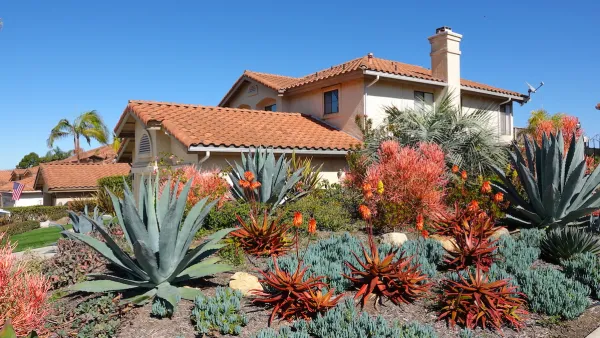
California Agency Awards $38 Million for Turf Replacement
The grant funds grass replacement rebates for commercial and residential properties and water-saving devices for fire stations.

The Rise of Artificial Turf
Once scratchy and unrealistic, artificial grass has come a long way. Now, it’s quickly becoming a popular lawn replacement as droughts and climate change make traditional lawns harder to maintain.
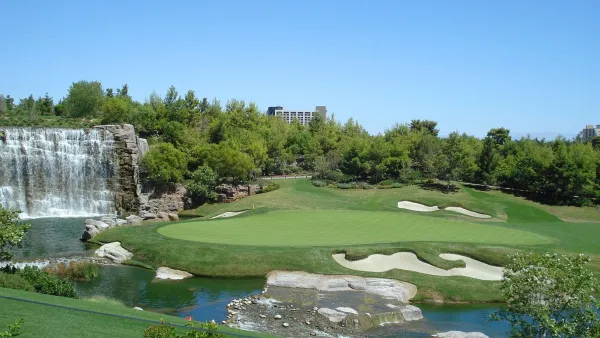
New Las Vegas Golf Courses Barred From Using Colorado River Water
A new rule from the Las Vegas Valley Water District prohibits new golf courses in the city from using Colorado River water for irrigation.

Planetizen Federal Action Tracker
A weekly monitor of how Trump’s orders and actions are impacting planners and planning in America.

The state-sanctioned urbicide of Austin
People don’t kill cities. Freeways do.

US to reduce Colorado River water deliveries to Mexico
A new Colorado Treaty amendment reduces Mexico’s Colorado River water allocation by 250,000 acre feet.

5 New England states march closer to 800 megawatt wind energy project
Securing federal approval for the project may be complicated under the Trump administration, which has historically been hostile towards domestic wind power.

Baltimore to break ground on $50 million Transit Priority Project
The project will bring faster bus trips, safer streets and better bike connections to Baltimore.

Airbnb launches $250 million 'last-dollar financing' housing accelerator, makes first investment in Austin
The company will put $6.4 million towards affordable housing development in Texas’ capital.

FREE Course: Walkable City 1: Why Walkability?
After describing his path towards focusing on walkability as the essence of good planning, Jeff Speck marches through his five principal reasons for making more walkable places.
Reinventing Malls: Planning Alchemy—Turning Gray Fields Into Gold
The course focuses on the opportunities and imperatives that shape reinvention of mall sites.

Eagle County Government
Harvard University Graduate School of Design
Nashville Planning Department
The Architects Foundation
University of Cincinnati Online
The Pocatello Development Authority
The Urban Renewal Agency of the City of Pocatello
Journal of the American Planning Association