The study compares data between 1993 and 2009.



A Wildlife Conservation Society press release announces the findings of a new study published in the Nature Communications journal, which finds that humanity's footprint is now growing slower than the economy and population.
Specifically, the "study finds that while the global population grew 23 percent and the global economy grew 153 percent between 1993 and 2009, the global human footprint grew only 9 percent," according to the press release.
Despite that seeming good news, the study still has plenty of bad news to go around. According to its findings, three-quarters of the planet has been altered, while "97 percent of species-rich regions are seriously altered."
Researchers from the University of Northern British Columbia, the University of Queensland, the Wildlife Conservation Society (WCS), and six other universities completed the study.
Read the full story: Human footprint surprisingly outpaced by population and economic growth


The 'Mountain Lion' Cities Rising in the U.S. West
An economist identifies the growth in nine U.S. cities—scattered from Utah to Texas, Arizona, Washington, and Idaho—as similar to the economic power generated in parts of Asia.

Sun Belt Cities Are Facing Many Changes and Challenges
Cities across this swath of the country have rapidly growing populations and economies. At the same time, Sun Belt cities are contending with a common host of urban issues that should not be overlooked.
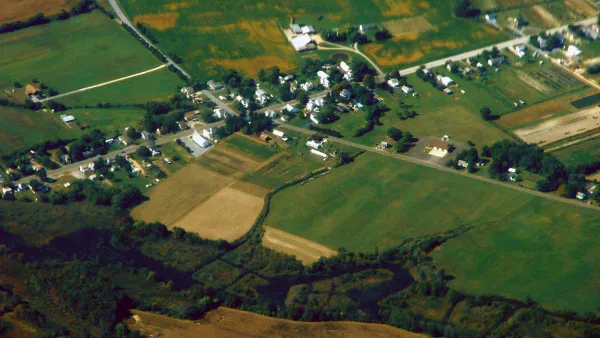
Rural America's Sluggish Recovery
A new report the U.S. Department of Agriculture’s Economic Research Service details the ways in which rural America has lagged behind metropolitan areas since the Great Recession.

Planetizen Federal Action Tracker
A weekly monitor of how Trump’s orders and actions are impacting planners and planning in America.

Northwest rail fans eager for Sept. 30 debut of Amtrak’s Airo fleet
Get ready for that new train smell and more seats. But they won’t go faster or run more frequently on the Cascades route in Washington and Oregon.
Trump is considering data centers on 6 states' public land — some state officials say they had no idea
If the administration approves the proposed projects, data center and data center-related developments will cover 17,600 acres of public land.

After decades of planning, Sacramento gains new light rail station
Trains will arrive every 15 minutes during peak hours and every 30 minutes during non-peak hours.

Massive tunnel-boring machine breaks ground on Gateway Project
The Trump administration revoked funding for the project in October 2025, and then restored it earlier this year.

Airo trainsets begin service on Amtrak Cascades route
The trains feature panoramic windows, complementary wifi and over 300 seats per train set.

FREE Course: Walkable City 1: Why Walkability?
After describing his path towards focusing on walkability as the essence of good planning, Jeff Speck marches through his five principal reasons for making more walkable places.
Reinventing Malls: Planning Alchemy—Turning Gray Fields Into Gold
The course focuses on the opportunities and imperatives that shape reinvention of mall sites.

City of Thousand Oaks
City of Wisconsin Rapids
Harvard University Graduate School of Design
The Architects Foundation
University of Cincinnati Online
Northern Illinois Transit Authority (NITA)
The Pocatello Development Authority
The Urban Renewal Agency of the City of Pocatello