The social vision of an architecture firm working in Bushwick, in Brooklyn, faces a familiar set of challenges.



An article by Justin Davidson begins by asking a question: "Can an architect design a kinder, gentler gentrification?"
According to the article, the neighborhood of Bushwick in Brooklyn will provide a case study for that question. There, the architecture firm ODA has chosen the former site of the Rheingold Brewery for a project that sets an ambitious goal for "nearly 1,000 apartments and a million square feet that would slip affably into a neighborhood that, despite its real-estate hotness and brand-name cool, remains tenaciously poor."
"Longtime residents and their new neighbors would mingle in the woodworking shop and photo lab and hang their creations side by side in the community art gallery," adds Davidson. "A microbrewery would open up onsite, making reference to the past while providing local jobs and drinks."
The pressure hanging over these visions are familiar: "every long-fallow acre in the city is a battleground," writes Davidson. And "even if not a single stoop gets demolished and not a single resident displaced, an affluent influx will rattle longtime residents."
The goals of the architects also have to compete with the marketing efforts and influence of the developers, zoning changes dependent on local political leadership, and the difficulties of producing an authentic urban environment that doesn't resemble something more like Disneyland.
Read the full story: Can We Get Development in Bushwick Right?

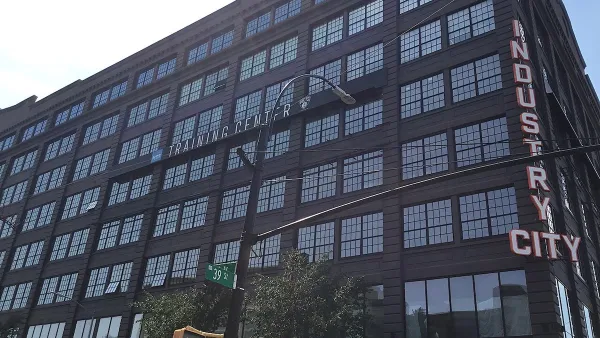
‘Emergent City’ Documentary Highlights Rare Anti-Gentrification Victory
The film charts the saga of a Brooklyn site called Industry City.
Study: Bike Lanes Raise Property Values in Brooklyn
New bike lanes in the Brooklyn neighborhood of Bushwick started raising property values within a year.
Artists Feel Gentrification Pressure in Bushwick
The Brooklyn Brief attended the recent eighth edition oft the Bushwick Open Studios annual art event. There the blog heard from artists concerned about the growing expenses of living in the neighborhood.

Planetizen Federal Action Tracker
A weekly monitor of how Trump’s orders and actions are impacting planners and planning in America.

Amtrak, CN end decades-long dispute with eight-year agreement
The new operating agreement establishes an updated framework for the companies to work together, including processes to resolve disputes.

Judges permit Denver to divert 77,000 acre feet from the Colorado River for reservoir expansion
Overuse and climate change have caused the Colorado River’s water levels to plummet.

NYC DOT wants faster, more permanent street upgrades
The city is examining ways to build more concrete infrastructure without getting entangled in 'decades-long' projects.

'Something we’ve never seen before:' rising utility rates could strain city finances nationwide
Data centers, climate change and other factors have caused utility rates in the United States to increase by 38% since 2020.

Trump to overrule local leaders, lease millions of acres of America’s Pacific Island territories’ seafloors to mining companies
International law says that the Indigenous people of America’s territories have a right to prior and informed consent regarding projects that impact their countries.

FREE Course: Walkable City 1: Why Walkability?
After describing his path towards focusing on walkability as the essence of good planning, Jeff Speck marches through his five principal reasons for making more walkable places.
Reinventing Malls: Planning Alchemy—Turning Gray Fields Into Gold
The course focuses on the opportunities and imperatives that shape reinvention of mall sites.

Harvard University Graduate School of Design
KFH Group Inc.
Greater Baltimore Committee
The Architects Foundation
University of Cincinnati Online
The Pocatello Development Authority
The Urban Renewal Agency of the City of Pocatello