There's a difference between designing for safety and designing for fear.


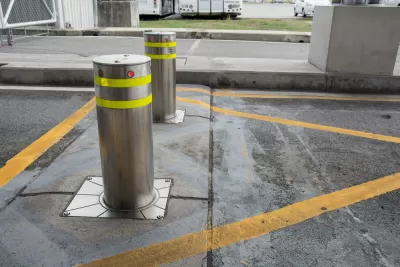
Ankita Rao explores a growing turn in architecture, and the culture that surrounds it, toward secure design. She writes:
Our culture of fear has changed the role of architecture in the United States… While legislators falter over gun control laws, architects and building designers are working to rethink the concept of a safe space.
Rao compares the built-in security measures of the Freedom Tower, the "behemoth" at the World Trade Center, to those of the outward-facing remodel of Sandy Hook Elementary School, where "natural surveillance" is encouraged. Both were rebuilt after devastating (and very different) attacks; their contrast points to the difficulty in striking what Rao terms "the balance between ominous and open" when designing for safety.
Read the full story: Architects Are Designing Buildings for the Age of Mass Shootings

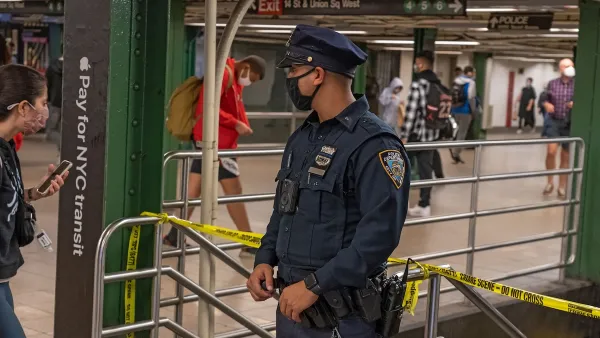
NYC Subway Has Safest Month Ever
The city’s subway system is seeing increased ridership and a sharp drop in crime a year after the MTA implemented new security measures.

Battery Park Resilience Project Breaks Ground
By 2027, the shoreline will be elevated by 5 feet to prevent flooding from future storm surges.

In Battery Park City, Public Infrastructure Meets Climate Resilience
A massive project underway in Lower Manhattan seeks to protect the shoreline from future flooding and mitigate the effects of climate change and rising sea levels.

Planetizen Federal Action Tracker
A weekly monitor of how Trump’s orders and actions are impacting planners and planning in America.

Amtrak, CN end decades-long dispute with eight-year agreement
The new operating agreement establishes an updated framework for the companies to work together, including processes to resolve disputes.
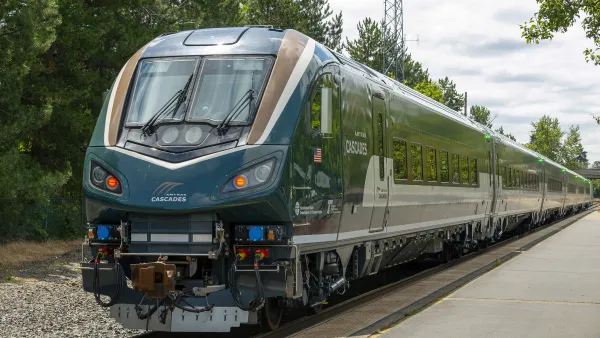
Northwest rail fans eager for Sept. 30 debut of Amtrak’s Airo fleet
Get ready for that new train smell and more seats. But they won’t go faster or run more frequently on the Cascades route in Washington and Oregon.

Trump administration unlawfully slashed $7 billion in clean energy grants, judge rules
The Environmental Protection Agency ended the Solar For All program, which provided the grants, after President Donald Trump’s inauguration.

Record-breaking wildlife overpass in Colorado brings 91% reduction in animal collisions
Prior to the overpass, vehicles were hitting one deer per day on Colorado’s Interstate 25.

California lawmakers approve just 5% of much-needed LA28 transportation funding
State legislators appear just as unwilling as Trump to pay for Olympics-related transportation projects.

FREE Course: Walkable City 1: Why Walkability?
After describing his path towards focusing on walkability as the essence of good planning, Jeff Speck marches through his five principal reasons for making more walkable places.
Reinventing Malls: Planning Alchemy—Turning Gray Fields Into Gold
The course focuses on the opportunities and imperatives that shape reinvention of mall sites.

City of Thousand Oaks
City of Wisconsin Rapids
Harvard University Graduate School of Design
The Architects Foundation
University of Cincinnati Online
The Pocatello Development Authority
The Urban Renewal Agency of the City of Pocatello