Downtown San Diego’s waterfront is undergoing major changes. Regarding the latest proposal, the San Diego Environment + Design Council has some words of advice in this open letter to the Port District.


The San Diego Unified Port District Commission has selected one of six proposals for a redevelopment of 77 acres of waterfront, including the popular Seaport Village. This redevelopment proposal would include, among other things, a 500-foot spire featuring a gondola ride, a beach, "an aquarium park," a pier, a floating pool, park space, a plaza for markets and events, an amphitheater, a dock for paddle boarding, a market area "similar to Pike Place," and, of course, retail space.
The San Diego Environment + Design Council, a coalition of organizations promoting environmentally-sustainable land use policies, has some concerns and advise:
Connect – The new waterfront area "should have obvious and functional physical and programmatic links to the downtown. . . continuation of the grid network to the water could enhance both the physical and visual connection to the Bay from the core, which is largely missing."
Not just for tourists – "include an array of tenants serving practical needs for downtown residents and displaying works of local artists."
Focus on the Bay – "The primary 'draw' should be San Diego Bay, and not shops and restaurants proximate to it."
Don’t overpower – "Proposed structures should not overwhelm the site with excessive bulk, excessive mass, excessive height, or crowding the waterfront by being too close to the edge."
Architecture – should be distinctive but should not distract from the beauty or history of the area – It should not be "a depiction of false history, nor something so trendy as to risk aging poorly."
Hotel set back – "hotels should not be in a waterfront park, but adjacent to it."
Retail and Restaurants – "...should assume a secondary position to the primary focus and purpose of the project site – free public access to, and the enjoyment of, San Diego Bay."
Multi-purpose public spaces – "public plazas [should] emphasize unprogrammed free play, quiet enjoyment, and San Diego Bay views, aromas, and sounds.”
Public art – "The public realm should have permanent fixed art of international prominence, and opportunities for outdoor performing arts."
Dynamic experiences – encourage "ever changing array of colorful outdoor building-free street vendors with carts, crafts, foods, and performances."
Timeless design – Require development with "high quality durability, flexibility, functionality, and material finish...Fine grain details..." with a "distinctive San Diego flavor."
Water Oriented Facilities – Include a public beach, "piers, overlooks, and wharves, free and open to the public.”
Commercial fishing operations – retain the tuna boat fleet—it provides an "authentic element . . . and link to San Diego’s maritime history."
Parking and mobility improvements:
PARK AND RIDE/WALK – "uses that require vehicle access for drop-offs, or service deliveries, [should be] positioned away from the waterside...."
And most importantly, part of the comprehensive planning process –
[A]n open and comprehensive planning and development process is essential. . . We recommend that no action on this particular parcel proceed until the Port District completes and adopts a Comprehensive Master Plan Update. The proposed project is an unacceptable, “piecemeal” development, instead of a component of an adopted update to the Comprehensive Master Plan.
FULL STORY: Open letter to San Diego Port Commission about “world class waterfront” development proposals


Op-ed: Federal austerity is funding what kills us
Tracing the backstory of the last year of cuts to multimodal transportation reveals an alarming definition of road safety that only serves one mode.
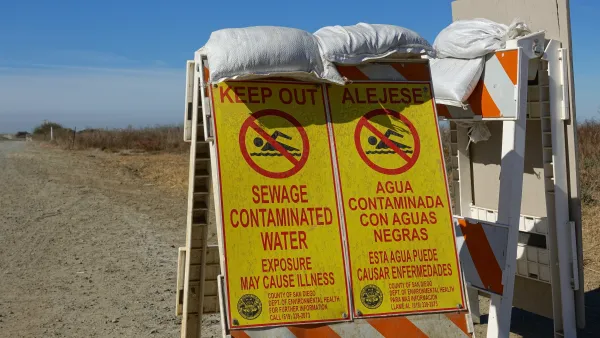
San Diego County to build treatment plant for Tijuana River sewage pollution crisis
The river has carried millions of gallons of untreated sewage into San Diego’s South Bay region.
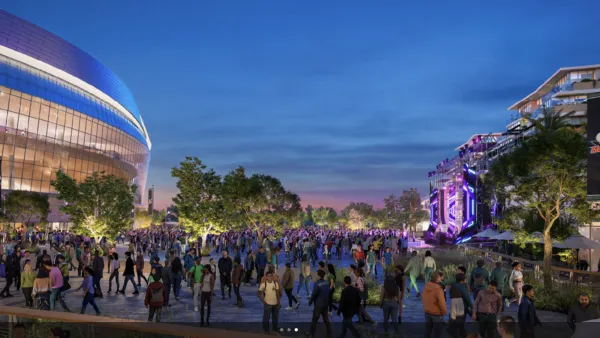
California lawmakers approve bill that would shield housing, sports arena project from environmental lawsuits
The bill passed the Assembly with 72 votes out of a possible 80 and later cleared the Senate on a unanimous vote.

The state-sanctioned urbicide of Austin
People don’t kill cities. Freeways do.

US to reduce Colorado River water deliveries to Mexico
A new Colorado Treaty amendment reduces Mexico’s Colorado River water allocation by 250,000 acre feet.

New Jersey’s second-largest city bans standalone data centers
Jersey City will continue to allow co-location facilities, such as those meant for research institutions that store their own data.

Amtrak not solely to blame for New Jersey commuter rail's unreliability, report finds
A new study from the Garden State Initiative found that NJ Transit’s budget grew 20% across a 4 year period, but reliability declined significantly over the same period.

EPA erases limits on planet-warming pollution from power plants
Under Monday’s plan, power plants would still have some limits on how much mercury, arsenic and other contaminants they can emit.

Phoenix announces new on-demand transit service, more frequent RAPID buses
Both new services will launch in October, and are part of Phoenix's Project Effective Access Solutions for Easing Congestion.

FREE Course: Walkable City 1: Why Walkability?
After describing his path towards focusing on walkability as the essence of good planning, Jeff Speck marches through his five principal reasons for making more walkable places.
Reinventing Malls: Planning Alchemy—Turning Gray Fields Into Gold
The course focuses on the opportunities and imperatives that shape reinvention of mall sites.

Eagle County Government
Harvard University Graduate School of Design
Nashville Planning Department
The Architects Foundation
University of Cincinnati Online
The Pocatello Development Authority
The Urban Renewal Agency of the City of Pocatello
Journal of the American Planning Association