Two U.S. coastal communities are debating the merits of staying or leaving due to effects from climate change and rising sea levels


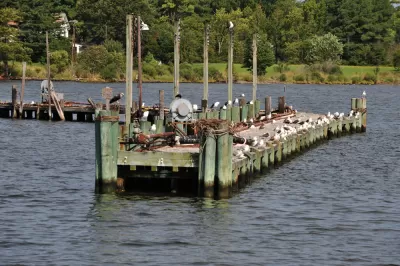
Molly Peterson and Carolyn Beeler of PRI report on low-lying coastal communities around the world beginning to reckon with climate change and rising global sea levels. "[I]t's not just happening in far-away places like Bangladesh or the Maldives. It's happening right here in the US. On Tangier Island, Virginia, in the southern Chesapeake Bay, residents are facing the inundation of a place some local families have called home since the 1600s. They are determined to stay. On Isle de Jean Charles on the Louisiana Gulf coast, a disappearing Native American community has made the opposite decision. They are the first community to receive federal money to relocate due to climate change. It's a tale of two towns, confronting a decision no community would ever want to make, but that more and more will have to."
FULL STORY: Rising seas are washing away two US towns. How they're responding is a matter of faith, belief and money.


Planetizen Federal Action Tracker
A weekly monitor of how Trump’s orders and actions are impacting planners and planning in America.

The state-sanctioned urbicide of Austin
People don’t kill cities. Freeways do.

US to reduce Colorado River water deliveries to Mexico
A new Colorado Treaty amendment reduces Mexico’s Colorado River water allocation by 250,000 acre feet.

LA Metro’s ultimatum: no extra buses for LA28 if federal funding isn’t imminently secured
If Metro does not provide additional buses, LA28 organizers will have to find a new way to manage Olympic traffic. LA28’s budget does not include a line item for transit.

Colorado’s Largest Data Center Could Rise Next to Homes — Without a Public Hearing
The proposed campus would consume 11 times the power of Denver International Airport; as it has across the country, opposition mounts.

5 New England states march closer to 800 megawatt wind energy project
Securing federal approval for the project may be complicated under the Trump administration, which has historically been hostile towards domestic wind power.

FREE Course: Walkable City 1: Why Walkability?
After describing his path towards focusing on walkability as the essence of good planning, Jeff Speck marches through his five principal reasons for making more walkable places.
Reinventing Malls: Planning Alchemy—Turning Gray Fields Into Gold
The course focuses on the opportunities and imperatives that shape reinvention of mall sites.

Eagle County Government
Harvard University Graduate School of Design
Nashville Planning Department
The Architects Foundation
University of Cincinnati Online
The Pocatello Development Authority
The Urban Renewal Agency of the City of Pocatello
Journal of the American Planning Association