Los Angeles voters will be asked to approve a new property tax on residential and commercial properties to pay for a $1.2 billion to improve the city's worsening homelessness problem.


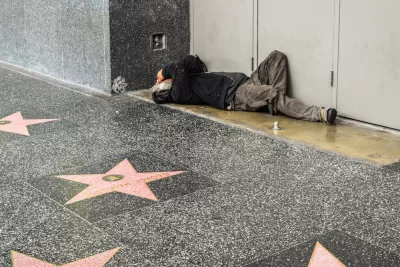
"Seeking to stem the rise of homelessness in the nation’s second largest city, the Los Angeles City Council voted Wednesday for a plan to add a property tax bond measure to the November ballot that’s expected to raise about $1.2 billion to build housing," reports Dakota Smith.
"The measure, which needs to pass by a 2/3 threshold in November, comes as city officials grapple with a 5 percent increase in homelessness in Los Angeles compared to last year and a noticeable spike in encampments across the city," adds Smith.
The City Council approved a sweeping plan to address homelessness back in February, but until now there will few details about the city would pay for the plan. The California State legislature is also looking for answers to the homelessness problem—the State Senate recently approved $2 billion in funding to assist mentally ill homeless people with permanent housing. The city of San Francisco is taking a different approach to homelessness at the ballot box, and deciding whether or not to allow the city to forcibly remove homeless encampments.
FULL STORY: LA City Council backs $1.2 billion property tax bond for homeless housing

Los Angeles Passes Sweeping Homeless Plans—Funding Still Needed
The easy part for politicians at both the city and the county of Los Angeles is over. Funding their plans to improve services for the homeless will be the hard part.
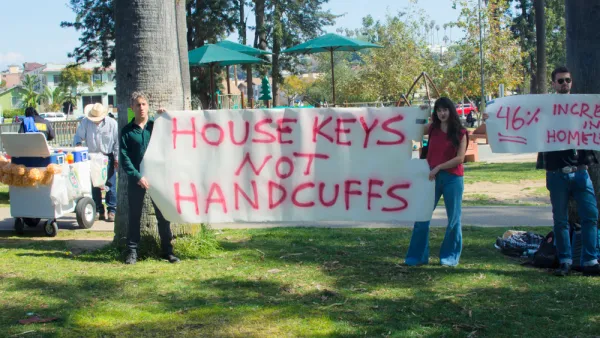
Los Angeles Tightens Restrictions on Encampments
During a city council meeting that had to pause while police cleared the room of activists opposing the measure, the council voted to ban public sleeping within 500 feet of schools, making one-fifth of city sidewalks off-limits to unhoused people.
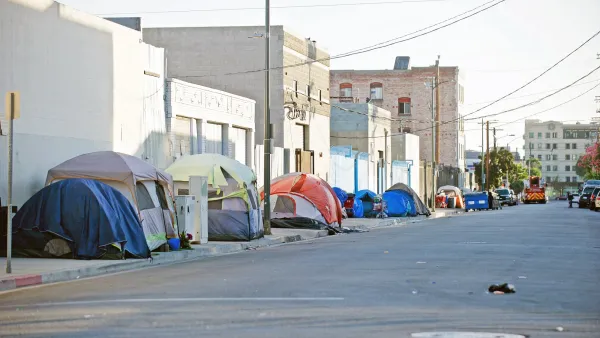
Permanent Supportive Housing Works for the Chronically Homeless, Study Says
A groundbreaking study provides some of the strongest evidence yet of the powerful results of permanent supportive housing for the chronically homeless.

The state-sanctioned urbicide of Austin
People don’t kill cities. Freeways do.

US to reduce Colorado River water deliveries to Mexico
A new Colorado Treaty amendment reduces Mexico’s Colorado River water allocation by 250,000 acre feet.

New Jersey’s second-largest city bans standalone data centers
Jersey City will continue to allow co-location facilities, such as those meant for research institutions that store their own data.

Amtrak not solely to blame for New Jersey commuter rail's unreliability, report finds
A new study from the Garden State Initiative found that NJ Transit’s budget grew 20% across a 4 year period, but reliability declined significantly over the same period.

EPA erases limits on planet-warming pollution from power plants
Under Monday’s plan, power plants would still have some limits on how much mercury, arsenic and other contaminants they can emit.

Phoenix announces new on-demand transit service, more frequent RAPID buses
Both new services will launch in October, and are part of Phoenix's Project Effective Access Solutions for Easing Congestion.

FREE Course: Walkable City 1: Why Walkability?
After describing his path towards focusing on walkability as the essence of good planning, Jeff Speck marches through his five principal reasons for making more walkable places.
Reinventing Malls: Planning Alchemy—Turning Gray Fields Into Gold
The course focuses on the opportunities and imperatives that shape reinvention of mall sites.

Eagle County Government
Harvard University Graduate School of Design
Nashville Planning Department
The Architects Foundation
University of Cincinnati Online
The Pocatello Development Authority
The Urban Renewal Agency of the City of Pocatello
Journal of the American Planning Association