A long-stalled, but partially built-out, commuter rail line has achieved institutional legitimacy with the Regional Transit Authority of Southeast Michigan. Novembers will have a chance to decide on the idea in November.


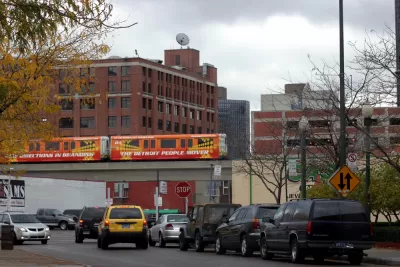
"The Regional Transit Authority wants to give life to a long-stalled Ann Arbor to Detroit commuter rail line that would connect the cities’ downtowns," reports Leonard N Fleming.
"The 38-mile line has been discussed for more than a decade but was in need of a funding source. The RTA plans to solve that issue by folding the cost of the service, which would use existing Amtrak lines, into its November millage request," adds Fleming.
According to Fleming, the proposal grew out of the Michigan Avenue Corridor Study, recently approved by the RTA board. The study also included the possibility of bus-rapid transit and a connection to the QLine (formerly known as the M-1 streetcar). Paul Hillegonds, RTA board chair, is on the record in article talking about how the existing infrastructure for the proposed Ann Arbor-Detroit connector makes the cost for the line competitive with bus-rapid transit.
Read the full story: RTA wants Detroit-Ann Arbor commuter rail service
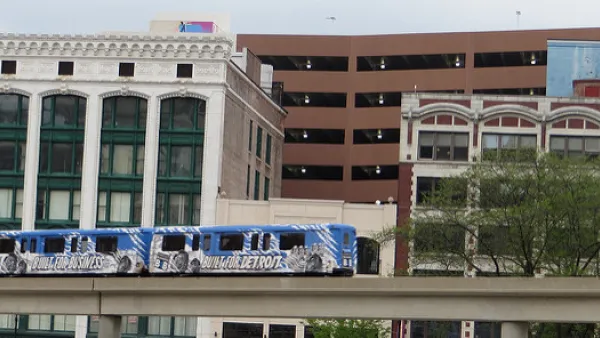
Cultivating a Culture of Transit
How Detroit, historical home of the U.S. automotive industry, can create a culture of transit and the equitable transportation system its residents need.
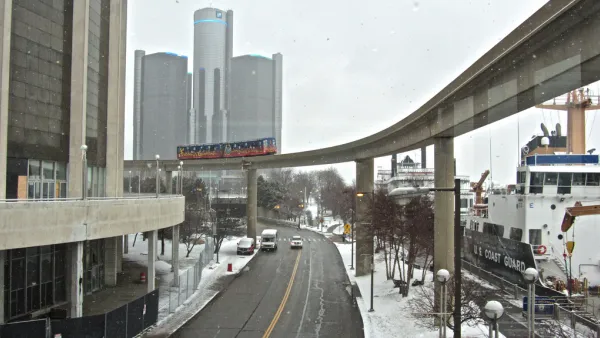
Regional Transit in Detroit: An Idea Whose Time Has Not Yet Come
Transit supporters in the Detroit region suffered a setback last week, but the hope is that they've only lost a battle, not the war, for regional transit.
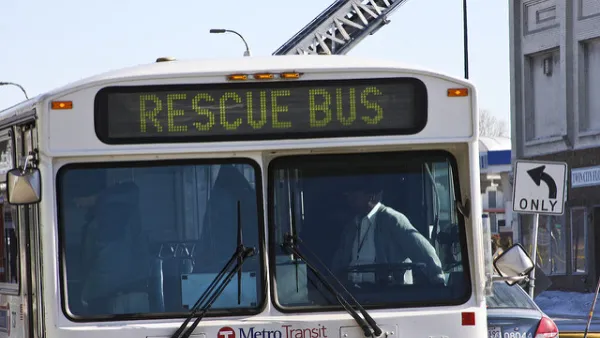
Metro Detroit's Millage Tax Comes Within Half a Percentage Point of Passing
A $4.6 billion transit plan proposed by the Regional Transit Authority of Southeast Michigan received 49.5 percent of the vote on November 8. The millage tax would have funded bus rapid transit and regional rail within a four-county region.

Planetizen Federal Action Tracker
A weekly monitor of how Trump’s orders and actions are impacting planners and planning in America.

Eastern Nebraska is running out of electricity
Data centers and electrification are straining eastern Nebraska’s grid, throttling economic development.

Study reveals best places in the U.S. for cycling, walking
New research from Streetlight Data examines bicycle and pedestrian miles per capita in the 100 largest U.S. cities by population.

DSA members accuse Mamdani of 'abandoning values' over housing redevelopment
New York City's mayor plans to replace about 2,000 units of public housing with private, mixed-income housing.

All sides of BRT debate unhappy with CDOT’s most recent move
The Colorado Department of Transportation is no longer considering center-running bus lanes for Colorado Boulevard.

Massachusetts bogs generate both power, and cranberries
Putting solar panels above farmland is one way Massachusetts is advancing toward its goal of net-zero carbon emissions by 2050.

FREE Course: Walkable City 1: Why Walkability?
After describing his path towards focusing on walkability as the essence of good planning, Jeff Speck marches through his five principal reasons for making more walkable places.
Reinventing Malls: Planning Alchemy—Turning Gray Fields Into Gold
The course focuses on the opportunities and imperatives that shape reinvention of mall sites.

City of Rosemead
Rutgers University, Edward J. Bloustein School of Planning and Public Policy
One Hundred Miles
University of Michigan School for Environment and Sustainability (SEAS)
Hunter College, City University of New York (CUNY)
The Architects Foundation
City of Cambridge
The Pocatello Development Authority
The Urban Renewal Agency of the City of Pocatello