A 2001 contract between the city of Los Angeles and CBS Decaux failed to deliver 662 shelters for bus stops. A case study in what not to do on either side of a public-private partnership follows.


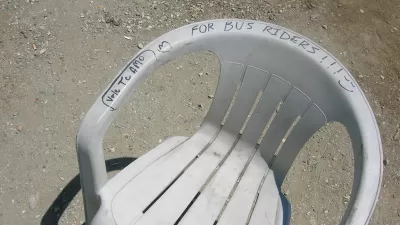
"More than half of the bus shelters planned under a city of Los Angeles contract have not been built, leaving riders at more than 800 locations without shelters and depriving the city of millions in unrealized advertising revenues," report Meghan McCarty and Aaron Mendelson.
The duo reports for this KPCC investigation into the results of a 2001 contract between the city of Los Angeles and CBS Decaux. In addition to the missing bus stop shelters, the city has missed out on $80 million in projected revenue.
McCarty and Mendelson provide the details of a public-private partnership gone wrong. The problem boils down to conflicts of interest. The goals of a transit system and the goals of an advertising company do not often align.
Bus riders and transit agencies want the shelters where they are most needed, often at busy bus stops in low-income communities where bus ridership is high. But advertising ventures like CBS Decaux have other priorities.
The article shares anecdotes from the experiences of Los Angeles residents who wait on buses without protection from the Southern California sun. Meghan McCarty also wrote a follow-up post sharing social media reactions to the original story. The issue had already inspire local activists to create the #SeekingShade hashtag.
FULL STORY: Hundreds of LA bus shelters go unbuilt, millions in promised revenue evaporate under city contract

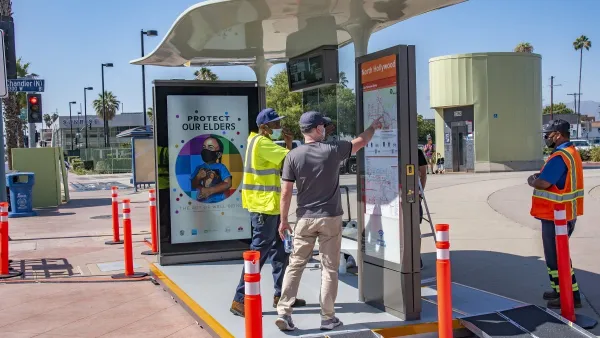
LA Begins Adding New Bus Shelters
The program, years in the works, pledges to add 3,000 new bus shelters and 450 shade structures to protect riders from extreme heat and weather.
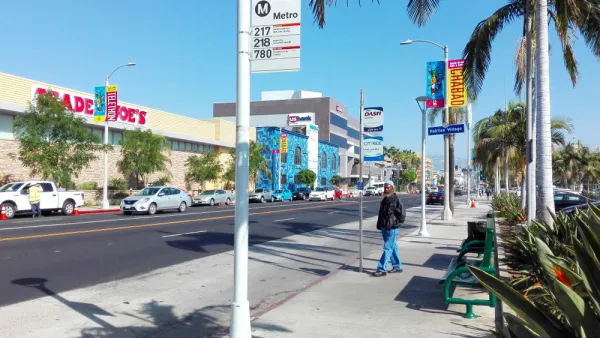
L.A. Bus Stops Offer No Relief From Searing Temperatures
As heat waves intensify, bus riders in Los Angeles are forced to wait at bus stops that offer little shade or seating, putting vulnerable residents at risk of heat stroke and other health impacts.

Where to Preview L.A.'s New Bus Shelters
Angelenos can try out the new designs at six locations this summer, with the full program set to launch in 2022.

Planetizen Federal Action Tracker
A weekly monitor of how Trump’s orders and actions are impacting planners and planning in America.

The state-sanctioned urbicide of Austin
People don’t kill cities. Freeways do.

US to reduce Colorado River water deliveries to Mexico
A new Colorado Treaty amendment reduces Mexico’s Colorado River water allocation by 250,000 acre feet.

5 New England states march closer to 800 megawatt wind energy project
Securing federal approval for the project may be complicated under the Trump administration, which has historically been hostile towards domestic wind power.

Baltimore to break ground on $50 million Transit Priority Project
The project will bring faster bus trips, safer streets and better bike connections to Baltimore.

Airbnb launches $250 million 'last-dollar financing' housing accelerator, makes first investment in Austin
The company will put $6.4 million towards affordable housing development in Texas’ capital.

FREE Course: Walkable City 1: Why Walkability?
After describing his path towards focusing on walkability as the essence of good planning, Jeff Speck marches through his five principal reasons for making more walkable places.
Reinventing Malls: Planning Alchemy—Turning Gray Fields Into Gold
The course focuses on the opportunities and imperatives that shape reinvention of mall sites.

Eagle County Government
Harvard University Graduate School of Design
Nashville Planning Department
The Architects Foundation
University of Cincinnati Online
The Pocatello Development Authority
The Urban Renewal Agency of the City of Pocatello
Journal of the American Planning Association