After three years, an ambitious placemaking plan for downtown Detroit has delivered results, but not as quickly as its architects hoped.



Three years ago, Quicken Loans chairman Dan Gilbert spearheaded a plan to revive downtown Detroit. Kirk Pinho discusses the ongoing results of that effort, which has continued despite falling short on its initial timeline.
Several high-profile projects have encountered setbacks. "What was intended to be completed by the end of 2015 is a checklist of the projects and ambitious plans the city still needs done: completion of the $137 million M-1 Rail project, [...] the redevelopment of the 2-acre former Hudson's department store site [...] and a pair of complex projects that would reimagine two key city arteries: Woodward and Jefferson avenues."
Bob Gregory, president of the Detroit 300 Conservancy, joined other backers of the plan in their continued optimism. "'You can go back three or four years ago, and people felt very uncomfortable, whether because of crime, dope or overgrown landscaping [...] These are not big, skyscraping kinds of projects, but we went in there, working off that plan and opened up the pathways, removed the hedges, adding programming and chairs and umbrellas. People are coming back there.'"
Read the full story: Three years later, Detroit place-making plan still a work in progress

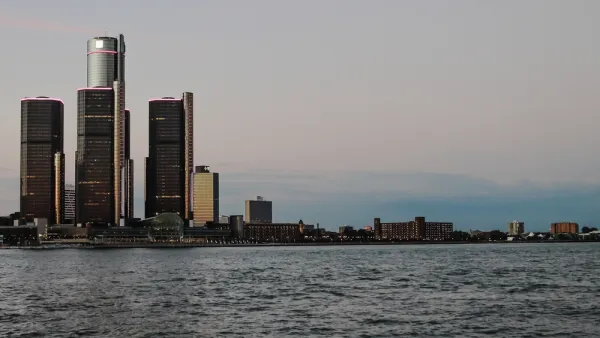
Digging Into the Data on Detroit's 'Recovery'
In key areas like jobs and housing, the numbers show a definite Motor City rebound since the recession. But a closer look reveals uneven gains and weakness next to state averages.
Potential Height of Dan Gilbert's Detroit Skyscraper Rises Again
The final height of the tower that will become Detroit's tallest building may exceed 900 feet. The tower and its complex are expected to include retail, office, residential, exhibit, and event space.
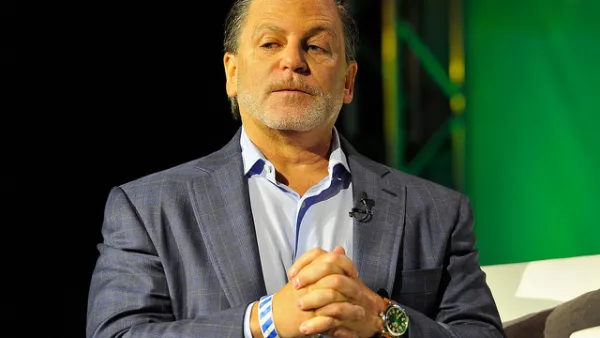
Dan Gilbert in His Own Words
At a recent public appearance, Dan Gilbert gave rare insight into the business success of Quicken Loans and its connection to the revitalization of Detroit.

Planetizen Federal Action Tracker
A weekly monitor of how Trump’s orders and actions are impacting planners and planning in America.

California plans to bury El Niño’s downpour
If the state plays its cards right, it may be able to store a billion acre-feet of El Niño’s water in aquifers.

Chicago breaks ground on $3 billion megadevelopment
The new neighborhood, titled Foundry Park, will one day host 3,700 residences.

One of Denver’s busiest corridors to gain BRT
The project will span 18 miles and contain 74 bus rapid transit stations.

275,000 bus trips are at stake on Seattle's ballot
If passed, the Seattle Transit Measure would trigger a 0.3% sales tax and raise an average of $138 million per year to maintain and expand Seattle’s bus services.

Texas may pay Israeli company billions to ease water woes
Texas awarded IDE Technologies the contract for its Harbor Island project, which is slated to become the Western Hemisphere's largest desalination plant.

FREE Course: Walkable City 1: Why Walkability?
After describing his path towards focusing on walkability as the essence of good planning, Jeff Speck marches through his five principal reasons for making more walkable places.
Reinventing Malls: Planning Alchemy—Turning Gray Fields Into Gold
The course focuses on the opportunities and imperatives that shape reinvention of mall sites.

City of Rosemead
Rutgers University, Edward J. Bloustein School of Planning and Public Policy
One Hundred Miles
Hunter College, City University of New York (CUNY)
The Architects Foundation
University of Cincinnati Online
City of Cambridge
Montrose County
The Pocatello Development Authority