It's a term that gets bandied about by the "creative class" to describe an endless array of projects, from whimsical pop-up art to new uses for century-old buildings. But what does placemaking really mean?


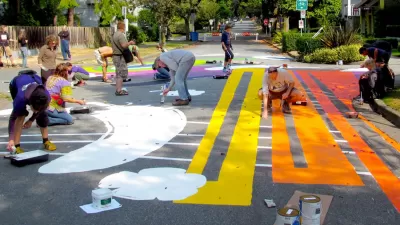
If intentionality is the essence of fashion, could a similar principle apply to urban design? Those who advocate and practice the urban interventionism called "placemaking" seem to think so. Russell Nichols examines the term from the perspective of those who engage in it—or abhor it.
Perhaps placemaking is controversial because of its political connotations. It is "a movement spearheaded by the creative class, who see collaboration as the path to the cutting edge. Projects benefit from public-private partnerships: an assorted team of supporters that includes city planners, architects, designers and local artists [...]"
Some think it's a disingenuous term suited to slick marketing. Nichols quotes a co-editor of the Sacramento News & Review: "'Modern urban revival shouldn't only matter when it's embraced by politicians, developers and Chamber of Commerce types. Placemaking shouldn't only be when the business community figures out how to commodify youth culture."'
In response, one place-maker offered this retort: "'Why denigrate people who want to improve Sacramento just because they 'just arrived in town'? I've been here eight years. Is that long enough to be entitled to an opinion? This smacks of a provincial attitude that remains all too common here.'"
Read the full story: Placemaking: Person, Place or Thing?

The Parking Lot Maternity Leave
New parenthood is the stress test of suburbia. I’ve learned the hard way just how spectacularly it fails.
“Leveraging Place”: A Toolkit for Staying Loyal to the Places We Shape
Place speaks before we plan. We need to listen.

Video: Jane Jacobs’ ‘Sidewalk Ballet’ is Alive and Well
“Streets Make Cities” takes viewers on a stroll down West 4th Street in Greenwich Village, illustrating the many ways that streets and sidewalks form the lifeblood of a city.

Planetizen Federal Action Tracker
A weekly monitor of how Trump’s orders and actions are impacting planners and planning in America.

California plans to bury El Niño’s downpour
If the state plays its cards right, it may be able to store a billion acre-feet of El Niño’s water in aquifers.

Chicago breaks ground on $3 billion megadevelopment
The new neighborhood, titled Foundry Park, will one day host 3,700 residences.

California High-Speed Rail Authority CEO resigns after $600,000 scandal
Under Ian Choudri, the authority used taxpayer dollars to fund first class flights and trips to nightclubs.

Want to study the Missouri River? Soon, you may need unanimous approval from 10 states
Legislation would require 10 governors’ permission to study or build projects moving water outside the basin.

Desperate measures: Advocates weigh draining Lake Powell to fill Colorado River
Draining the reservoir could reduce evaporation losses by a couple hundred thousand acre-feet.

FREE Course: Walkable City 1: Why Walkability?
After describing his path towards focusing on walkability as the essence of good planning, Jeff Speck marches through his five principal reasons for making more walkable places.
Reinventing Malls: Planning Alchemy—Turning Gray Fields Into Gold
The course focuses on the opportunities and imperatives that shape reinvention of mall sites.

City of Rosemead
Rutgers University, Edward J. Bloustein School of Planning and Public Policy
One Hundred Miles
Hunter College, City University of New York (CUNY)
The Architects Foundation
University of Cincinnati Online
City of Cambridge
Montrose County
The Pocatello Development Authority