Opposition to a bikeshare proposal in Raleigh, North Carolina, centers on whether enough people will use the system to justify its cost.


"An ongoing debate over the merits of a proposed taxpayer-subsidized bike rental program in Raleigh has gotten a little more heated," reports Paul A. Specht.
First, a little background: "The Raleigh City Council is considering a proposed 'BikeShare' program that would place 300 bikes at 30 stations around Raleigh, mostly downtown and at local universities. Council members, who discussed the proposal during their Feb. 23 meeting, are split on the matter."
A controversy has arisen regarding the example provided by Charlotte's bikeshare system. Councilmember Kay Chowder, who opposes the Raligh bikeshare proposal, "said Charlotte’s program generated less user-fee revenue than expected and that higher-than-expected sponsorship costs prompted sponsor Blue Cross Blue Shield of North Carolina to pull out," according to Specht.
Blue Cross Blue Shield of North Carolina emailed The News & Observer to refute that claim, citing its recent renewal of its sponsorship of the Charlotte system through 2017.
It's important to note that the Raleigh City Council is considering whether or not to approve a federal grant that has already been approved, according to an editorial by Danny Kadis, which makes the case for Raleigh to approve the bikeshare system.
Read the full story: BCBS refutes Raleigh councilor’s BikeShare claim

Raleigh Finally Approves Bikeshare Program
Raleigh City Council voted Tuesday to adopt a bike rental program downtown and at five university campuses. Supporters say it will improve mobility, encourage healthy lifestyles, and offer a more urban lifestyle.
Court unfreezes $20B in federal climate grants
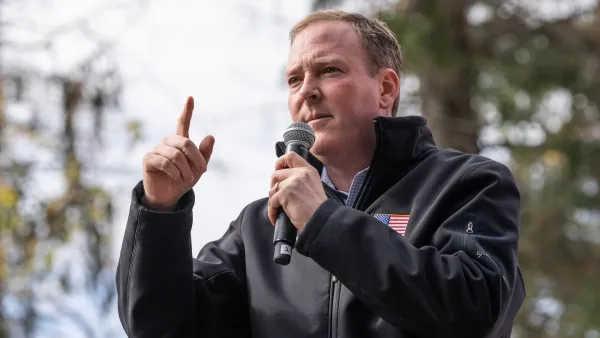
A U.S. Court of Appeals ruled that the Trump administration potentially violated the Inflation Reduction Act by attempting to claw back grants awarded under the Greenhouse Gas Reduction Fund program.
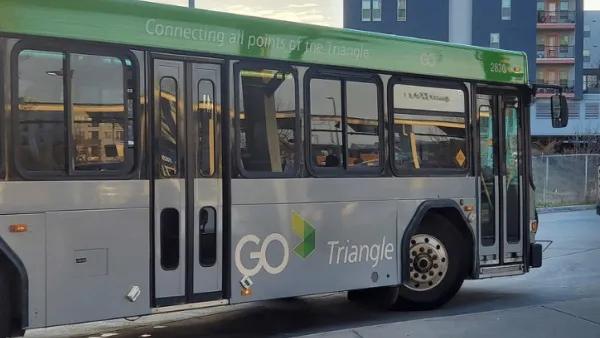
North Carolina Triangle transit ridership jumped 32% in April
Rising gas prices are prompting more Americans to consider public transit, where it's available.

Planetizen Federal Action Tracker
A weekly monitor of how Trump’s orders and actions are impacting planners and planning in America.

Amtrak, CN end decades-long dispute with eight-year agreement
The new operating agreement establishes an updated framework for the companies to work together, including processes to resolve disputes.

Judges permit Denver to divert 77,000 acre feet from the Colorado River for reservoir expansion
Overuse and climate change have caused the Colorado River’s water levels to plummet.

NYC DOT wants faster, more permanent street upgrades
The city is examining ways to build more concrete infrastructure without getting entangled in 'decades-long' projects.

'Something we’ve never seen before:' rising utility rates could strain city finances nationwide
Data centers, climate change and other factors have caused utility rates in the United States to increase by 38% since 2020.

Trump to overrule local leaders, lease millions of acres of America’s Pacific Island territories’ seafloors to mining companies
International law says that the Indigenous people of America’s territories have a right to prior and informed consent regarding projects that impact their countries.

FREE Course: Walkable City 1: Why Walkability?
After describing his path towards focusing on walkability as the essence of good planning, Jeff Speck marches through his five principal reasons for making more walkable places.
Reinventing Malls: Planning Alchemy—Turning Gray Fields Into Gold
The course focuses on the opportunities and imperatives that shape reinvention of mall sites.

Harvard University Graduate School of Design
KFH Group Inc.
Greater Baltimore Committee
The Architects Foundation
University of Cincinnati Online
The Pocatello Development Authority
The Urban Renewal Agency of the City of Pocatello