The Chicago Transit Authority has something to celebrate as it tries to dig itself out of a budgetary hole.


"The Chicago Transit Authority has announced a record number of rail passengers during 2015, at more than 241 million riders," reports Marwa Eltagouri. "But while rail ridership broke the 2014 record with 3.5 million more rides, bus ridership fell by about 1.6 million, to about 272.5 million rides."
The article blames a blizzard in February 2015 and ongoing construction projects in Downtown Chicago for the drop in ridership. Both bus and rail totaled for an increase in ridership over 2014, however.
The ridership numbers come at a critical moment for the transit agency. It credits increased ridership to $5 billion in planned and completed improvements since 2011, but it also has ongoing budget challenges. "The CTA passed a 2016 budget counting on $300 million in state funding, about $130 million more than Gov. Bruce Rauner has indicated he would provide," according to Eltagouri.
Read the full story: Record number of riders take 'L' but bus use slips in 2015, CTA says
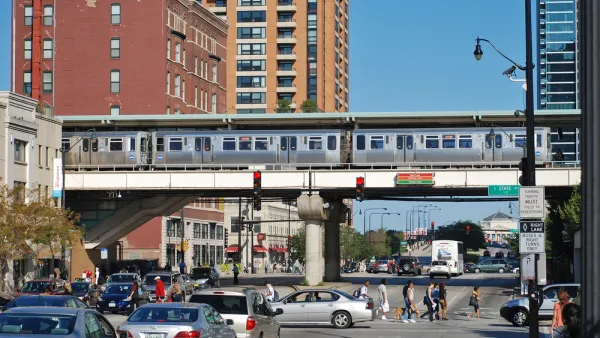
Chicago Transit Increasing Rail Service to Pre-Pandemic Levels
The Chicago Transit Authority is close to returning both rail and bus service to pre-pandemic schedules, with some adjustments for new travel demand.
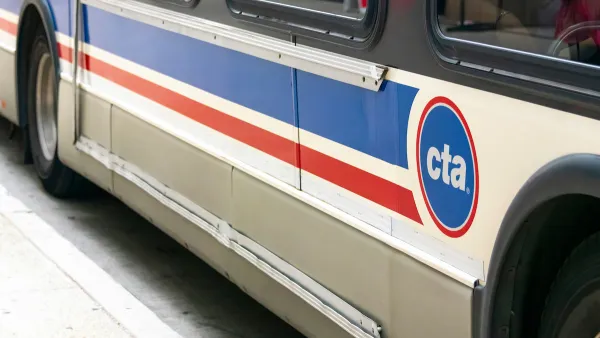
Chicago Transit Releases 2024 Budget
The agency projects modest ridership growth while aiming to make long-term investments in bus and rail improvements.

CTA underestimated Chicago transit ridership by 19 million trips
The agency is moving from using farebox data and manual video reviews to automatic counters that more accurately measure the total number of riders, whether or not they pay full fares.

Planetizen Federal Action Tracker
A weekly monitor of how Trump’s orders and actions are impacting planners and planning in America.

California plans to bury El Niño’s downpour
If the state plays its cards right, it may be able to store a billion acre-feet of El Niño’s water in aquifers.

Desperate measures: Advocates weigh draining Lake Powell to fill Colorado River
Draining the reservoir could reduce evaporation losses by a couple hundred thousand acre-feet.

In Texas, data centers are swallowing promised parkland
Residents who moved to Taylor, Texas for a rural community now have to contend with three data centers in their backyard.

How a Chicago-sized wind farm beat the odds and powered on
The project spanned five presidential administrations and a standoff with a U.S. military base.

MTA gives itself 30 days to transform pit into basketball court
The site has been under construction since 2022; the city originally estimated it would finish the court in 2024.

FREE Course: Walkable City 1: Why Walkability?
After describing his path towards focusing on walkability as the essence of good planning, Jeff Speck marches through his five principal reasons for making more walkable places.
Reinventing Malls: Planning Alchemy—Turning Gray Fields Into Gold
The course focuses on the opportunities and imperatives that shape reinvention of mall sites.

City of Rosemead
Rutgers University, Edward J. Bloustein School of Planning and Public Policy
One Hundred Miles
Hunter College, City University of New York (CUNY)
The Architects Foundation
University of Cincinnati Online
City of Cambridge
Montrose County
The Pocatello Development Authority