A book review of the newly released book, "Dream Cities," by Wade Graham.



Michael J. Lewis reviews a new book by Wade Graham, titled Dream Cities. After establishing a framework for the review with a discussion of Thomas More's book Utopia, Lewis begins to explain the argument of Graham's book. Namely:
…the basic physical structures of our contemporary world that these men created, from the shopping mall to the picturesque suburb, have grown mundane through constant repetition, to the point that they barely register on the eye. A 'remarkable, global urban monotony' has set in, everywhere from Singapore to Ulan Bator to Buenos Aires to Boston. A garden designer and historian, Graham wants us to see these urban and architectural forms afresh, not as the drab commonplaces they have become but as the work of visionaries 'whose dreamed-of cities became the blueprints for the world we actually live in.'
According to Lewis, Dream Cities provides a "field guide" to seven specific kinds of visions for these dreamed of cities: "monuments," "malls," "slabs" (high-rise towers), "castles" (Graham's term for romantic suburbs), "homesteads" (contemporary suburban sprawl), "corals" (the neotraditional towns of the New Urbanism), and "habitats."
After critiquing some of the book's highs and lows, Lewis concludes by noting the unintentional tragedy of the story told by the book: "The visionaries profiled here, with few exceptions, suffered from an overweening belief in the capacity of architecture to shape behavior and thus society….It takes only a moment’s reflection to realize that this is foolishness…"
Read the full story: ‘Dream Cities,’ by Wade Graham

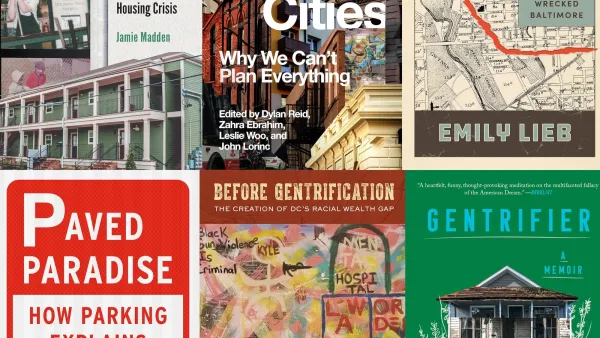
10 great urban planning summer reads
Wherever you're going (or staying) this summer, here are some suggestions for books to bring along.
Review: "An Even Better Way to Zone"
Don Elliot’s sophisticated and much-anticipated follow up to "A Better Way to Zone" tackles equity, affordability and provides a better blueprint from theory to application.
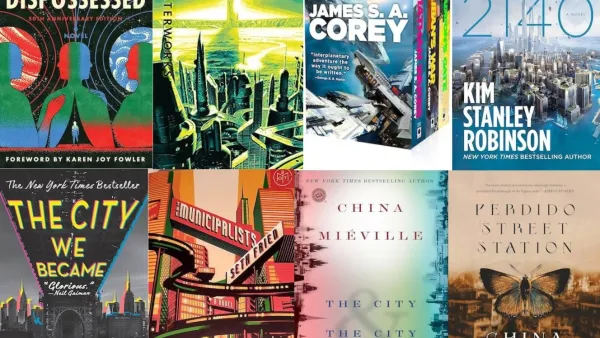
Eight Sci-Fi Books That Teach Urbanists the Dos and Don’ts of the Future
Science fiction has long painted a picture of the city of the future. What if it’s our roadmap out of dystopia?

Planetizen Federal Action Tracker
A weekly monitor of how Trump’s orders and actions are impacting planners and planning in America.

Amtrak, CN end decades-long dispute with eight-year agreement
The new operating agreement establishes an updated framework for the companies to work together, including processes to resolve disputes.

Judges permit Denver to divert 77,000 acre feet from the Colorado River for reservoir expansion
Overuse and climate change have caused the Colorado River’s water levels to plummet.

NYC DOT wants faster, more permanent street upgrades
The city is examining ways to build more concrete infrastructure without getting entangled in 'decades-long' projects.

'Something we’ve never seen before:' rising utility rates could strain city finances nationwide
Data centers, climate change and other factors have caused utility rates in the United States to increase by 38% since 2020.

Trump to overrule local leaders, lease millions of acres of America’s Pacific Island territories’ seafloors to mining companies
International law says that the Indigenous people of America’s territories have a right to prior and informed consent regarding projects that impact their countries.

FREE Course: Walkable City 1: Why Walkability?
After describing his path towards focusing on walkability as the essence of good planning, Jeff Speck marches through his five principal reasons for making more walkable places.
Reinventing Malls: Planning Alchemy—Turning Gray Fields Into Gold
The course focuses on the opportunities and imperatives that shape reinvention of mall sites.

Harvard University Graduate School of Design
KFH Group Inc.
Greater Baltimore Committee
The Architects Foundation
University of Cincinnati Online
The Pocatello Development Authority
The Urban Renewal Agency of the City of Pocatello