Following in the footsteps of Seattle, which recently followed a similar narrative arc, the city of Spokane will go back to the ballot for transportation funding, leaving the county of Spokane to its own devices.


Mike Proger reports: "The city of Spokane could go it alone in building a new Central City Line and other transit improvements, after a regionwide sales tax increase to pay for those projects narrowly failed last April."
"The 0.3 percent sales tax measure in 2015 failed by just 572 votes out of 76,800 that were cast. Opposition was strongest in suburban areas, including Spokane Valley," adds Proger.
The new ballot measure would appear before voters in November—if it passes, "expanded transit service likely would occur only inside the city."
Proger also shares details of the centerpiece of the 2015 ballot measure, the Central City Line, which "would use rubber-tire trolley cars from Browne’s Addition through downtown and east to Gonzaga University and Spokane Community College." Local officials are pitching the line as a service expansion in the most densely populated parts of Spokane, as well as an economic development tool. The article includes more of the funding details and political context for the plan.
For more details on the proposals rejected by the rest of the county of Spokane, see coverage by Zach Shaner of the Seattle Transit Blog.
Read the full story: Spokane may run its own transit ballot measure this fall

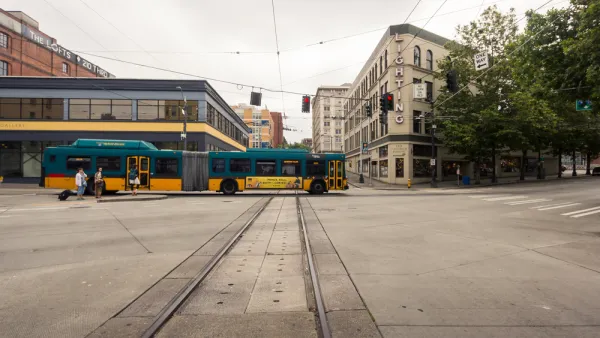
Transit Spending on the Ballot in Seattle and Washington
Voters in the city of Seattle will consider a sales tax to fund bus transit service, while voters around the state of Washington will have a chance to send new leaders to Congress.
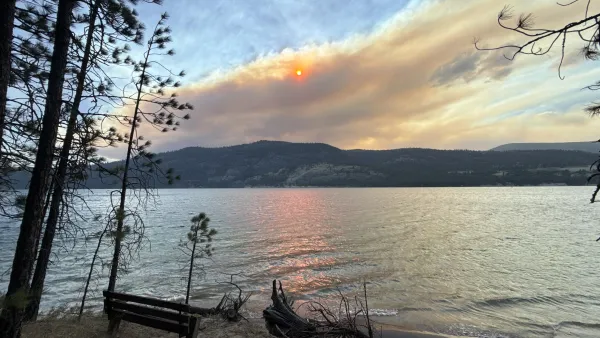
One month of wildfires has cost Washington state over $200 million
Washington’s fire season lasts through October.
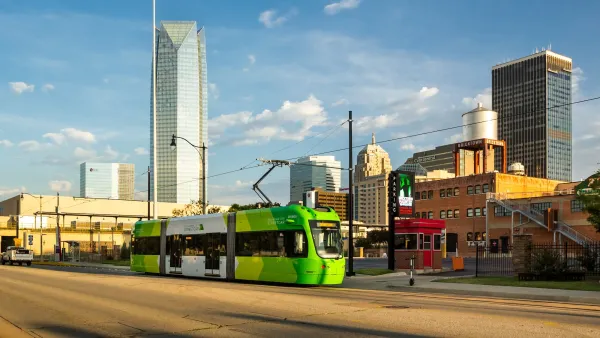
Oklahoma City bets on transit
The city's mayor is urging residents to support a new sales tax that would fund transit expansion in the growing city.

Planetizen Federal Action Tracker
A weekly monitor of how Trump’s orders and actions are impacting planners and planning in America.

The state-sanctioned urbicide of Austin
People don’t kill cities. Freeways do.

US to reduce Colorado River water deliveries to Mexico
A new Colorado Treaty amendment reduces Mexico’s Colorado River water allocation by 250,000 acre feet.

Nation's most wind-powered state turns to coal as data centers increase energy demand
For the first time in decades, Iowa has increased its generation of coal power.

NYC cools commuters with city's first rain garden above a bus stop
New York City officials say the plants in the rain garden can absorb 16 gallons of rainwater during heavy storms.

Brightline West’s future may rely on $6 billion federal loan
The company has until Nov. 2 to make a $400 million equity investment into its proposed high-speed rail line.

FREE Course: Walkable City 1: Why Walkability?
After describing his path towards focusing on walkability as the essence of good planning, Jeff Speck marches through his five principal reasons for making more walkable places.
Reinventing Malls: Planning Alchemy—Turning Gray Fields Into Gold
The course focuses on the opportunities and imperatives that shape reinvention of mall sites.

Eagle County Government
Harvard University Graduate School of Design
Nashville Planning Department
The Architects Foundation
University of Cincinnati Online
The Pocatello Development Authority
The Urban Renewal Agency of the City of Pocatello
Journal of the American Planning Association