Not only might Alaskans have to pay a state income for the first time since 1980, three years after the Trans-Alaska Pipeline was completed, but Alaska Permanent Fund checks might drop 50 percent to cope with falling crude oil tax revenue.


"This is the nation’s least-taxed state, where oil royalties and energy taxes once paid for 90 percent of state functions," writes In fact, according to according to Bankrate.com, "Alaska is the only state that does not collect state sales tax or levy an individual income tax."
There wasn't a need to tax residents shortly after completion of the 800-mile Trans-Alaska Pipeline in 1977, allowing oil to flow from Prudhoe Bay and other oil fields on the North Slope to Valdez where it would be loaded on tankers for California, other West Coast ports, and even South Korea.
With every barrel of oil, the state collected a royalty and a production tax that paid for most of state government and the creation of a multibillion-dollar Permanent Fund savings account.
Every eligible Alaskan resident, children as well as adults, received a payment this year of $2,072 from the Alaska Permanent Fund Corporation. However, the size of the check is as much if not more dependent on investment revenue than oil revenue. That would change under a proposal by Gov. Bill Walker.
"Production of the oil has declined from a peak of 2.1 million barrels a day in 1988 to an average of 523,797 barrels a day this month, state data show," notes a Bloomberg article dated Oct. 21, 2014. That's a decline of 75 percent. As noted previously, the volumes in the Trans-Alaska Pipeline are so low as to endanger it's operation.
Exacerbating the decline in crude oil production has been the drop in oil prices since July, 2014, and the free fall after a November 27, 2014 OPEC meeting, the effect on state finances was bound to be dramatic: "Two-thirds of the revenue needed to cover this year’s $5.2 billion state budget cannot be collected," writes Johnson.
Mr. Walker’s recovery plan would take more from residents through the income tax and would give them less as well, by changing the formula under which the dividend is paid. The income tax would be 6 percent of the amount an Alaskan currently pays in federal taxes, so a person who owed $10,000 to the Internal Revenue Service would also need to write a $600 check to Alaska.
Dividend payments would be tied directly to royalties that decrease or increase with oil production. Because oil production is down, next year’s payout would be cut by roughly half under the proposal, to about $1,000 a person. The governor would also raise taxes on alcohol and tobacco and would collect new taxes from the fishing, mining, energy and tourism industries.
Noticeably absent is an increase to the state's gas tax, lowest in the nation at 12.25 cents per gallon [PDF], although it was increased .95 cents on July 1.
Johnson goes on to discuss the political challenges awaiting Walker, an Independent, in his proposal. Notwithstanding the outcome of a ballot measure last year where voters chose to lower taxes on energy companies in order to increase production, Walker's budget doesn't exempt them from new taxes.
The energy industry’s main lobbying group has vowed to fight Mr. Walker’s proposal to collect $100 million in new taxes on oil and gas companies, while reducing by $400 million the tax credits they can claim
The FY 2017 budget was unveiled by Gov. Walker on Dec. 15. His press release indicates that "the plan addresses the state’s $3.5 billion budget deficit using a combination of spending cuts, new revenue, wealth management and investment." The proposed budget has been reduced from the current year's operating budget of $4.8 billion, notes the release.
Read the full story: As Oil Money Melts, Alaska Mulls First Income Tax in 35 Years

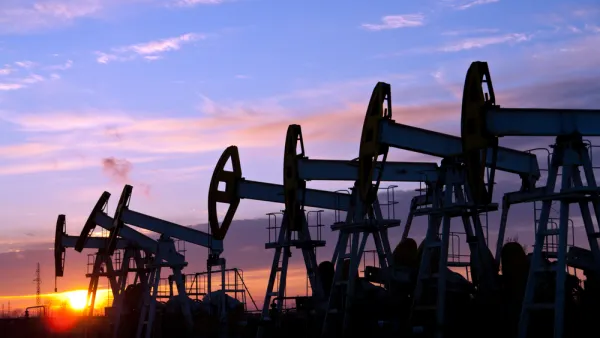
Just What the Planet Needs: More Oil Production
A surge of oil from four countries—Norway, Guyana, Canada and Brazil—will more than compensate for slowing growth of U.S. oil production. The new sources might cause oil prices to dip to $50 a barrel and slow the transition to electric vehicles.
Ten States Could Hike Gas Taxes this Year
With gas prices the lowest since 2009, ten state legislatures and governors consider raising state gas taxes, though many are accompanied by fiscally questionable tax shifts. Some tried and failed last year. All of the proposed increases are modest.
Saudi Arabia Reducing Gasoline Subsidies to Cope with Budget Deficit
The world's third cheapest gasoline will increase by 40 percent in order to deal with a record budget deficit of $98 billion this year. Plummeting oil prices have forced the world's largest oil exporter, Saudi Arabia, to reduce energy subsidies.

Planetizen Federal Action Tracker
A weekly monitor of how Trump’s orders and actions are impacting planners and planning in America.

Northwest rail fans eager for Sept. 30 debut of Amtrak’s Airo fleet
Get ready for that new train smell and more seats. But they won’t go faster or run more frequently on the Cascades route in Washington and Oregon.
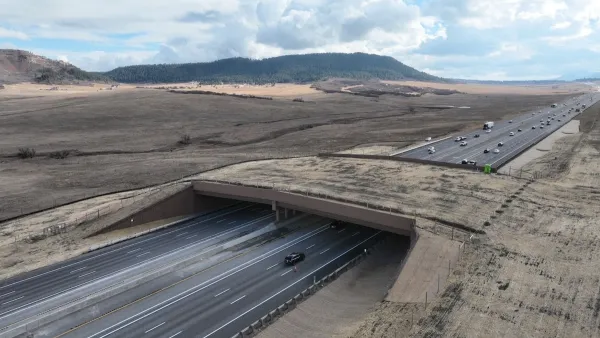
Record-breaking wildlife overpass in Colorado brings 91% reduction in animal collisions
Prior to the overpass, vehicles were hitting one deer per day on Colorado’s Interstate 25.

Detroit to transform waterfront with $2.2 billion investment
Developers will convert about 18 acres of unused parking lot space into civic spaces.

‘Going backwards:’ Baltimore mayor, students rally against state's transit funding plan
Maryland's proposed six-year plan provides no funding for Baltimore’s BMORE bus program and reduces its road maintenance funding.

Trump wants to cancel nearly 98% of funding for HUD housing support program
Multiple housing groups are suing the administration in an effort to preserve the funding.

FREE Course: Walkable City 1: Why Walkability?
After describing his path towards focusing on walkability as the essence of good planning, Jeff Speck marches through his five principal reasons for making more walkable places.
Reinventing Malls: Planning Alchemy—Turning Gray Fields Into Gold
The course focuses on the opportunities and imperatives that shape reinvention of mall sites.

City of Thousand Oaks
City of Wisconsin Rapids
Harvard University Graduate School of Design
The Architects Foundation
University of Cincinnati Online
Northern Illinois Transit Authority (NITA)
The Pocatello Development Authority
The Urban Renewal Agency of the City of Pocatello