A new online mapping project called American Panorama earned rave reviews this week from CityLab and Gizmodo.


Writing for CityLab, Laura Bliss describes the ambition of the American Panorama project, as conceived by a collaboration between the University of Richmond's Digital Scholarship Lab and the cartography firm Stamen. Though the maps are specifically designed to look contemporary, according to Bliss, " these are not the simple animated maps or hover-over statistical visualizations to which Internet trawlers are by now so accustomed. The Panorama’s plates are dense, like entire textbook chapters turned interactive tools."
Bliss goes on to focus on two of the project's maps (the project's website promises more in the future): "Foreign-Born Population: A Nation of Overlapping Diasporas" and "Forced Migration of Enslaved People."
Writing for Gizmodo, Alissa Walker also focused on the former of those two maps in addition to a map of overland trails showing how pioneers settled the American West. Walker also provides this effusive review: "This is data storytelling at its very finest and I’m really looking forward to seeing what other topics American Panorama covers."
Read the full story: A Historical Atlas of America, Built for the 21st Century
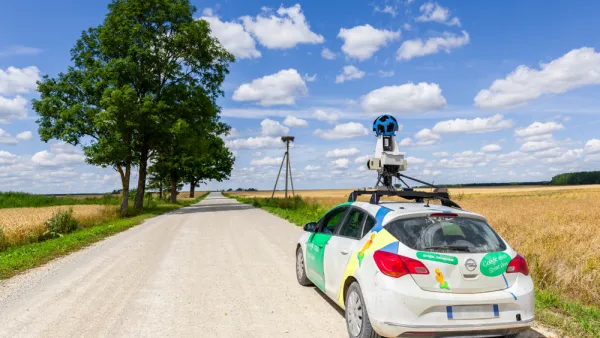
How Digital Mapping Can Reinforce Inequity
Digital mapping tools like Google Street View often obscure the realities of cities and concentrate their resources in the wealthiest countries, effectively ‘erasing’ some places from the global map.

New Interactive Mapping Tool Tracks all of NYC's Infrastructure Projects, Housing Permits, and City Facilities
The New York Department of City Planning has taken its open data practices to a new level with the launch of the Capital Planning Explorer.
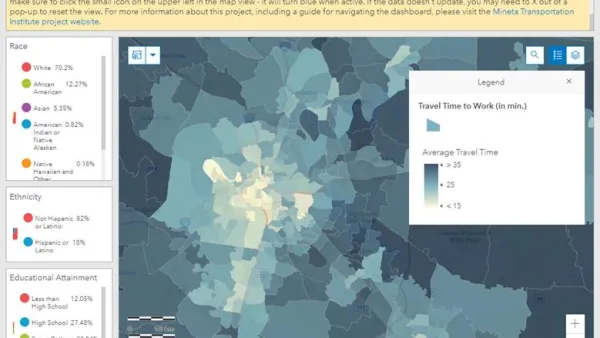
Smart Growth Loves Heatmaps
Smart growth can provide many important benefits that are easy to see using informative and beautiful heatmaps—our complex world as viewed by all-knowing gods.

Desperate measures: Advocates weigh draining Lake Powell to fill Colorado River
Draining the reservoir could reduce evaporation losses by a couple hundred thousand acre-feet.

Eastern Nebraska is running out of electricity
Data centers and electrification are straining eastern Nebraska’s grid, throttling economic development.
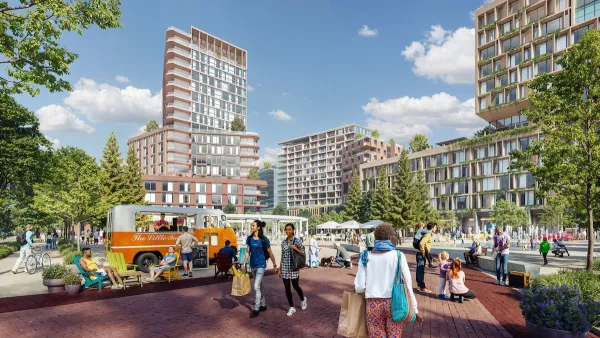
Malls are becoming the midtowns of the future
Mall and office park redevelopments are a generational opportunity to create new nodes of urbanity.

NYC breaks ground on anti-flooding infrastructure project
New York City's new system will reduce stormwater flows to local sewers by 90%.

One Kentucky town’s secret to affordable housing
The Smoketown Community Land Trust has already built seven affordable homes for community members.

Houston gains petal-shaped cooling infrastructure to make streets more ‘delightful’
The city has installed the pavilions along 15 blocks in Houston.

FREE Course: Walkable City 1: Why Walkability?
After describing his path towards focusing on walkability as the essence of good planning, Jeff Speck marches through his five principal reasons for making more walkable places.
Reinventing Malls: Planning Alchemy—Turning Gray Fields Into Gold
The course focuses on the opportunities and imperatives that shape reinvention of mall sites.

City of Rosemead
Rutgers University, Edward J. Bloustein School of Planning and Public Policy
One Hundred Miles
University of Michigan School for Environment and Sustainability (SEAS)
Hunter College, City University of New York (CUNY)
The Architects Foundation
City of Cambridge
Montrose County
The Pocatello Development Authority