Milwaukee County, Wisconsin is following a growing trend in cities across the country of working to end chronic homelessness by providing permanent housing to the homeless.


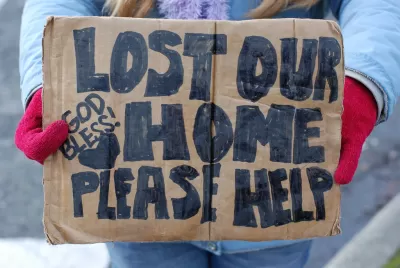
Following the lead of cities including Salt Lake City and Seattle, Milwaukee County is tackling chronic homelessness by providing permanent housing through a program called Housing First. Casey Tolin of Fusion reports that the program has already found permanent housing for 64 of an estimated 300 chronically homeless individuals.
Since September, officials have been giving permanent housing vouchers to anyone who’s been homeless for more than a year or on multiple occasions in the past couple years.
“The biggest need for a homeless person is housing,” said James Mathy, the county’s housing administrator. “We just offer them housing right off the street. It sounds simple, but a lot of communities don’t do it.”
Participants in the program are expected to contribute 30 percent of their income toward the cost of housing, with the remainder covered by the vouchers. In addition to providing housing, the program sets up homeless individuals with case workers who help to ease the transition between the streets and into the problems often associated with apartment living. The case workers also assist in signing up for benefits and finding treatment programs. Milwaukee's Housing First program is funded through a combination of state and federal dollars, as well as private donations, that will keep it operating for the next three years.
Read the full story: Why Milwaukee is giving homeless people free apartments
'Housing First' Program Reduces Homelessness by 70 Percent in Milwaukee County
The "housing first" approach to homelessness is building a track record of success in Milwaukee.

Milwaukee Homelessness Dropped in 2024
Bucking national trends, Milwaukee reduced homelessness in 2024 through Housing First policies and supportive services, but local advocates warn high housing costs will likely lead to an increase in the unhoused population in the coming year.
Seattle's 'Pathway Home' Initiative Seeks Housing First Strategy for Homeless
'Housing first' has become a policy buzzword of sorts to describe an approach to homeless services. A pair of new reports on the homelessness situation in Seattle finds consensus on the need for a housing first policy.

Planetizen Federal Action Tracker
A weekly monitor of how Trump’s orders and actions are impacting planners and planning in America.

Eastern Nebraska is running out of electricity
Data centers and electrification are straining eastern Nebraska’s grid, throttling economic development.

Study reveals best places in the U.S. for cycling, walking
New research from Streetlight Data examines bicycle and pedestrian miles per capita in the 100 largest U.S. cities by population.

Why does it take an emergency for the U.S. to expedite infrastructure projects?
In June 2023, Philadelphia repaired a melted interstate in 12 days thanks to an emergency order.

Federal government nominates new FTA administrator
Mark Aesch is currently the founder and CEO of a transportation management consulting firm.

Developers reveal $10 billion stadium plan as ‘Hail Mary’ to keep Bears in Chicago
The plan would also boast a public park, high- and mid-rise buildings and a youth sports complex.

FREE Course: Walkable City 1: Why Walkability?
After describing his path towards focusing on walkability as the essence of good planning, Jeff Speck marches through his five principal reasons for making more walkable places.
Reinventing Malls: Planning Alchemy—Turning Gray Fields Into Gold
The course focuses on the opportunities and imperatives that shape reinvention of mall sites.

City of Charlotte
City of Rosemead
Rutgers University, Edward J. Bloustein School of Planning and Public Policy
University of Michigan School for Environment and Sustainability (SEAS)
Hunter College, City University of New York (CUNY)
The Architects Foundation
City of Cambridge
The Pocatello Development Authority
The Urban Renewal Agency of the City of Pocatello