An architecture critic spots an opportunity to think big after Caltrans finally ditched a plan to extend the I-710 Freeway through several Southern California cities.


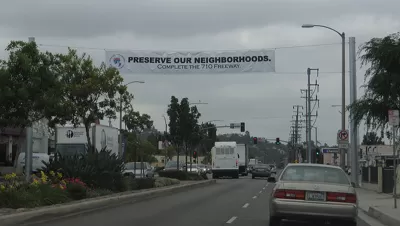
Christopher Hawthorne shifts through the ashes of a long-controversial plan to extend the 710 freeway, above ground, through the cities of Alhambra, South Pasadena, and Pasadena. Instead of the above ground option, transit officials are now considering five options, including a tunnel option that has already attracted a lot of attention and comes with an estimated price tag of $6.5 billion.
Hawthorne's bold suggestion, however: "The debate we're having about the 710 Freeway should be a whole lot broader and more imaginative than it's been so far." Specifically, Hawthorne focuses on the potential for the land, owned by Caltrans, now made available by the demise of the plans for an above-ground extension. Hawthorne explains that over the four decades the above-ground freeway extension proposal was in play, the state transportation agency "acquired about 400 residential properties, most of them single-family houses, that it planned to demolish to make way for the freeway." Moreover, "[Caltrans] also owns nearly 60 vacant residential lots as well as several large open pieces of land, many alongside, between or near freeway ramps at each end of the corridor."
Caltrans is currently some of that land on the market, in batches at a time, and offering current tenants first opportunity to buy the houses at "appraised fair market value." Hawthorne's recommendation, however, is for Caltrans to "work with Los Angeles County and the state of California to build a combination of new parks and affordable and market-rate housing in the 710 corridor. New bike and walking paths could lead to the Arroyo Seco and rail stations on the Gold Line, helping stitch back together neighborhoods long separated by a no-man's land set aside for freeway construction."
Hawthorne goes into a lot more detail about how such a planning process could unfold, and why any such effort would signify a strong response to the challenges—like affordable housing, open space, and others—facing the region.
Read the full story: Here are better ideas for the land Caltrans has stockpiled for the 710 Freeway extension

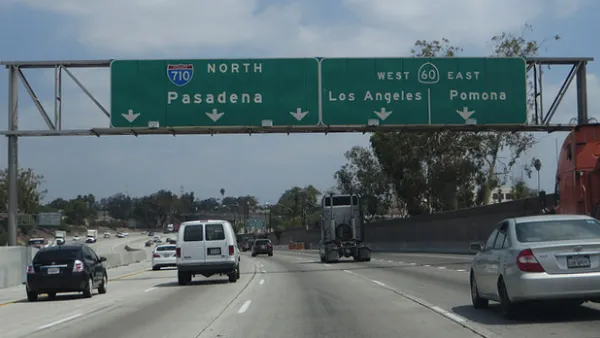
After a Failed Freeway Plan, Alternatives Prove Controversial
With plans to extend California's 710 Freeway off the table, cities in the path have been awarded funds for alternative road projects. But residents of San Marino aren't all on board.

Op-Ed: 'Public Mood' Has Turned Against Cars in Cities
A survey of recent planning decisions demonstrates that cities are no longer necessarily looking to more and bigger highways to solve their traffic problems.
With a 710 Freeway Extension Unlikely, Cities Propose Alternatives
After withdrawing support for a controversial extension of the 710 Freeway, Los Angeles Metro is asking cities for local road improvements to improve traffic flow in its stead.

Planetizen Federal Action Tracker
A weekly monitor of how Trump’s orders and actions are impacting planners and planning in America.

Amtrak, CN end decades-long dispute with eight-year agreement
The new operating agreement establishes an updated framework for the companies to work together, including processes to resolve disputes.

Judges permit Denver to divert 77,000 acre feet from the Colorado River for reservoir expansion
Overuse and climate change have caused the Colorado River’s water levels to plummet.

Idaho may see an 18% drop in federal surface transit funding — the largest estimated cut in the US
Transit systems in rural communities are much more reliant on federal funding to provide their services.

How ‘post-disaster gentrification’ alters neighborhoods after natural calamities
After hurricanes, fires or other calamities, the original residents of a community are often replaced by younger, wealthier residents.

Maryland local governments examine if they should have more power to raise property taxes
Maryland’s housing market is out of reach for the majority of moderate-income residents.

FREE Course: Walkable City 1: Why Walkability?
After describing his path towards focusing on walkability as the essence of good planning, Jeff Speck marches through his five principal reasons for making more walkable places.
Reinventing Malls: Planning Alchemy—Turning Gray Fields Into Gold
The course focuses on the opportunities and imperatives that shape reinvention of mall sites.

Harvard University Graduate School of Design
KFH Group Inc.
Greater Baltimore Committee
The Architects Foundation
University of Cincinnati Online
The Pocatello Development Authority
The Urban Renewal Agency of the City of Pocatello