St. Petersburg will overhaul its bus system in early 2016, expecting improved efficiency from operating on the downtown city grid as well as upgrades to the area that serves as the current hub of the system.


According to an article by Kate Bradshaw, the city of St. Petersburg has approved changes to the "hub and spokes" model for operating buses in its downtown. "The move, which officials said was decades in the making, comes just over a year after voters rejected a sales tax proposal that would have funded a dramatic enhancement and overhaul of the county's bus system," writes Bradshaw.
Instead of the hub and spokes, the buses will now operate more along the framework laid out by the city's grid. The implications of that change include a new role for Williams Park—the former hub in the system. "It would clear downtown's William's Park, the current bus hub, of multiple bus shelters and the smog and heavy traffic that accompany them."
The city council members on hand to announce the new system noted that cities around the country have moved away from the hub and spokes model. The city of Houston has made perhaps the most ambitious effort to implement a high frequency grid system in recent years. The article also notes that the changes, scheduled to be in place by February 14, 2016, will only affect are only downtown.
Read the full story: It's official: come Valentine's Day next year, Williams Park won't be a bus hub anymore


St. Petersburg To Offer Free Bus Rides to Low-Income Residents
Eligible riders must reside within the city and lack alternate forms of transportation.

Double First: The First Station on Tampa Bay's First BRT Line Complete
The first of 15 bus rapid transit stations in St. Petersburg was unveiled last week.
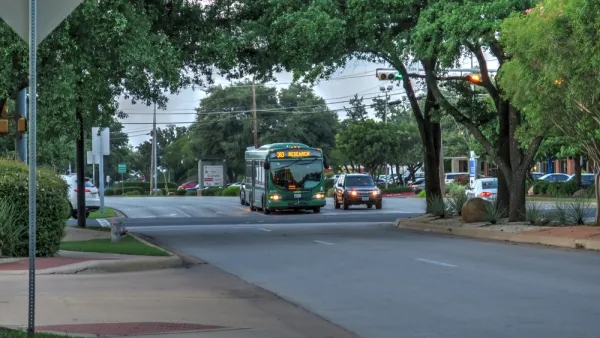
Bus System Redesign Boosts Ridership in Austin
Over a year after Capital Metro in Austin overhauled its bus system design, the system is bucking national trends and achieving growth in its ridership numbers.

Planetizen Federal Action Tracker
A weekly monitor of how Trump’s orders and actions are impacting planners and planning in America.

Amtrak, CN end decades-long dispute with eight-year agreement
The new operating agreement establishes an updated framework for the companies to work together, including processes to resolve disputes.

Nation's most wind-powered state turns to coal as data centers increase energy demand
For the first time in decades, Iowa has increased its generation of coal power.

Alabama scores up to $2.5 billion federal loan for largest infrastructure project in state’s history
The Mobile River Bridge and Bayway Project aims to ease congestion at Alabama’s worst bottleneck.

Trump is considering data centers on 6 states' public land — some state officials say they had no idea
If the administration approves the proposed projects, data center and data center-related developments will cover 17,600 acres of public land.

Despite court ruling, Trump is keeping nearly all wind projects in the US on hold
At least 110 wind energy projects have not heard from the government since a federal judge ruled that the Trump administration's freeze on wind turbine clearances was likely illegal.

FREE Course: Walkable City 1: Why Walkability?
After describing his path towards focusing on walkability as the essence of good planning, Jeff Speck marches through his five principal reasons for making more walkable places.
Reinventing Malls: Planning Alchemy—Turning Gray Fields Into Gold
The course focuses on the opportunities and imperatives that shape reinvention of mall sites.

KFH Group Inc.
Greater Baltimore Committee
Eagle County Government
The Architects Foundation
University of Cincinnati Online
The Pocatello Development Authority
The Urban Renewal Agency of the City of Pocatello