Accessory dwelling units, granny flats, mother-in-law units—whatever you call them, they're now legal in Austin.


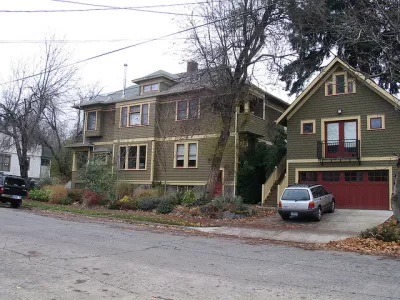
Jennifer Curington reports that the "Austin City Council agreed to lessen restrictions on accessory dwelling units, or ADUs."
"Changes approved by council allow ADUs to be located 10 feet from each property’s main home instead of 15 feet as currently required by city law," reports Curington. "Also, the minimum lot size required to build an ADU has been reduced from 7,000 square feet to 5,740 square feet, and the structure cannot be larger than 1,100 square feet." The article also provides a lot of detail about the limitations on the use of ADUs.
ADUs are usually a hot button politically when communities consider easy ways to ease land use regulations and add density. The politics of the issue in Austin followed a traditional playbook: "Proponents of the changes said ADUs could be used as a tool to tackle Austin’s affordability crisis, and opponents expressed concern about preserving neighborhood character and allowing code changes that may override some neighborhood plans." In the end, the City Council decided to update the ADU regulations before the city completes the CodeNEXT overhaul of its zoning code.
Read the full story: Austin City Council lessens restrictions on accessory dwelling units
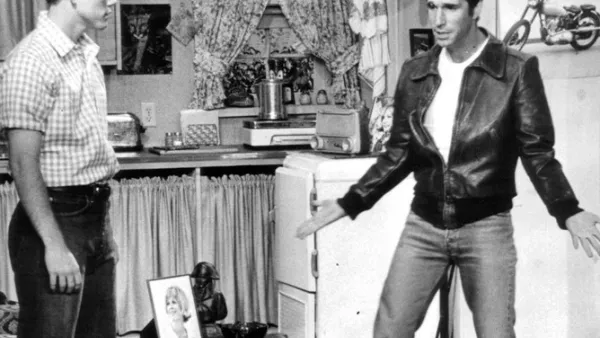
What do the Gilmore Girls, Happy Days, and Full House have in common? ADUs.
American sitcoms are full of garage apartments, attic rooms, and pool houses. Why aren't our cities?
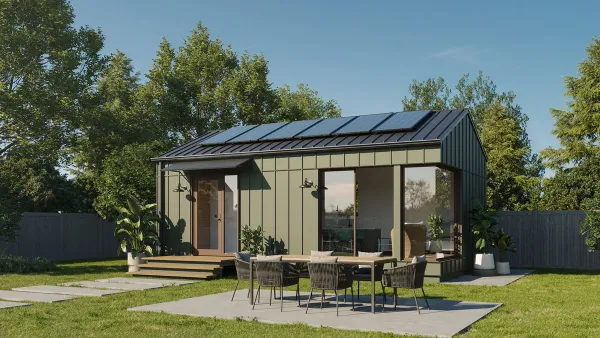
NYC’s ‘ADU for You’ Initiative Offers Pre-approved Plans and Financing Tools
The project pairs pre-approved plans with financing and other tools to help more homeowners build accessory units.

Florida Senate Advances Law Allowing ADUs in All Residential Zones
The law would legalize ‘granny flats’ by-right in single-family zoned neighborhoods.

Planetizen Federal Action Tracker
A weekly monitor of how Trump’s orders and actions are impacting planners and planning in America.

California plans to bury El Niño’s downpour
If the state plays its cards right, it may be able to store a billion acre-feet of El Niño’s water in aquifers.

Desperate measures: Advocates weigh draining Lake Powell to fill Colorado River
Draining the reservoir could reduce evaporation losses by a couple hundred thousand acre-feet.

Housing is the top priority of Seattle’s sole new councilmember
Jenks campaigned on building 1,000 new units of affordable housing.

New tax cuts may slash $1.5 billion in funding for Miami transit, public parks
Amendment 3 will save Miami-Dade homeowners $2,700 in 2028.

Arizona, Wisconsin, Pennsylvania hope to finally advance climate goals post-midterms
The three states have spent years under Republican or divided control.

FREE Course: Walkable City 1: Why Walkability?
After describing his path towards focusing on walkability as the essence of good planning, Jeff Speck marches through his five principal reasons for making more walkable places.
Reinventing Malls: Planning Alchemy—Turning Gray Fields Into Gold
The course focuses on the opportunities and imperatives that shape reinvention of mall sites.

City of Rosemead
Rutgers University, Edward J. Bloustein School of Planning and Public Policy
One Hundred Miles
University of Michigan School for Environment and Sustainability (SEAS)
Hunter College, City University of New York (CUNY)
The Architects Foundation
City of Cambridge
Montrose County
The Pocatello Development Authority