A mega-project in San Francisco's South of Market neighborhood is exciting for its size an prize tag—and remarkable for the income levels that define "affordable" in San Francisco these days.



Cory Weinberg reports on the 5M mega-project on the way in San Francisco, after a key political victory that paved the way for its approval by the San Francisco Board of Supervisors.
The victory came in the shape of an agreement to build more apartments "dedicated to middle class residents." The $690 million project will now become "the largest ever affordable housing commitment that a San Francisco developer has made for a project built on private land."
Weinberg explains how the development will achieve its affordability targets: "40 percent of the units that will get built as a part of the project won’t be priced at market rate, and they will range in affordability. For instance, some units at an off-site Tenderloin affordable building will be reserved for formerly homeless residents, while a family of four making $152,850 a year would qualify for one of the middle-income units at one of the Fifth and Mission buildings."
The key phrase in there is "range in affordability," exemplified by the $152,850 annual salary being considered in the range of affordable anywhere on this planet.
For more on the project, including pretty renderings and more on some of the political process that got the development to this point, Curbed SF has been following the project closely for months.
Read the full story: 5M megaproject clinches political victory by agreeing to build more middle-class apartments

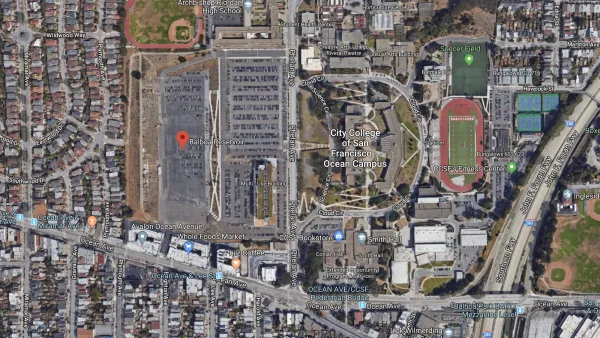
After Decades of Failure, 1,000-Plus Homes Coming to the Balboa Reservoir in San Francisco
Four developers tried, and four developers failed, until the San Francisco Board of Supervisors changed the story in August 2020.
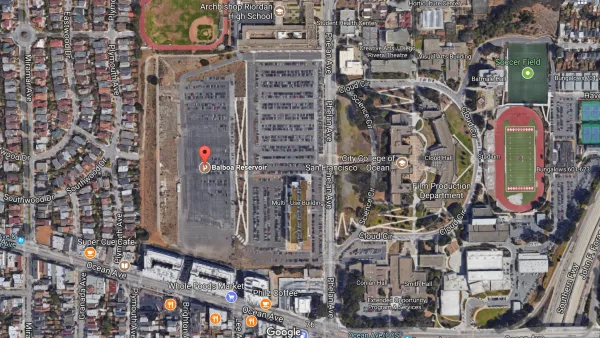
1,100 New Homes Planned in the Middle of San Francisco
The prospect of a large mixed-use development on a 17-acre parking lot in the center of San Francisco took a substantial step forward this week.
San Francisco Voters Increase Height Limits for Waterfront Development
Voters gave Forest City Enterprises' Pier 70 development the go-ahead on Tuesday by increasing height limits from 40 to 90 feet. The 65-acre property will be developed into mixed use, with 2,000 housing units, 30 percent affordable, and open space.

Planetizen Federal Action Tracker
A weekly monitor of how Trump’s orders and actions are impacting planners and planning in America.

‘Going backwards:’ Baltimore mayor, students rally against state's transit funding plan
Maryland's proposed six-year plan provides no funding for Baltimore’s BMORE bus program and reduces its road maintenance funding.
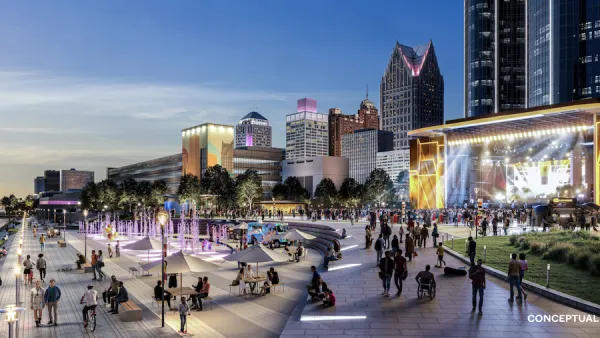
Detroit to transform waterfront with $2.2 billion investment
Developers will convert about 18 acres of unused parking lot space into civic spaces.

Central Park has seen three deadly crashes since June. It banned cars 8 years ago.
100,000 bikers, pedestrians and horseback riders compete for space on the loop daily, sometimes resulting in deadly collisions.

SF residents can no longer use potential shadows to block housing developments
The SHADE act also halves the allotted time for certain appeals before projects can progress.

HUD, USDA agree on framework to simplify housing environmental review standards
Their agreement is a requirement of the 21st Century ROAD to Housing Act.

FREE Course: Walkable City 1: Why Walkability?
After describing his path towards focusing on walkability as the essence of good planning, Jeff Speck marches through his five principal reasons for making more walkable places.
Reinventing Malls: Planning Alchemy—Turning Gray Fields Into Gold
The course focuses on the opportunities and imperatives that shape reinvention of mall sites.

planning NEXT
City of Thousand Oaks
City of Wisconsin Rapids
The Architects Foundation
University of Cincinnati Online
Northern Illinois Transit Authority (NITA)
The Pocatello Development Authority
The Urban Renewal Agency of the City of Pocatello