Left behind in business-as-usual city planning processes: low income and racial minority residents who rely on biking for transportation.


Rachel Dovey examines a project recently completed by BikeHouston for lessons in how standard-practice city planning fails standards of social equity for cyclists.
According to Dovey, "[b]y gathering input along high-traffic routes for transit-dependent cyclists, the women behind BikeHouston’s targeted outreach program managed to demonstrate just how exclusive the business-as-usual cycle of notices, public forums and plan updates can be."
The project described helped gather public info for a revision of Houston's Comprehensive Bikeway Plan. "Instead of inviting cyclists to come to them," reports Dovey, "BikeHouston decided to meet riders where they were — specifically, along the Metro Red Line during late-night and early-morning commute hours."
Nabiha Hossain, then an intern with BikeHouston, spent the project interviewing cyclists for their opinions about bike safety. In addition to the typical kind of information one would expect to collect during a bike planning process, Hossain also reached a much larger realization: how completely standard-practice city engagement tactics seemed to be failing the cyclists she spoke with.
Dovey adds that other programs in East Los Angeles and San Francisco are also experimenting with new outreach methods to close the racial gap in bike planning practices.
Read the full story: Why Business-as-Usual Bike Planning Fails Low-Income Cyclists

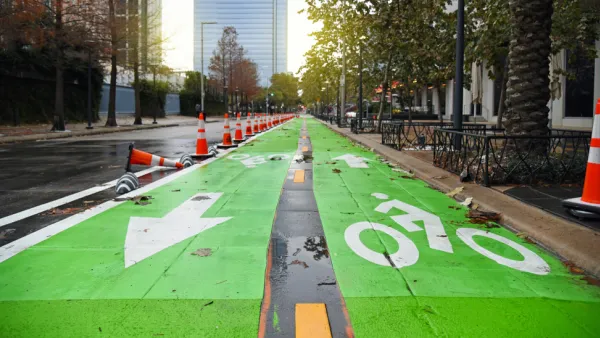
Bike Infrastructure Makeover Underway in Houston
It might surprise people outside of Texas to hear about the progress of new, high quality bike infrastructure in the city of Houston.

High Hopes for the Future of Biking in Houston
Despite Houston's reputation for sprawl, the city has made impressive efforts to build out its bike infrastructure.
Houston Creating 'Equity Indicators' Report
To better plan and track its progress toward equity, the city of Houston is creating a new system of equity indicators.

Planetizen Federal Action Tracker
A weekly monitor of how Trump’s orders and actions are impacting planners and planning in America.

Amtrak, CN end decades-long dispute with eight-year agreement
The new operating agreement establishes an updated framework for the companies to work together, including processes to resolve disputes.

Northwest rail fans eager for Sept. 30 debut of Amtrak’s Airo fleet
Get ready for that new train smell and more seats. But they won’t go faster or run more frequently on the Cascades route in Washington and Oregon.

A 'dangerous' precedent: North Carolina successfully pressures communities into voting for toll roads
Two mayors resigned from the Charlotte Regional Transportation Planning Organization after it voted in favor of the toll roads.

Austin landlords only need to address mold when it covers 25 sqft. A resolution looks to change that
The city manager will propose updates to the city code regarding regulations around mold in May.

NYCHA’s green future? Officials open ‘showroom’ apartment with sustainable features
Heat pumps, inductions stoves and infrared heating panels: these are a few of the climate-friendly upgrades being installed at some public housing developments, with more to come, officials said Tuesday.

FREE Course: Walkable City 1: Why Walkability?
After describing his path towards focusing on walkability as the essence of good planning, Jeff Speck marches through his five principal reasons for making more walkable places.
Reinventing Malls: Planning Alchemy—Turning Gray Fields Into Gold
The course focuses on the opportunities and imperatives that shape reinvention of mall sites.

City of Thousand Oaks
City of Wisconsin Rapids
Harvard University Graduate School of Design
The Architects Foundation
University of Cincinnati Online
The Pocatello Development Authority
The Urban Renewal Agency of the City of Pocatello